VibeChopper Blog

Developer Notes

Technical notes on AI video editing infrastructure, media processing, render verification, object storage, and production-grade creative tools.

Filter by tag

Clear
All tags AI video editorobject storageFFmpegasset provenanceDATA Remediationtool eventsAI agentscloud renderingcloud video renderingnatural language editingrender verificationtechnical SEOvideo renderingAI edit runsAI video analysisbrowser video editorbrowser video processingfallbacksframe extractionmedia graphobservabilityonline video editorprovenanceresumable uploadstimeline architecturetimeline editingupload reliabilityvideo editingvideo editor backendvideo metadataagent scoringagent securityAI audit trailAI edit planningAI edit run schemaAI editingAI infrastructureAI musicAI music generationAI timelinesAI video editingAI video editor observabilityAI video toolsAI workflow audit trailasset contextasset ownershipaudit trailauthautomatic subtitlesbackend streamsbatch uploadbearer tokensbrowser based video editorbrowser storageCapCut alternativecaption infrastructureclip effectscloud compositorcloud persistencecloud video processingcollaborationcreative briefscross-device editingdatabase schemadeep linksdeveloper notesemail bootstrapexport reliabilityexport workflowfeedback automationFFmpeg APIFFmpeg workersGemini Lyriagenerated media provenancegenerated music bedheadless workersHMACincident automationincident responseiOS video editoriPad video editorJSON validationJWT fallbackKdenlivelarge media projectsmedia asset graphmedia asset managementmedia processingmemory pressureMLT frameworkmulti-device syncnative app authnative authopen-source video editingowned authpasskeyspasswordless loginproduct infrastructureproduction reliabilityproduction repairprogress trackingproject provenance graphprompt metadataprovider harnessrender hygienerender pipelinesrender testsrepair loopsrepair workflowsReplit Autoscalerubricsscratch storagetelemetrytext-based video editingtimeline compositortimeline synctimeline tool callstimeline toolstransactional emailtranscript editingtranscript-based editingupload sessionsupload telemetryusage logsVEED.IOvideo editing APIvideo editing architecturevideo editing backendvideo editor APIvideo editor architecturevideo editor infrastructurevideo editor metadatavideo processing pipelinevideo provenancevideo rendering APIvideo timelinevideo transcription editorvideo upload architecturevideo upload UXvoice video editingweb video editorWebAuthnworker callbacks
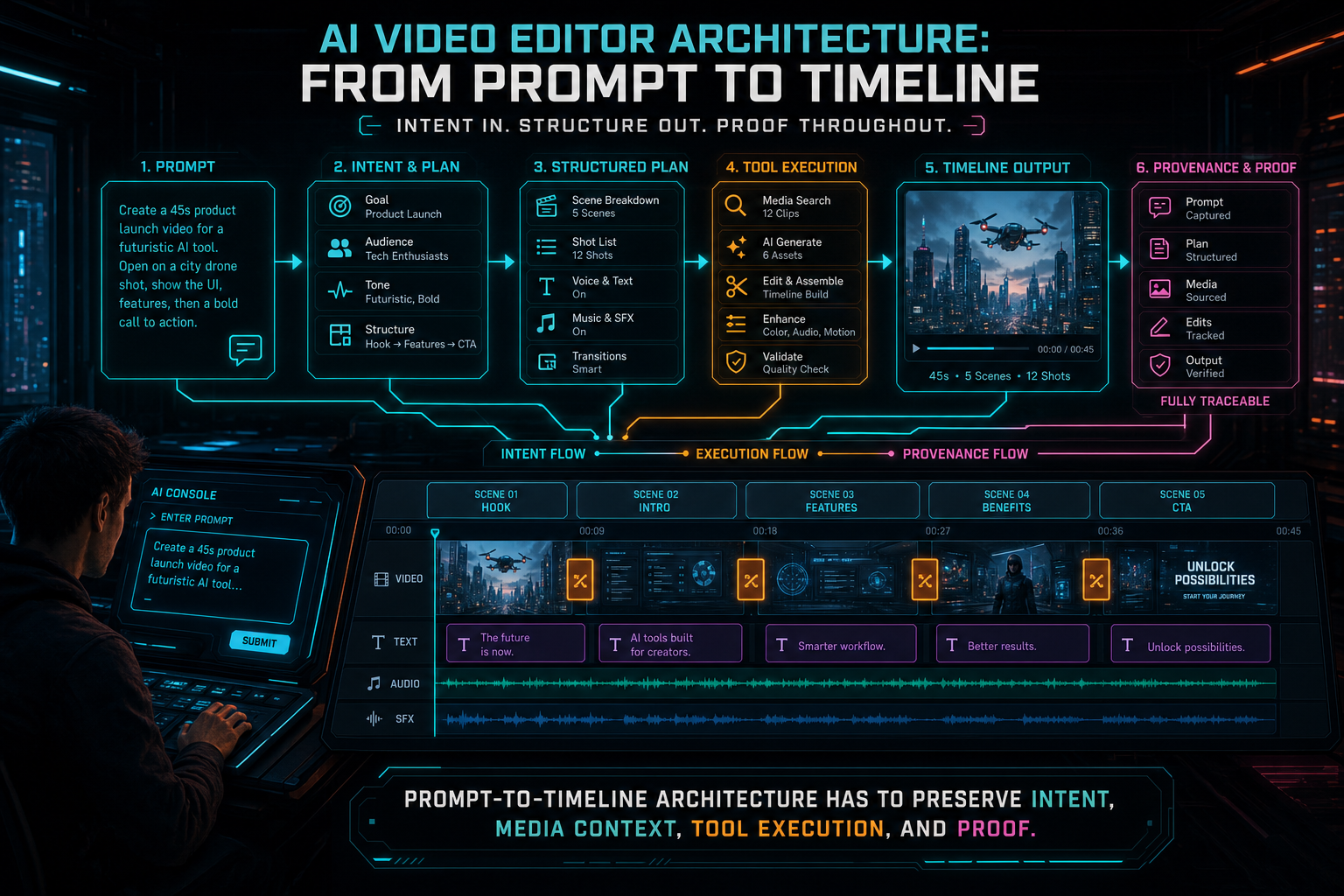
A dark VibeChopper edit lab showing a prompt becoming a structured video timeline.
Developer Notes17 min read

AI Video Editor Architecture: From Prompt to Timeline

An AI video editor is not a prompt box glued to a render button. The durable version is a product architecture that turns intent into validated plans, native timeline tool calls, media records, verification steps, and renderable output.

AI video editortimeline architecturenatural language editingvideo editing backend
Read the post
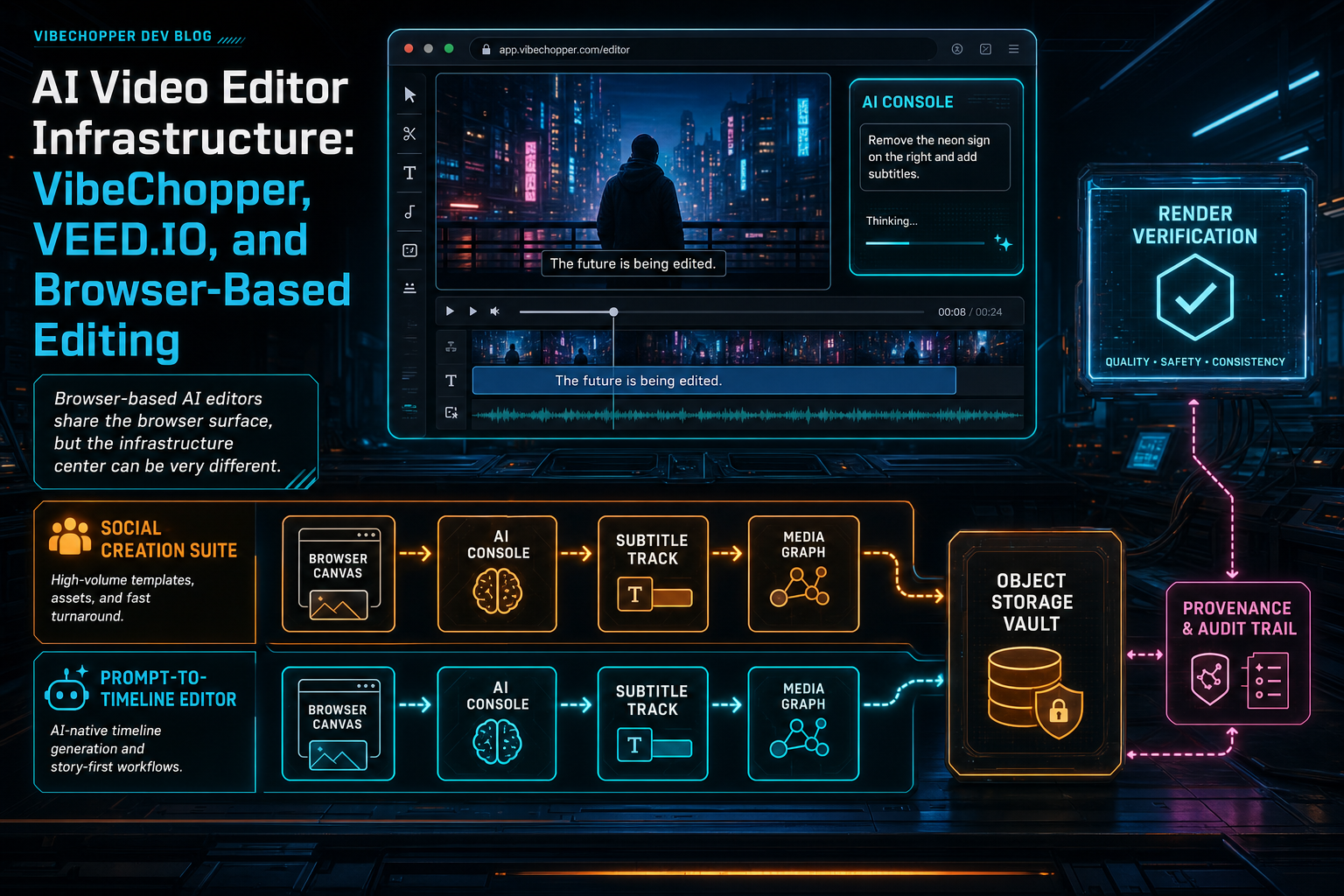
A dark VibeChopper edit lab comparing browser AI video editor infrastructure patterns.
Developer Notes16 min read

AI Video Editor Infrastructure: VibeChopper, VEED.IO, and Browser-Based Editing

Browser-based video editors are not one architecture. VEED.IO shows how broad online creation workflows can package AI generation, subtitles, avatars, templates, and quick editing for social output. VibeChopper is built around a different infrastructure center: prompt-to-timeline editing, durable media provenance, server-side validation, object storage, and render verification.

AI video editorVEED.IObrowser video editoronline video editor
Read the post
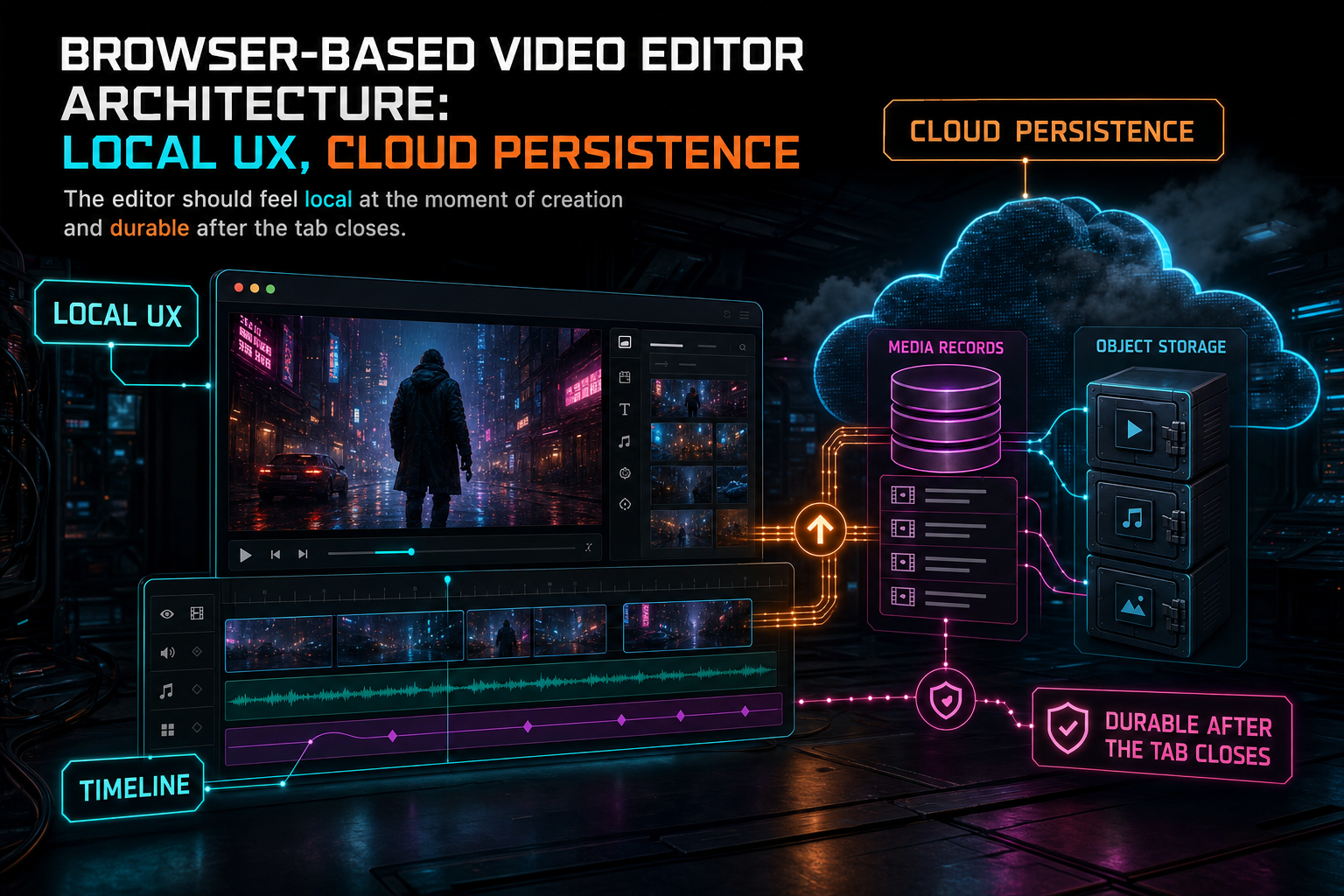
A dark VibeChopper edit lab showing local browser playback connected to cloud persistence.
Developer Notes16 min read

Browser-Based Video Editor Architecture: Local UX, Cloud Persistence

A browser-based video editor has to feel local while behaving like a durable cloud product. The winning architecture keeps preview, timeline interaction, and early media inspection close to the browser, then persists source media, derived assets, AI context, and render artifacts through server-owned contracts.

browser based video editoronline video editorcloud persistencevideo editor architecture
Read the post
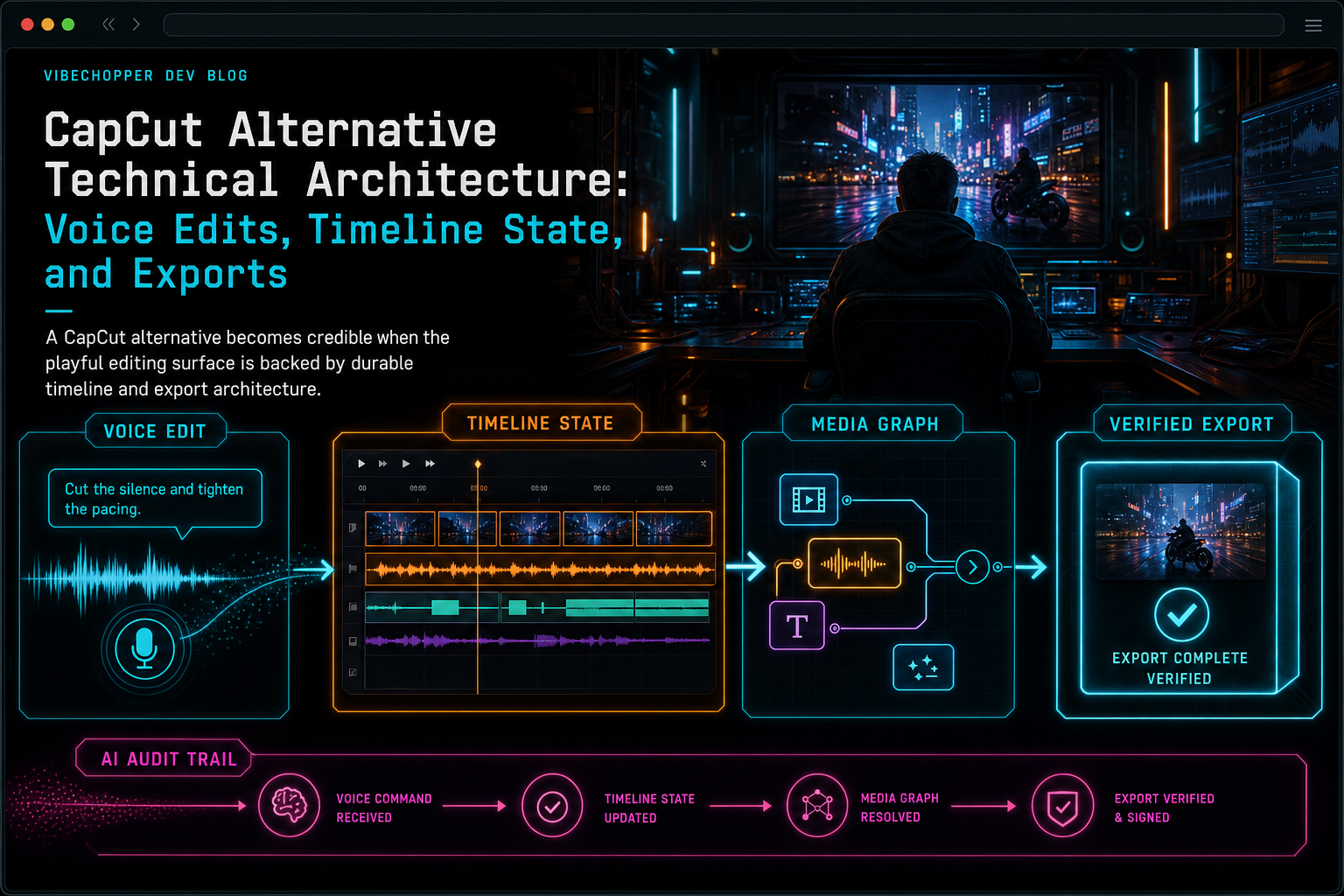
A dark VibeChopper edit lab showing voice commands, timeline state, and verified exports for a CapCut alternative.
Developer Notes15 min read

CapCut Alternative Technical Architecture: Voice Edits, Timeline State, and Exports

A credible CapCut alternative is not only a different editing surface. It needs a durable architecture for voice commands, transcript and frame context, native timeline operations, upload recovery, media provenance, and exports that can be verified after an AI-assisted edit.

CapCut alternativeAI video editorvoice video editingtimeline architecture
Read the post
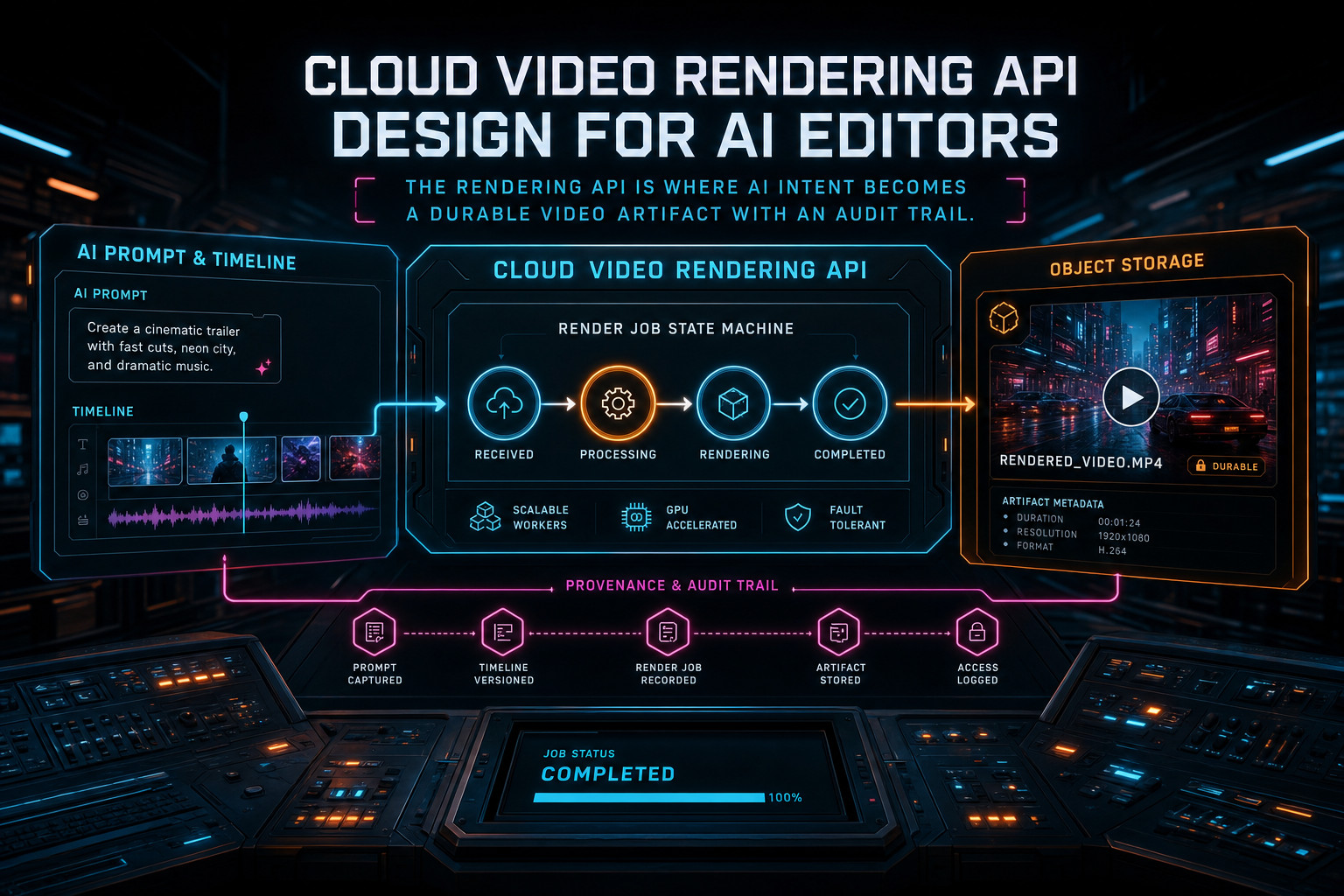
A dark VibeChopper developer console showing an AI timeline flowing into a cloud video rendering API.
Developer Notes17 min read

Cloud Video Rendering API Design for AI Editors

A cloud video rendering API for an AI editor is not only a job endpoint around FFmpeg. It is the boundary where prompts, timeline edits, media provenance, storage paths, progress events, failures, and verified export artifacts become one dependable product contract.

cloud video renderingvideo rendering APIAI video editorFFmpeg
Read the post
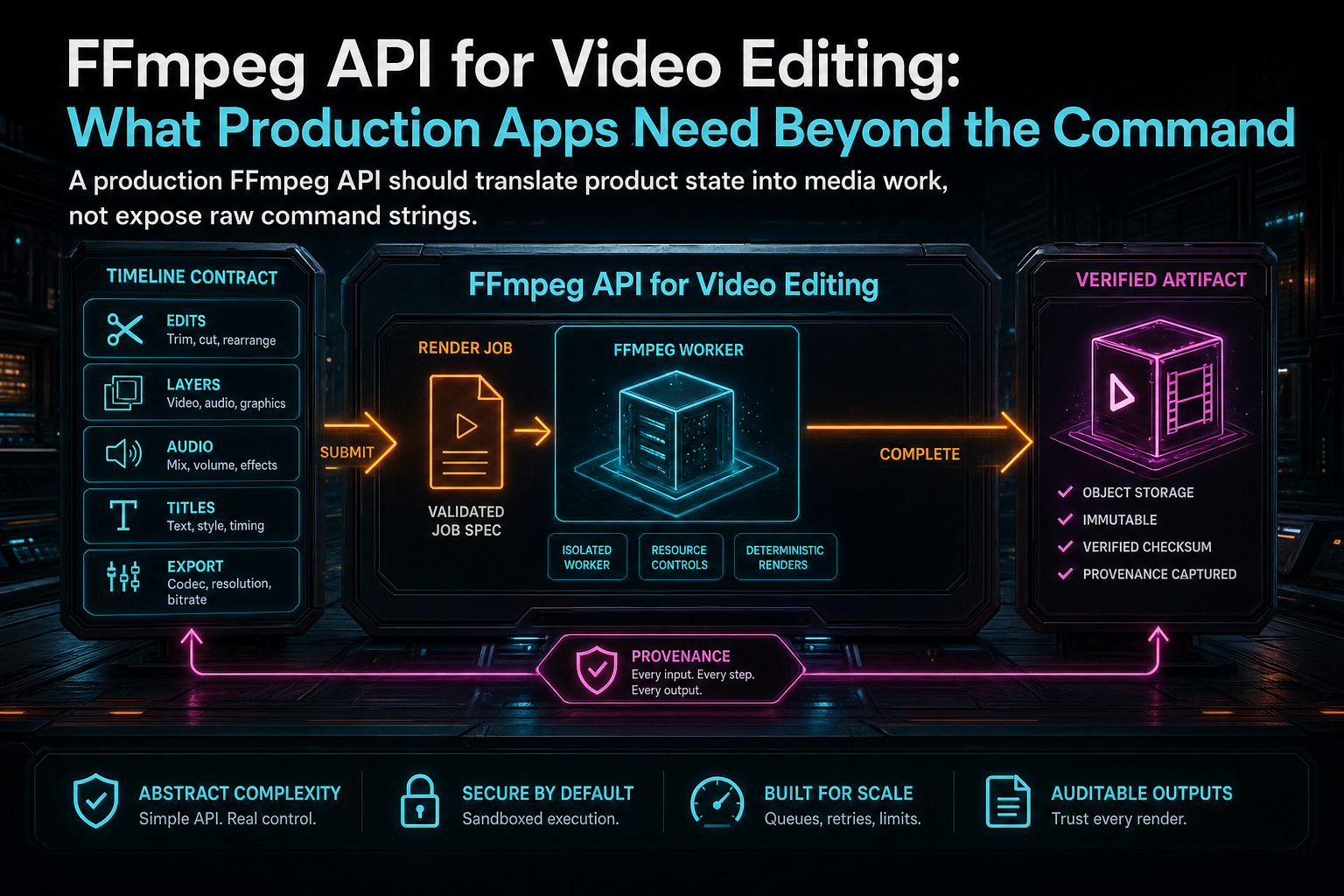
A dark VibeChopper production console showing an FFmpeg API turning timeline data into a verified video artifact.
Developer Notes15 min read

FFmpeg API for Video Editing: What Production Apps Need Beyond the Command

A useful FFmpeg API is not a remote shell for media commands. Production video editors need a typed timeline contract, authenticated media resolution, durable render jobs, progress, idempotency, object storage, verification, and provenance that survives refreshes, retries, AI edits, and support cases.

FFmpeg APIvideo editing APIcloud renderingAI video editor
Read the post
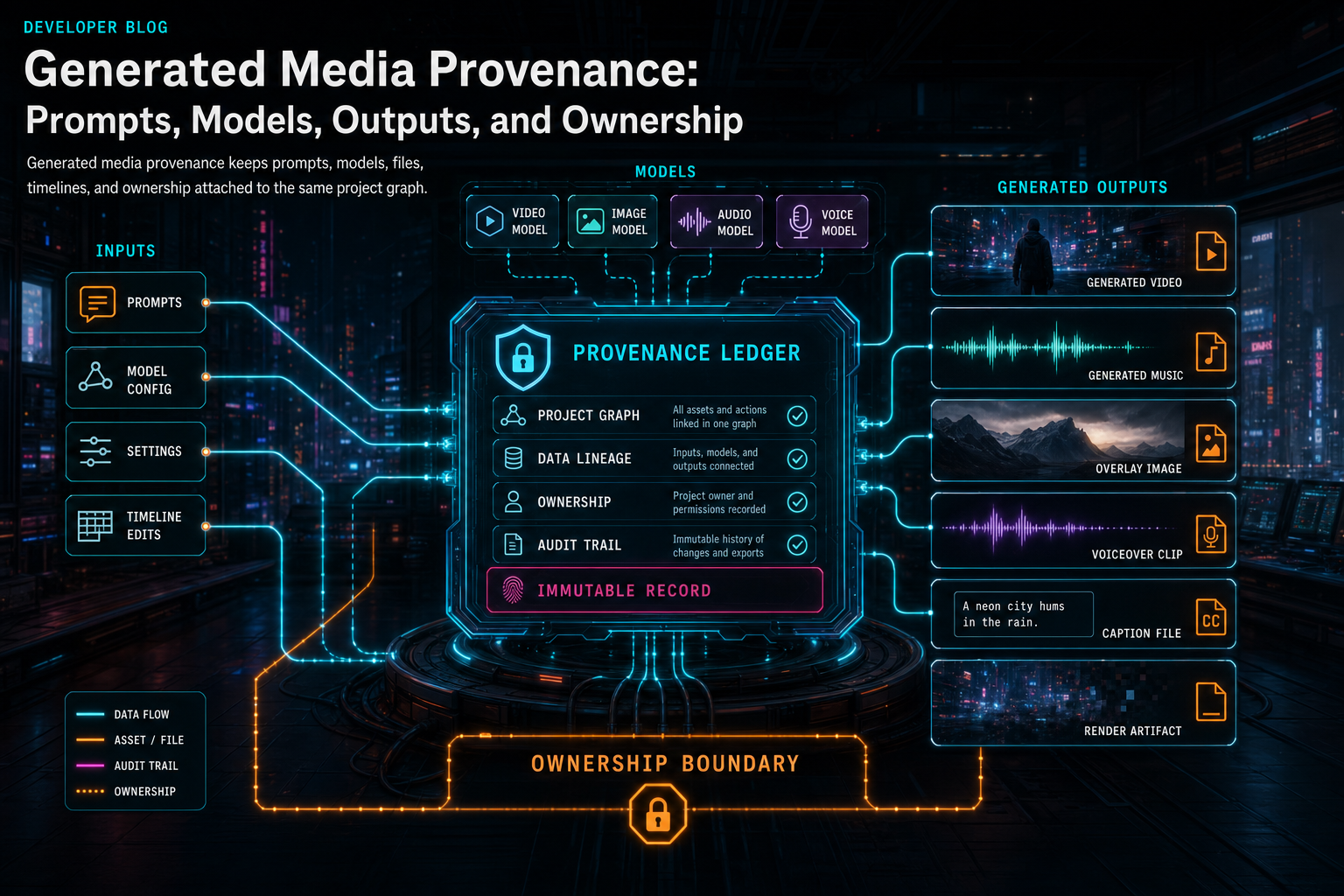
A dark VibeChopper edit lab showing prompts, models, generated media outputs, and ownership records connected in one provenance ledger.
Developer Notes16 min read

Generated Media Provenance: Prompts, Models, Outputs, and Ownership

Generated media provenance is the product contract that connects a user's creative request to the model call, output file, storage path, timeline usage, ownership boundary, and final render. Without it, AI assets become loose files. With it, they become inspectable parts of the edit.

generated media provenanceAI video editorasset ownershipprompt metadata
Read the post
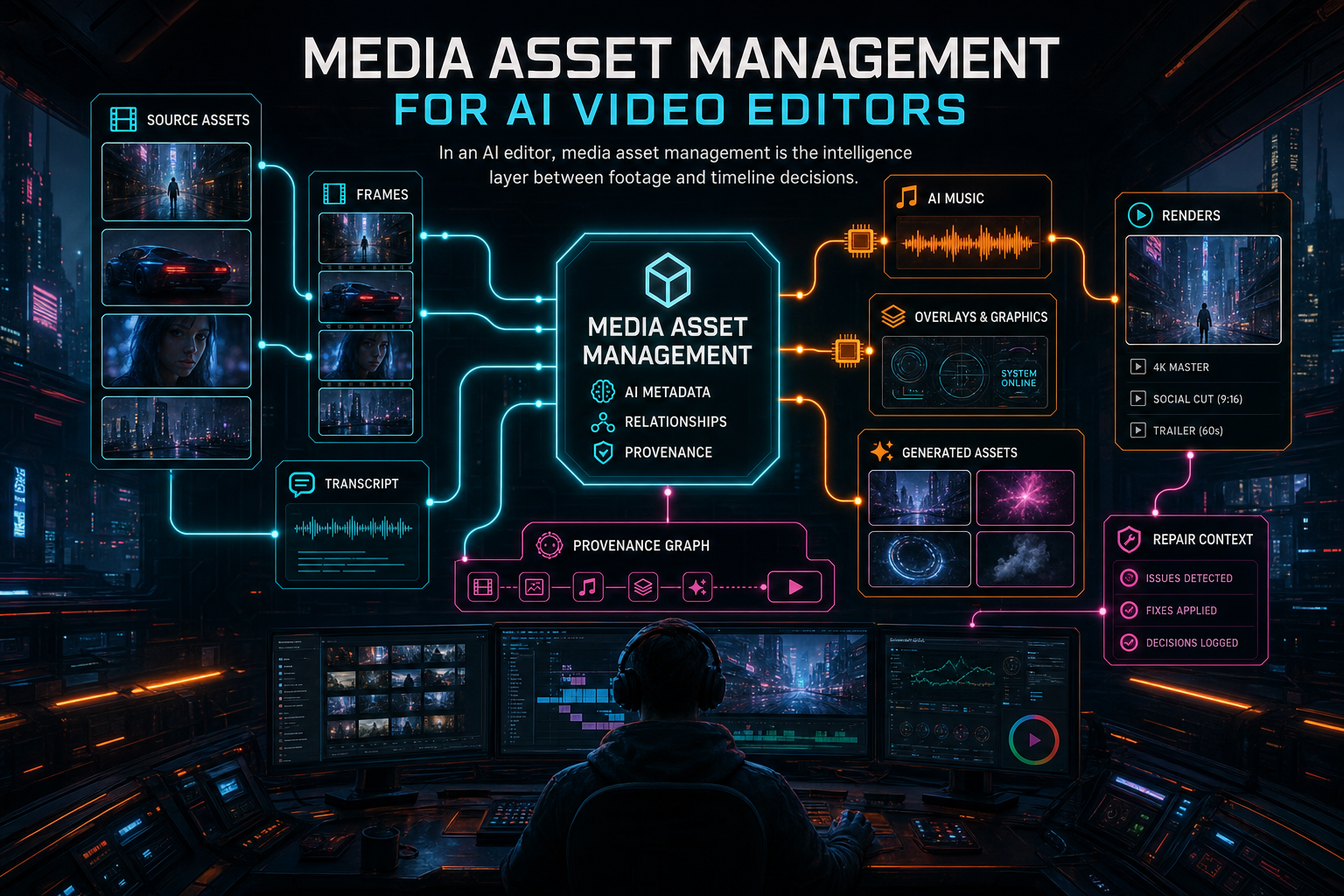
A dark VibeChopper media asset command center showing source clips, AI metadata, generated assets, and renders connected in one graph.
Developer Notes18 min read

Media Asset Management for AI Video Editors

Media asset management for an AI video editor is not a file browser with thumbnails. It is the system that keeps source footage, extracted frames, transcripts, generated music, overlays, renders, plan assets, AI edit runs, object storage paths, and repair context connected enough for humans and agents to make reliable editing decisions.

media asset managementAI video editorasset provenancevideo metadata
Read the post
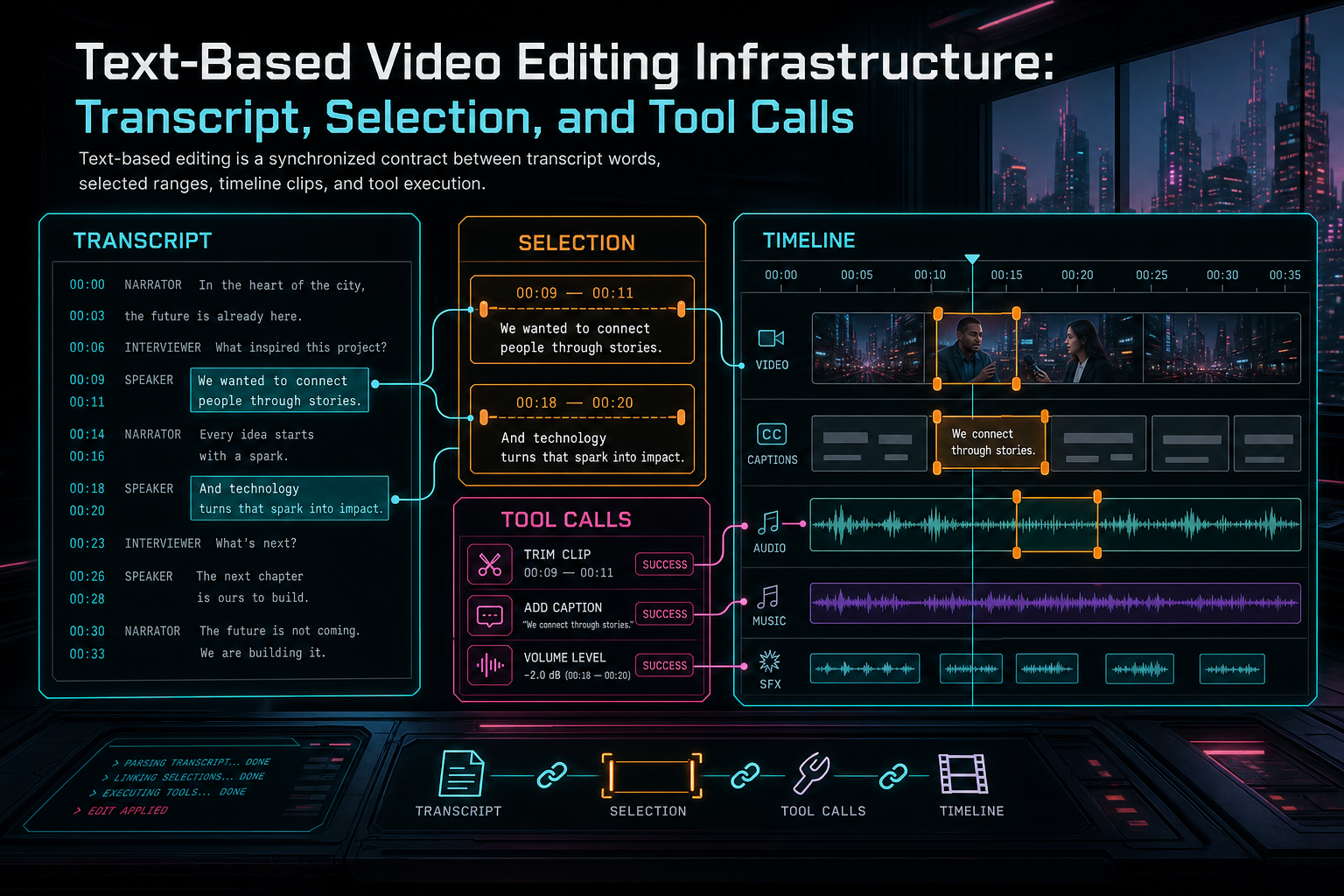
A dark VibeChopper edit lab where transcript text is linked to a multitrack video timeline.
Developer Notes16 min read

Text-Based Video Editing Infrastructure: Transcript, Selection, and Tool Calls

Text-based video editing works when transcript words, timeline timecodes, selected ranges, and native editor tools share one contract. The product can feel like editing a document, but the infrastructure still has to protect project state, media provenance, and renderable timeline output.

text-based video editingtranscript editingAI video editortimeline tool calls
Read the post
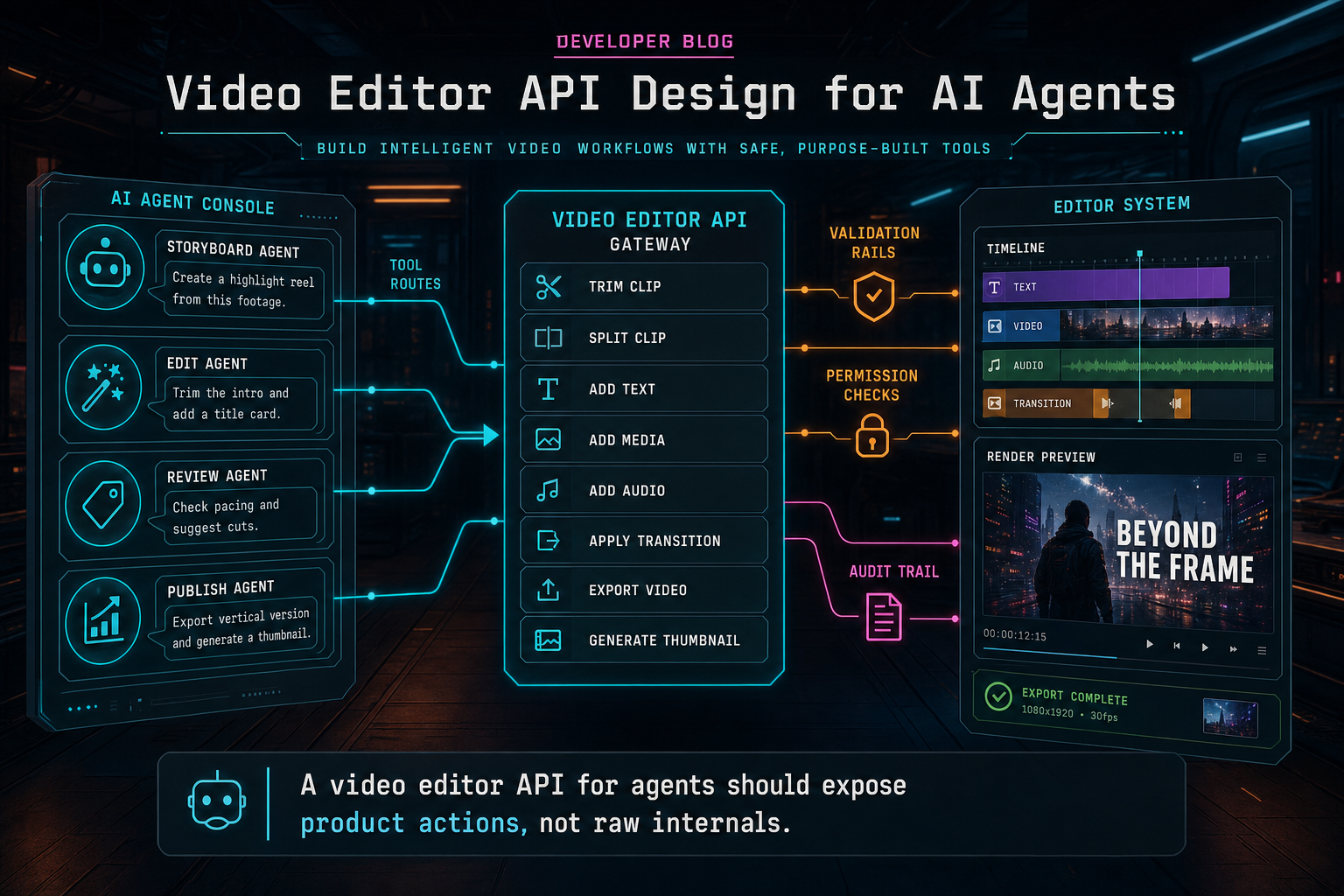
A dark VibeChopper developer console showing AI agents calling safe video editor API tools.
Developer Notes16 min read

Video Editor API Design for AI Agents

An API for AI video editing agents should expose bounded timeline tools, not raw database access or command strings. The durable design uses schemas, ownership checks, idempotency, media provenance, render artifacts, and audit trails so agents can move fast without bypassing the editor.

video editor APIAI agentsAI video editortimeline tools
Read the post
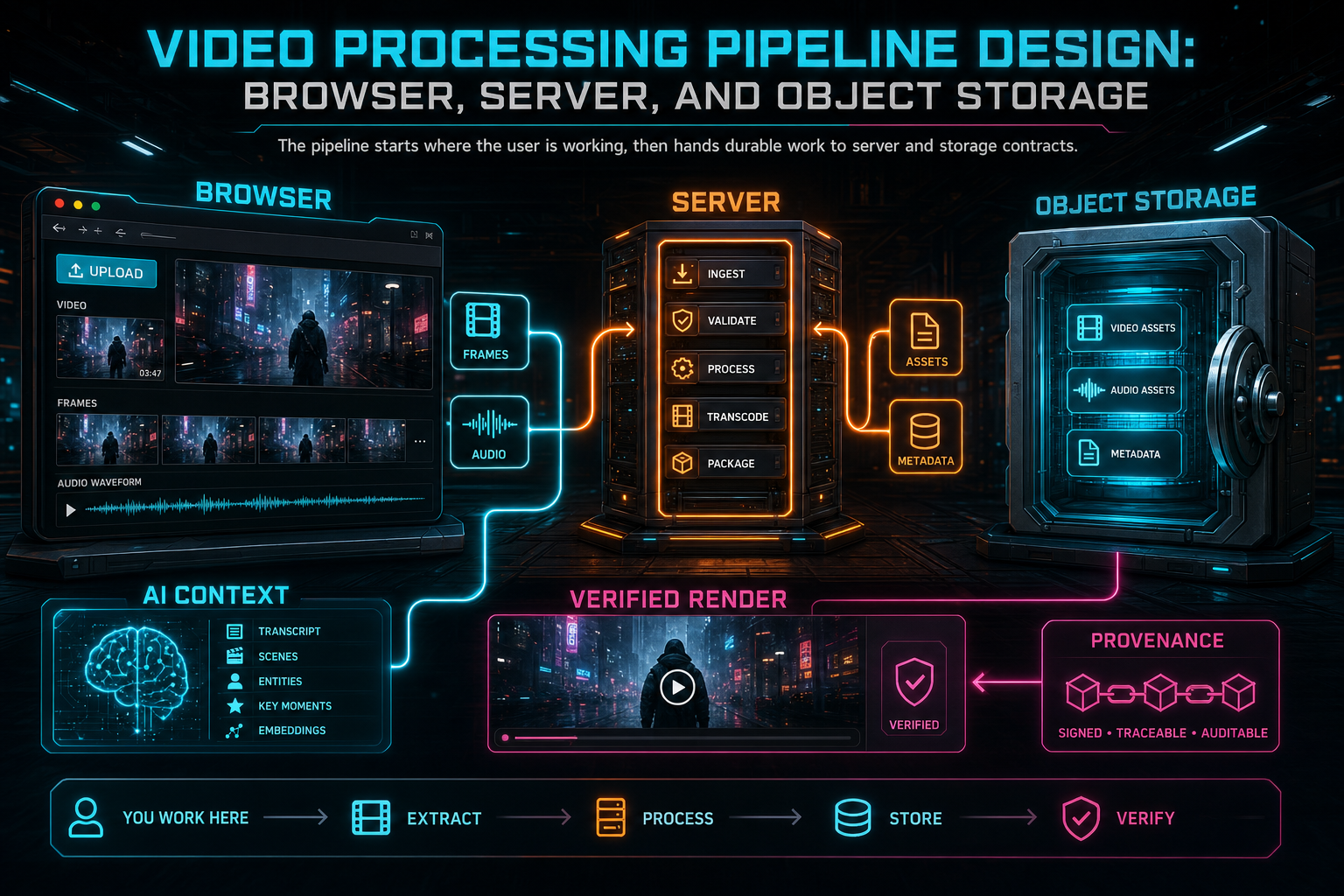
A VibeChopper video processing pipeline flowing from browser upload through server processing into object storage.
Developer Notes18 min read

Video Processing Pipeline Design: Browser, Server, and Object Storage

A reliable video processing pipeline is not one giant upload followed by one giant encode. For an AI video editor, the better shape is a set of typed handoffs: browser sampling and preview, authenticated server processing, durable object storage, recoverable progress, AI-readable media records, and verified render artifacts.

video processing pipelinebrowser video editorobject storagecloud video processing
Read the post
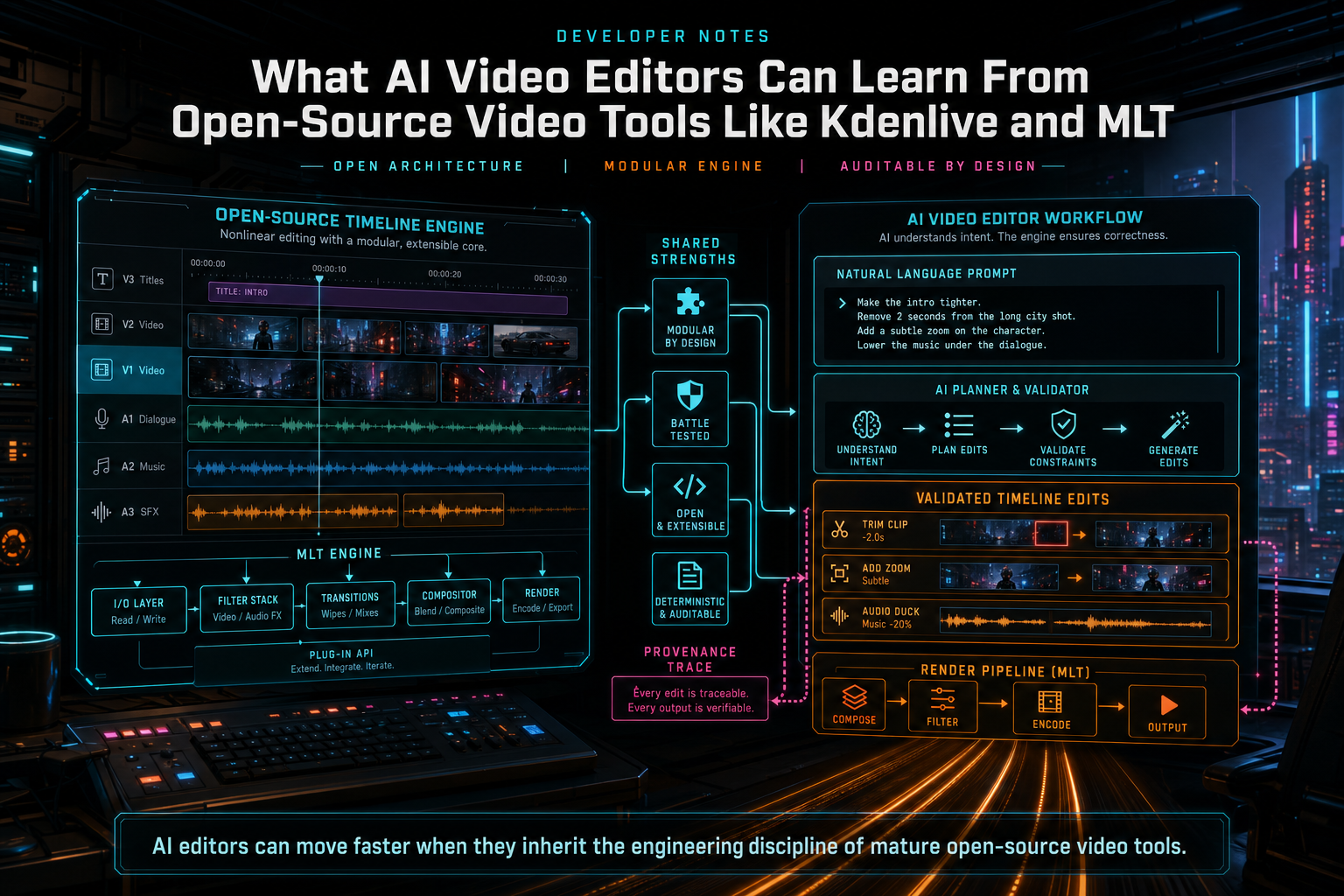
A dark VibeChopper edit lab comparing an open-source timeline engine with an AI video editor workflow.
Developer Notes15 min read

What AI Video Editors Can Learn From Open-Source Video Tools Like Kdenlive and MLT

Open-source video tools show that durable editing software is built on explicit timeline models, plugin boundaries, proxy workflows, inspectable effects, and repeatable rendering. AI video editors should copy that discipline before adding model-driven automation.

AI video editoropen-source video editingKdenliveMLT framework
Read the post