VibeChopper Blog

Developer Notes

Technical notes on AI video editing infrastructure, media processing, render verification, object storage, and production-grade creative tools.

Filter by tag

Clear
All tags AI video editorobject storageFFmpegasset provenanceDATA Remediationtool eventsAI agentscloud renderingcloud video renderingnatural language editingrender verificationtechnical SEOvideo renderingAI edit runsAI video analysisbrowser video editorbrowser video processingfallbacksframe extractionmedia graphobservabilityonline video editorprovenanceresumable uploadstimeline architecturetimeline editingupload reliabilityvideo editingvideo editor backendvideo metadataagent scoringagent securityAI audit trailAI edit planningAI edit run schemaAI editingAI infrastructureAI musicAI music generationAI timelinesAI video editingAI video editor observabilityAI video toolsAI workflow audit trailasset contextasset ownershipaudit trailauthautomatic subtitlesbackend streamsbatch uploadbearer tokensbrowser based video editorbrowser storageCapCut alternativecaption infrastructureclip effectscloud compositorcloud persistencecloud video processingcollaborationcreative briefscross-device editingdatabase schemadeep linksdeveloper notesemail bootstrapexport reliabilityexport workflowfeedback automationFFmpeg APIFFmpeg workersGemini Lyriagenerated media provenancegenerated music bedheadless workersHMACincident automationincident responseiOS video editoriPad video editorJSON validationJWT fallbackKdenlivelarge media projectsmedia asset graphmedia asset managementmedia processingmemory pressureMLT frameworkmulti-device syncnative app authnative authopen-source video editingowned authpasskeyspasswordless loginproduct infrastructureproduction reliabilityproduction repairprogress trackingproject provenance graphprompt metadataprovider harnessrender hygienerender pipelinesrender testsrepair loopsrepair workflowsReplit Autoscalerubricsscratch storagetelemetrytext-based video editingtimeline compositortimeline synctimeline tool callstimeline toolstransactional emailtranscript editingtranscript-based editingupload sessionsupload telemetryusage logsVEED.IOvideo editing APIvideo editing architecturevideo editing backendvideo editor APIvideo editor architecturevideo editor infrastructurevideo editor metadatavideo processing pipelinevideo provenancevideo rendering APIvideo timelinevideo transcription editorvideo upload architecturevideo upload UXvoice video editingweb video editorWebAuthnworker callbacks
A dark VibeChopper render console showing a timeline flowing through FFmpeg into object storage.
Developer Notes16 min read

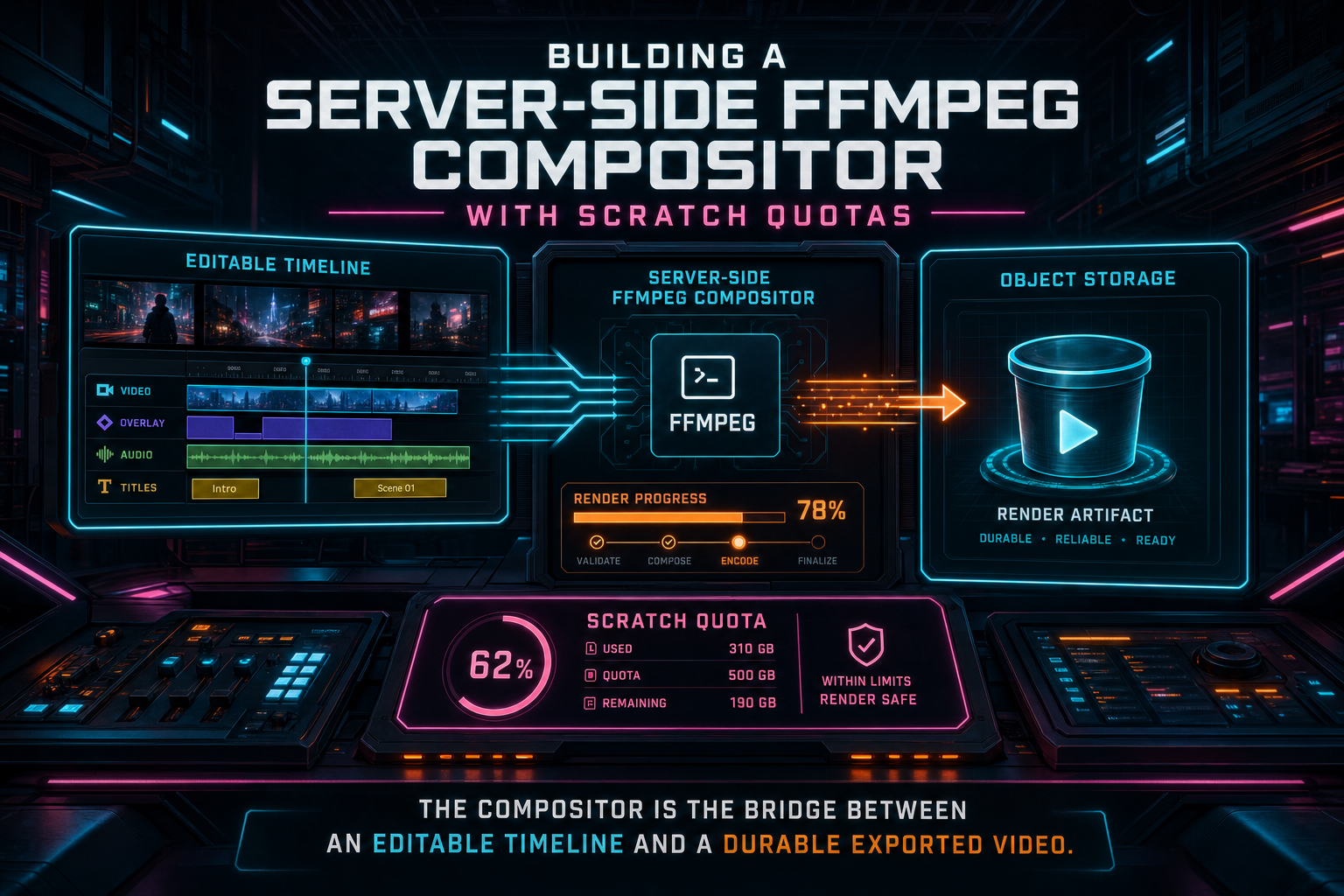
Building a Server-Side FFmpeg Compositor With Scratch Quotas

VibeChopper's server-side compositor turns an editable timeline into a durable render without letting temporary files become the product. The render path downloads only project-owned media, builds one FFmpeg graph for clips, effects, transitions, overlays, adjustment tracks, and audio, enforces scratch quotas along the way, streams the result into object storage, and cleans the workspace after every attempt.

FFmpegvideo renderingscratch storagecloud compositor
Read the post
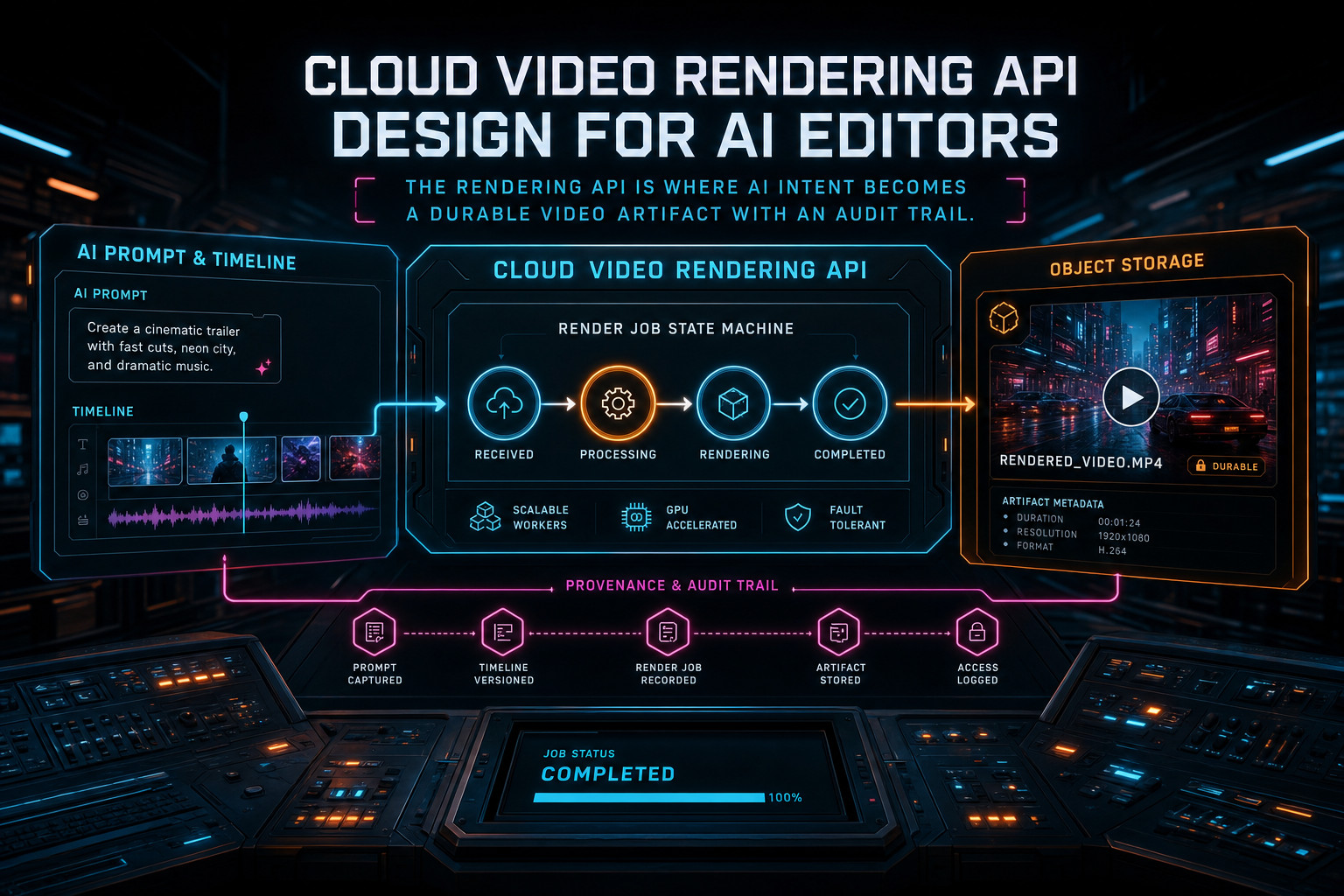
A dark VibeChopper developer console showing an AI timeline flowing into a cloud video rendering API.
Developer Notes17 min read

Cloud Video Rendering API Design for AI Editors

A cloud video rendering API for an AI editor is not only a job endpoint around FFmpeg. It is the boundary where prompts, timeline edits, media provenance, storage paths, progress events, failures, and verified export artifacts become one dependable product contract.

cloud video renderingvideo rendering APIAI video editorFFmpeg
Read the post
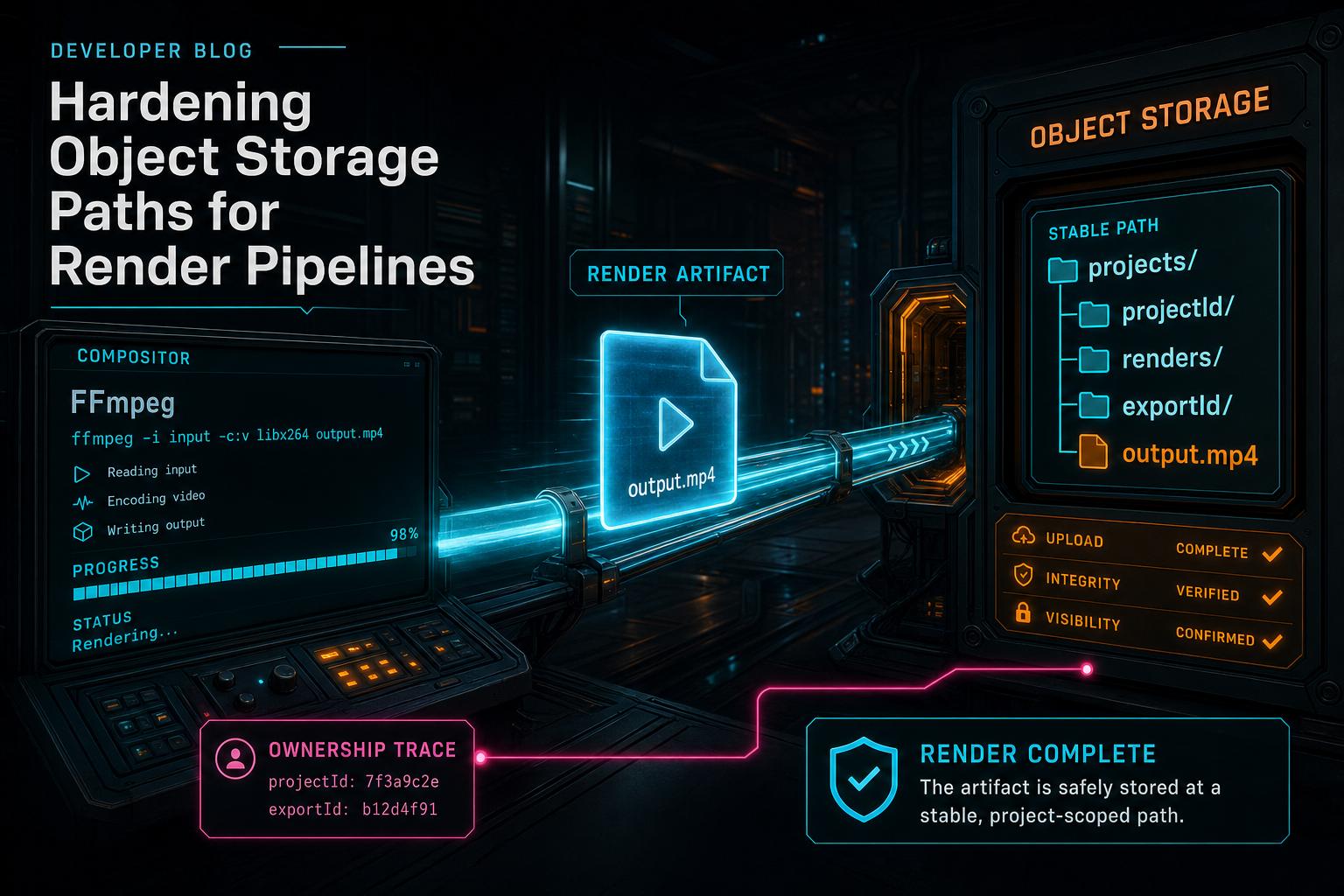
A dark VibeChopper render pipeline console showing FFmpeg output flowing into a stable object-storage path.
Developer Notes15 min read

Hardening Object Storage Paths for Render Pipelines

A render pipeline is only production-ready when the output path is as intentional as the edit. VibeChopper hardens render storage by giving each export a stable project-scoped object path, streaming completed media from scratch disk into object storage, normalizing object URLs, rejecting unsafe overlay fetches, cleaning temporary files, and preserving enough metadata for verification, media graphs, AI edit runs, and repair workflows.

object storagerender pipelinescloud renderingFFmpeg
Read the post
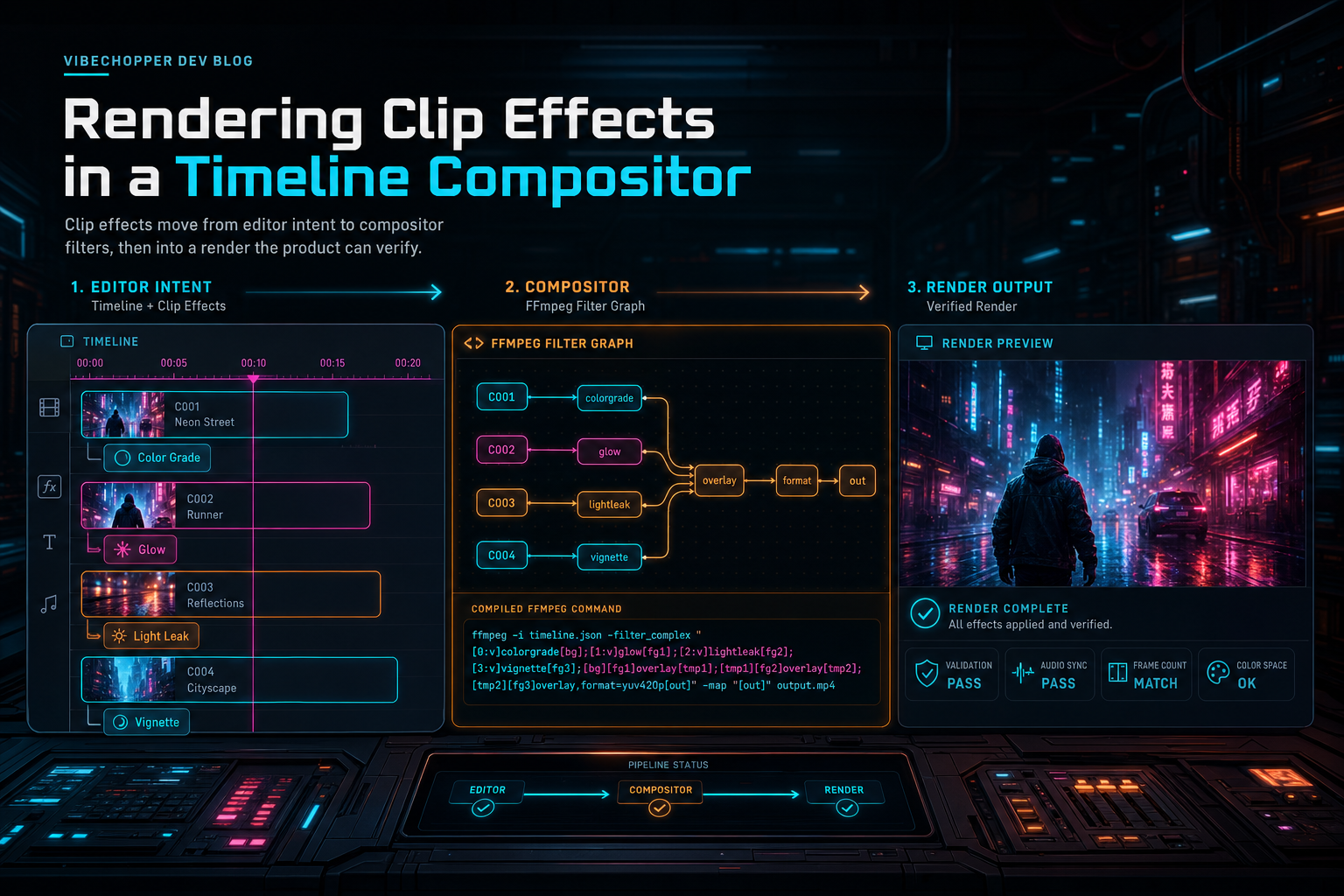
A dark VibeChopper compositor console showing clip effects compiled from a timeline into an FFmpeg filter graph.
Developer Notes16 min read

Rendering Clip Effects in a Timeline Compositor

Clip effects are easy to preview and hard to export correctly. VibeChopper treats every effect as timeline intent that must compile into a deterministic FFmpeg filter graph, survive trims and timing offsets, and remain testable without trusting visual luck.

timeline compositorclip effectsFFmpegvideo rendering
Read the post
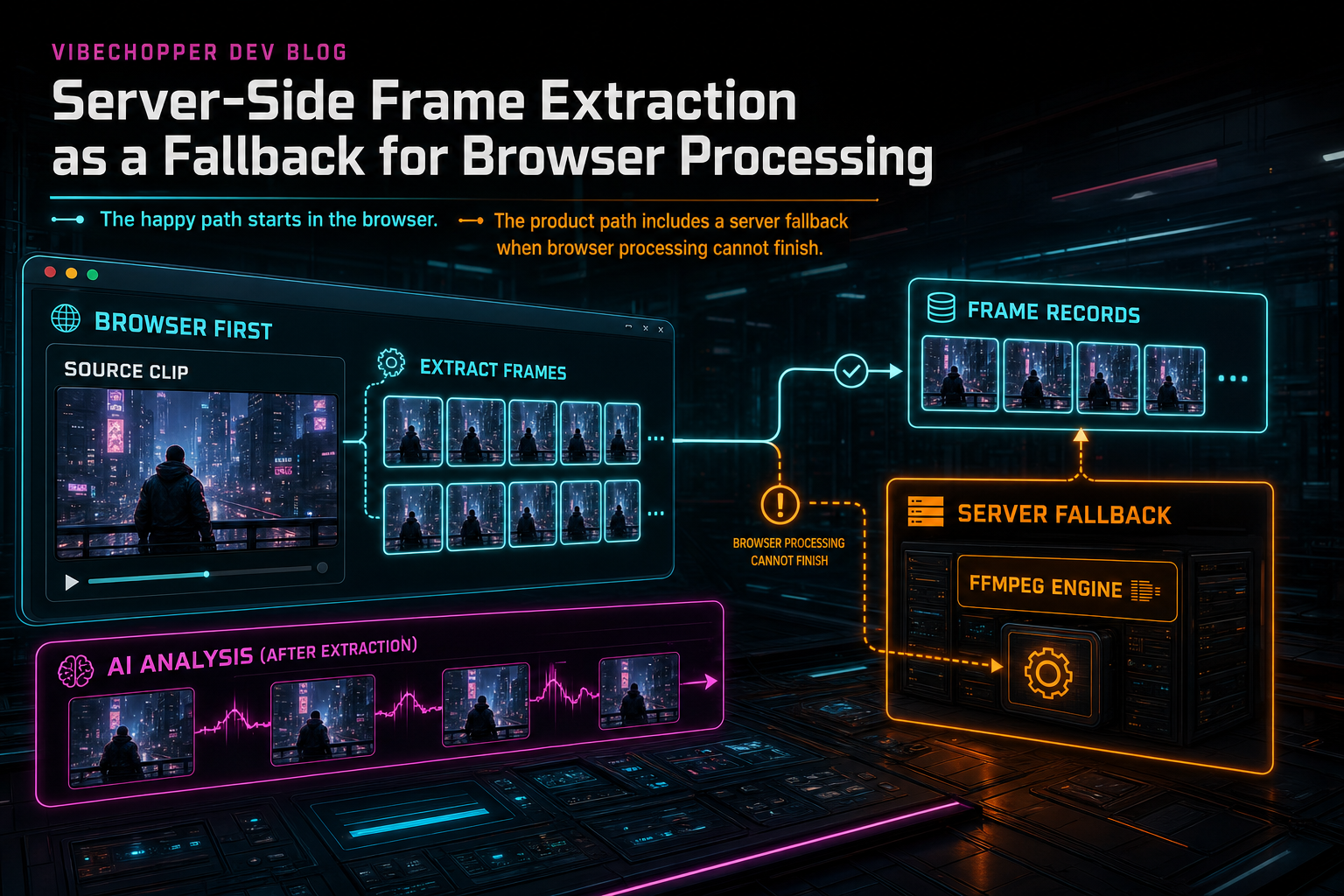
A VibeChopper processing console showing browser frame extraction handing off to server-side FFmpeg fallback.
Developer Notes16 min read

Server-Side Frame Extraction as a Fallback for Browser Processing

VibeChopper is browser-first for video processing, but browser-first cannot mean browser-only. The frame extraction fallback lets the editor keep moving when client decoding, memory pressure, unsupported codecs, or upload misses prevent local frames from reaching the AI analysis pipeline.

frame extractionbrowser video processingFFmpegfallbacks
Read the post