
Developer Notes and Creator Playbooks
Read VibeChopper Developer Notes and Creator Playbooks for technical architecture, creative workflows, and AI video editing strategy.
Filter by tag
ClearTechnical deep dives
Developer Notes
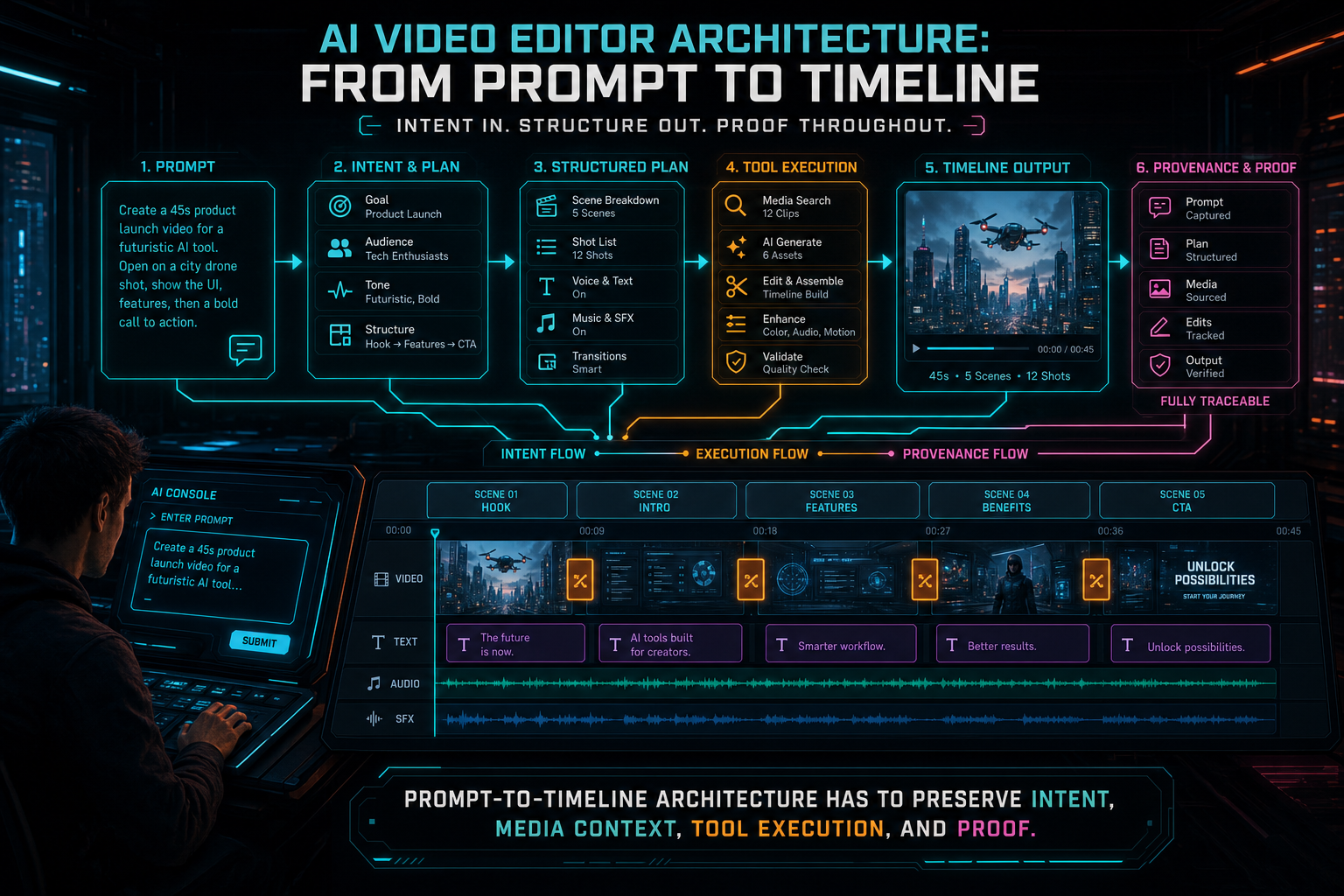
AI Video Editor Architecture: From Prompt to Timeline
An AI video editor is not a prompt box glued to a render button. The durable version is a product architecture that turns intent into validated plans, native timeline tool calls, media records, verification steps, and renderable output.
Read the post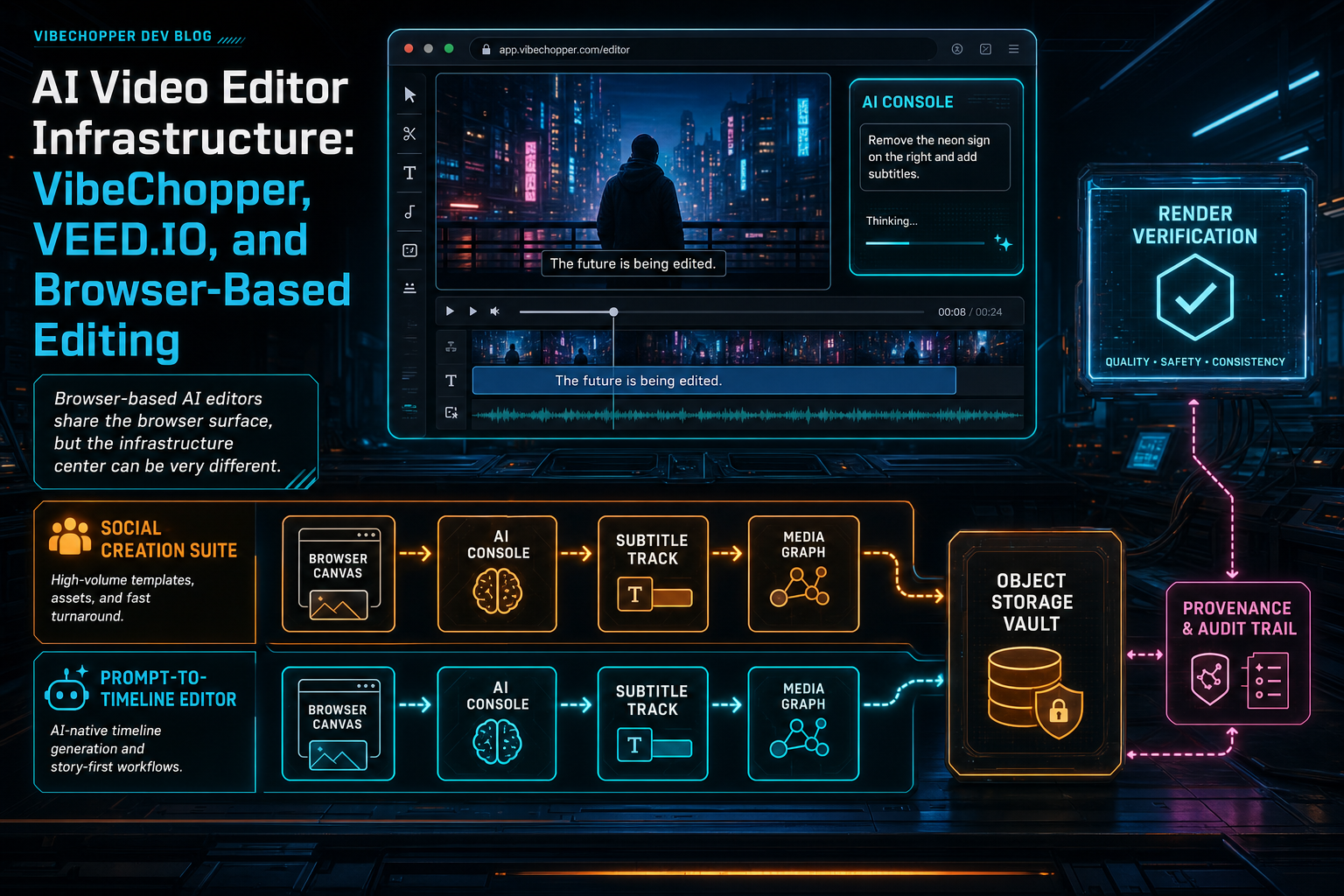
AI Video Editor Infrastructure: VibeChopper, VEED.IO, and Browser-Based Editing
Browser-based video editors are not one architecture. VEED.IO shows how broad online creation workflows can package AI generation, subtitles, avatars, templates, and quick editing for social output. VibeChopper is built around a different infrastructure center: prompt-to-timeline editing, durable media provenance, server-side validation, object storage, and render verification.
Read the post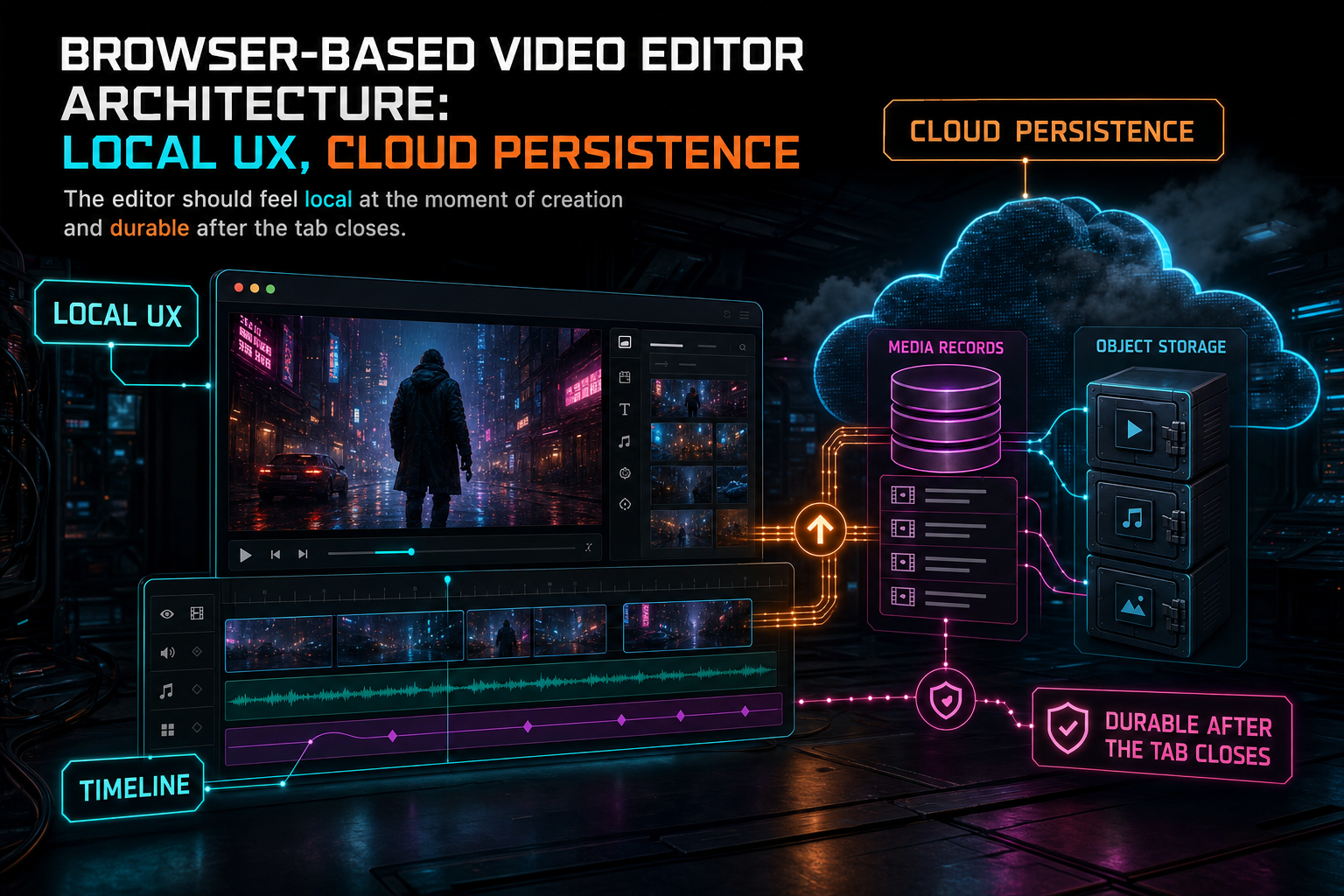
Browser-Based Video Editor Architecture: Local UX, Cloud Persistence
A browser-based video editor has to feel local while behaving like a durable cloud product. The winning architecture keeps preview, timeline interaction, and early media inspection close to the browser, then persists source media, derived assets, AI context, and render artifacts through server-owned contracts.
Read the post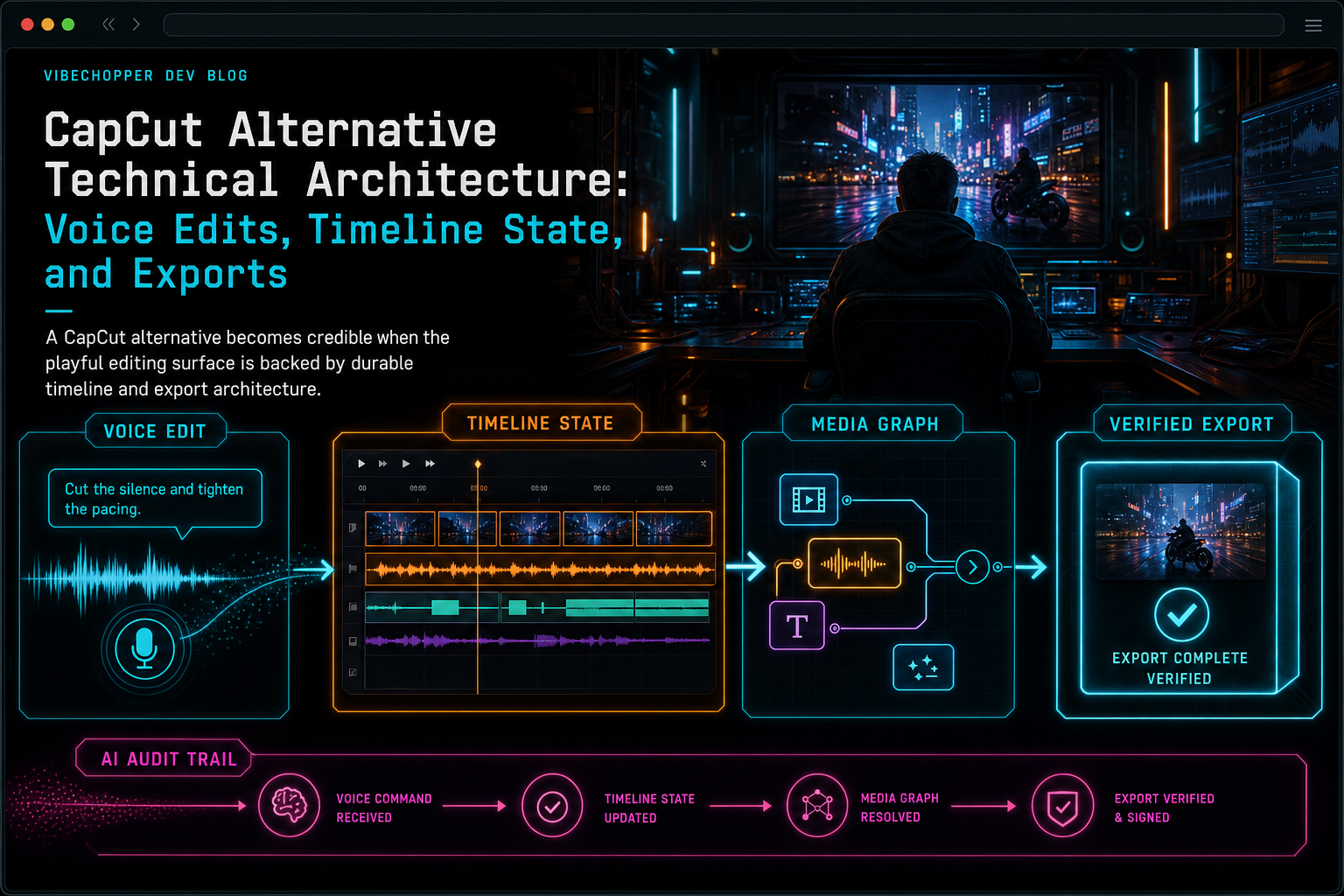
CapCut Alternative Technical Architecture: Voice Edits, Timeline State, and Exports
A credible CapCut alternative is not only a different editing surface. It needs a durable architecture for voice commands, transcript and frame context, native timeline operations, upload recovery, media provenance, and exports that can be verified after an AI-assisted edit.
Read the post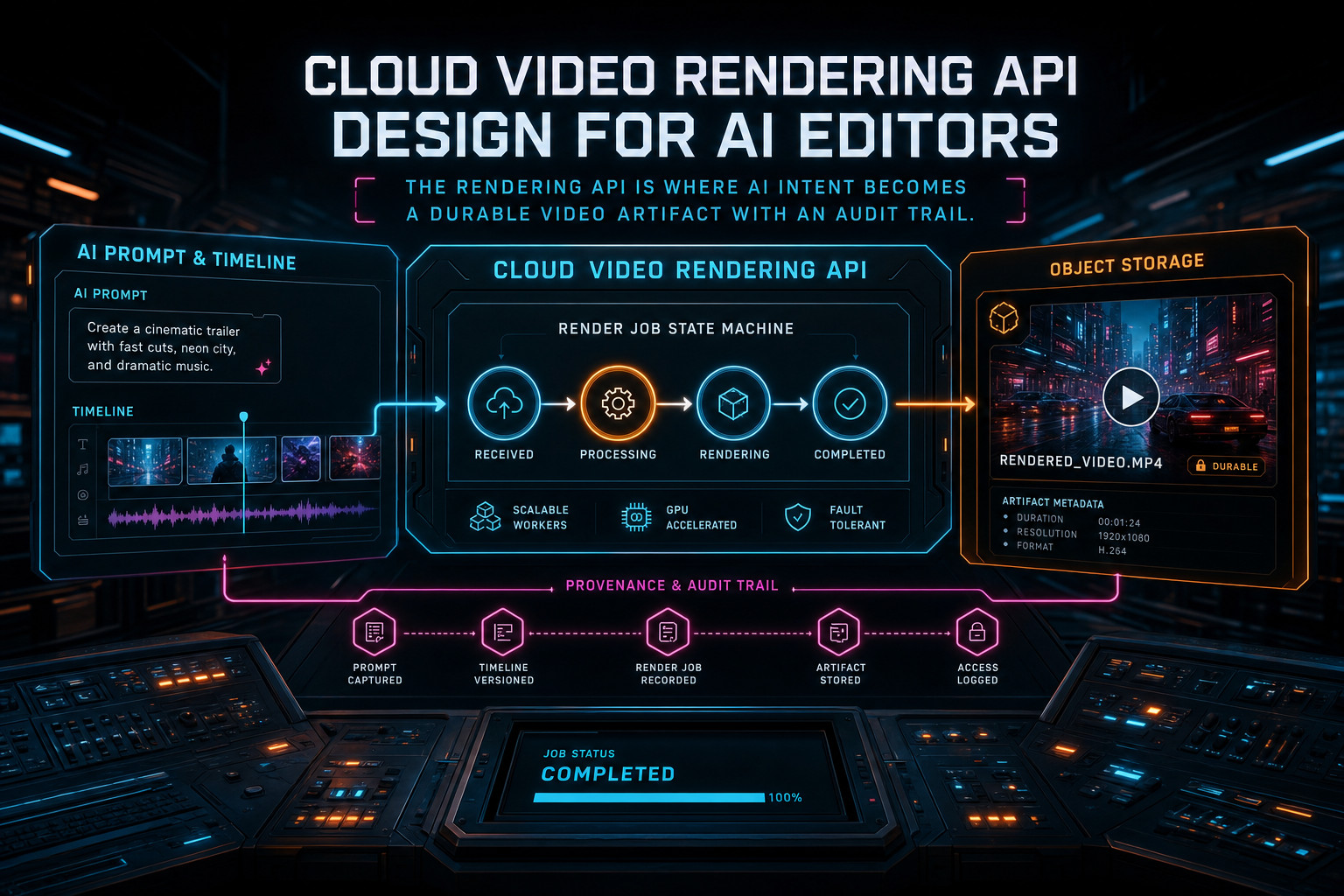
Cloud Video Rendering API Design for AI Editors
A cloud video rendering API for an AI editor is not only a job endpoint around FFmpeg. It is the boundary where prompts, timeline edits, media provenance, storage paths, progress events, failures, and verified export artifacts become one dependable product contract.
Read the post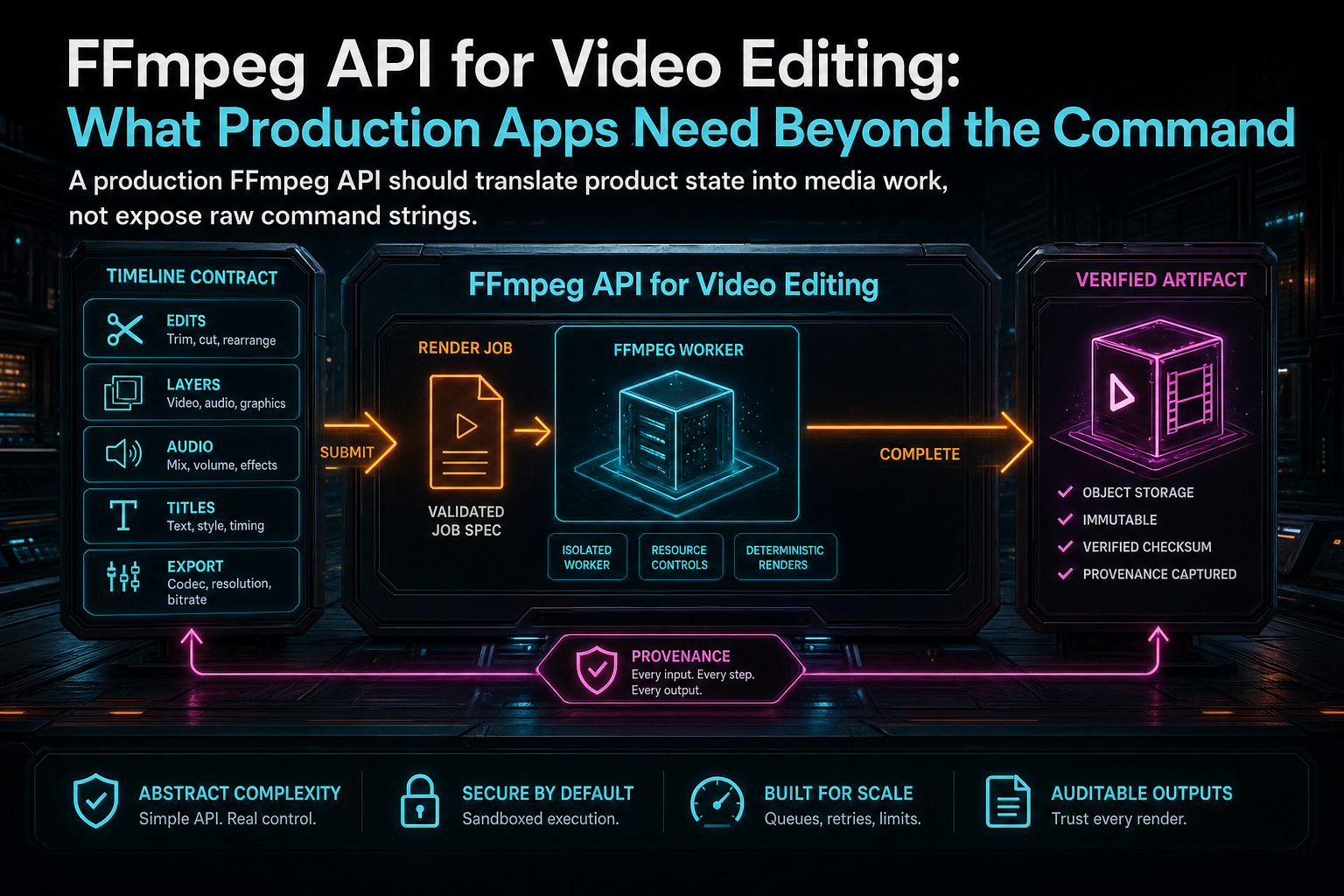
FFmpeg API for Video Editing: What Production Apps Need Beyond the Command
A useful FFmpeg API is not a remote shell for media commands. Production video editors need a typed timeline contract, authenticated media resolution, durable render jobs, progress, idempotency, object storage, verification, and provenance that survives refreshes, retries, AI edits, and support cases.
Read the post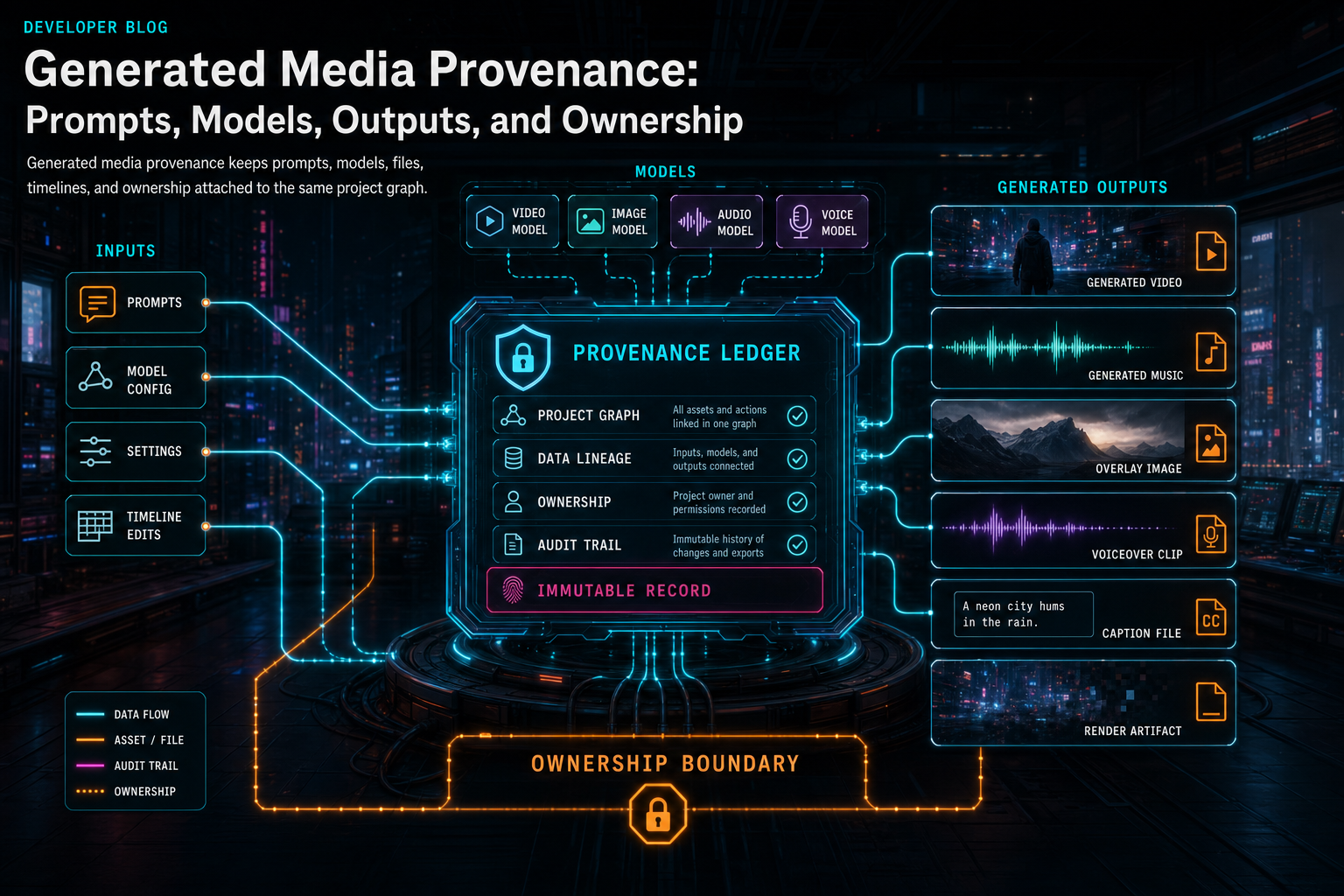
Generated Media Provenance: Prompts, Models, Outputs, and Ownership
Generated media provenance is the product contract that connects a user's creative request to the model call, output file, storage path, timeline usage, ownership boundary, and final render. Without it, AI assets become loose files. With it, they become inspectable parts of the edit.
Read the post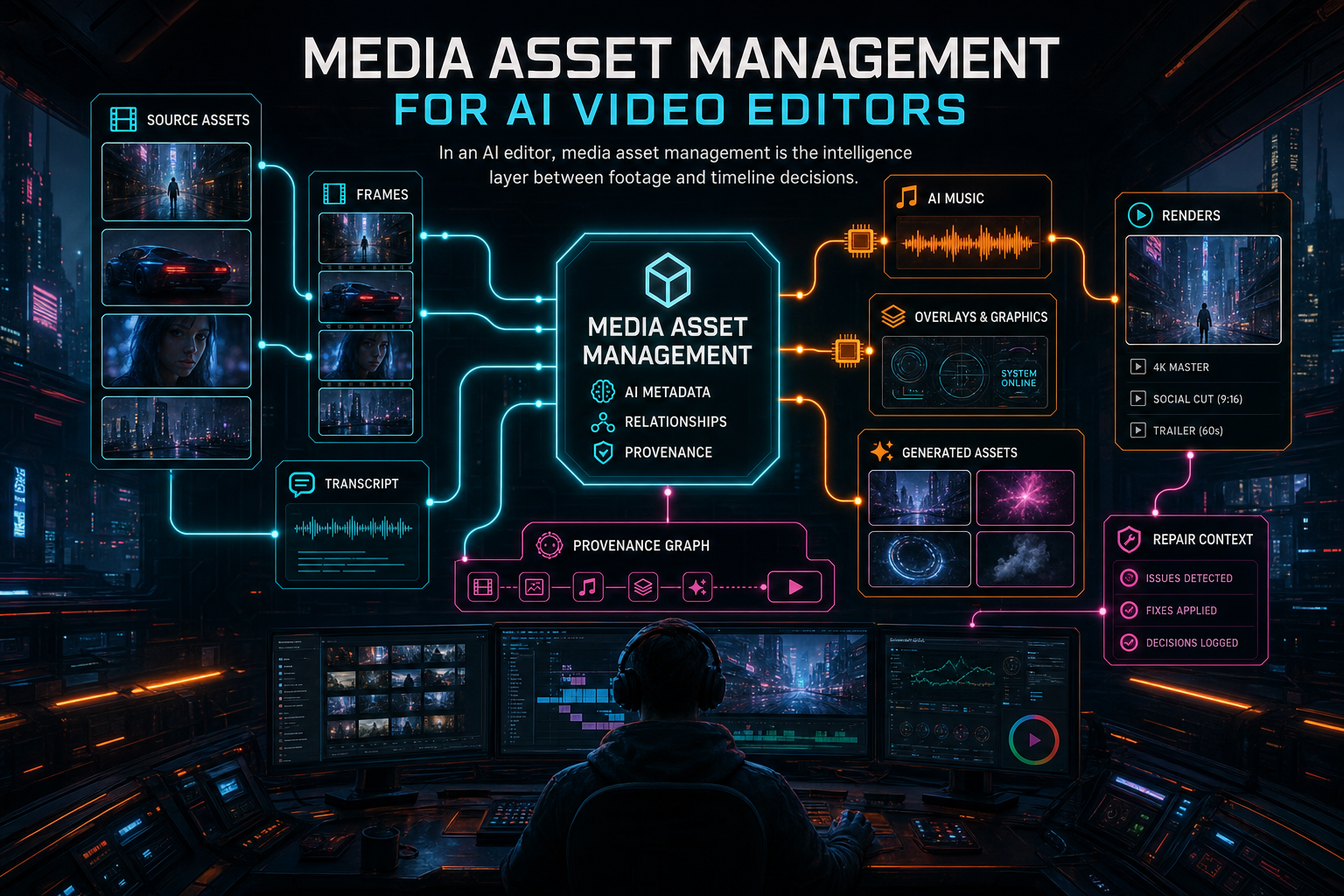
Media Asset Management for AI Video Editors
Media asset management for an AI video editor is not a file browser with thumbnails. It is the system that keeps source footage, extracted frames, transcripts, generated music, overlays, renders, plan assets, AI edit runs, object storage paths, and repair context connected enough for humans and agents to make reliable editing decisions.
Read the post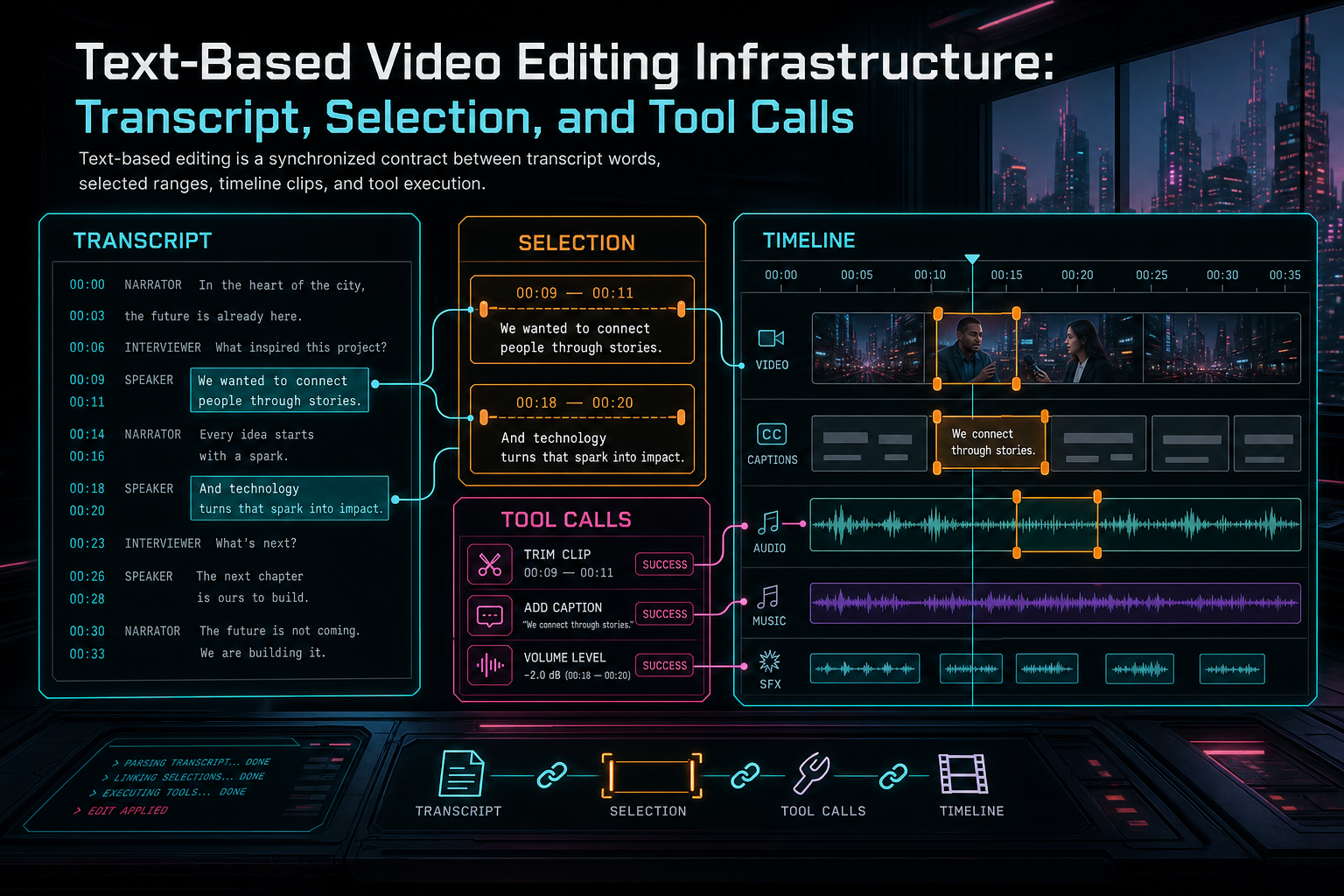
Text-Based Video Editing Infrastructure: Transcript, Selection, and Tool Calls
Text-based video editing works when transcript words, timeline timecodes, selected ranges, and native editor tools share one contract. The product can feel like editing a document, but the infrastructure still has to protect project state, media provenance, and renderable timeline output.
Read the post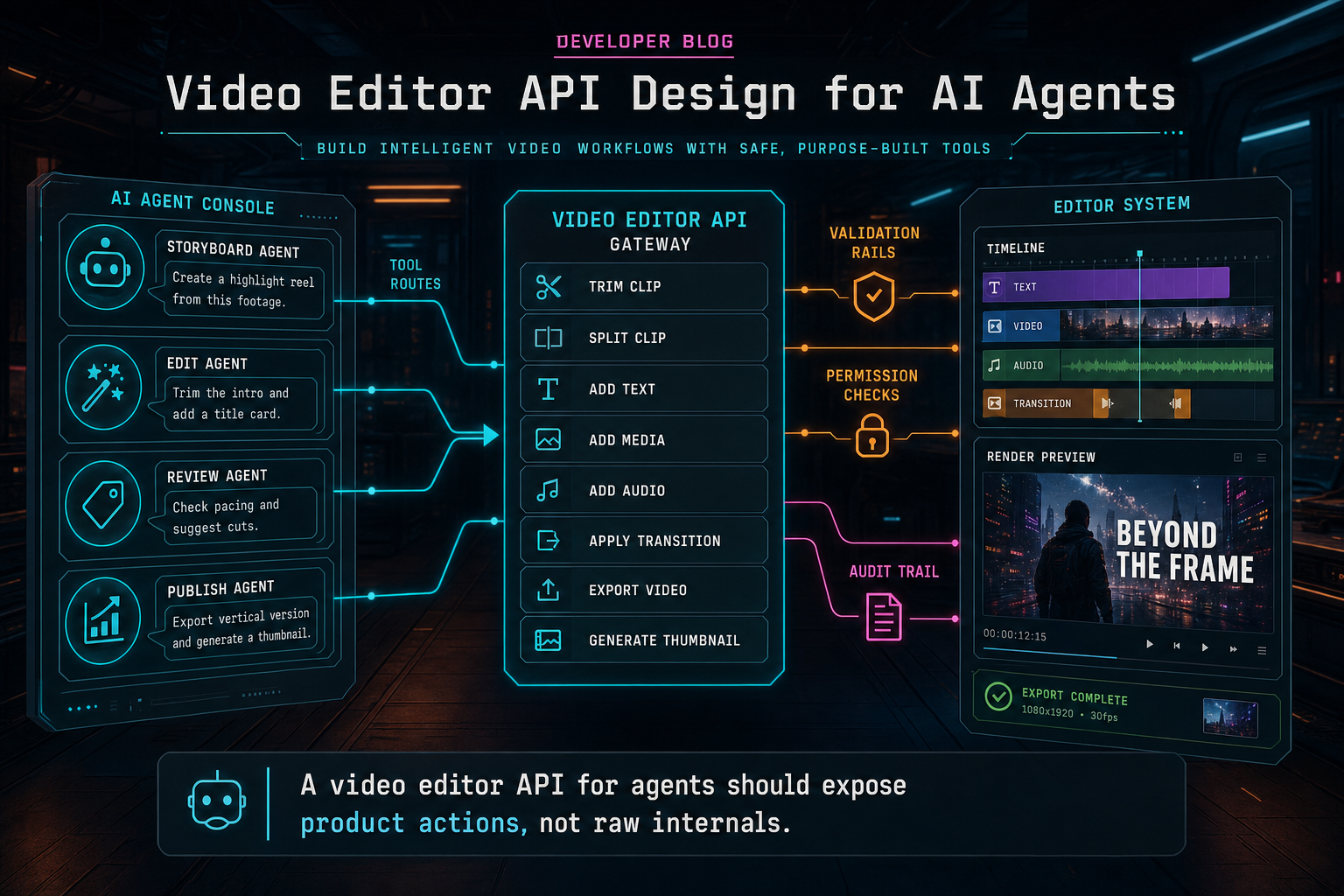
Video Editor API Design for AI Agents
An API for AI video editing agents should expose bounded timeline tools, not raw database access or command strings. The durable design uses schemas, ownership checks, idempotency, media provenance, render artifacts, and audit trails so agents can move fast without bypassing the editor.
Read the post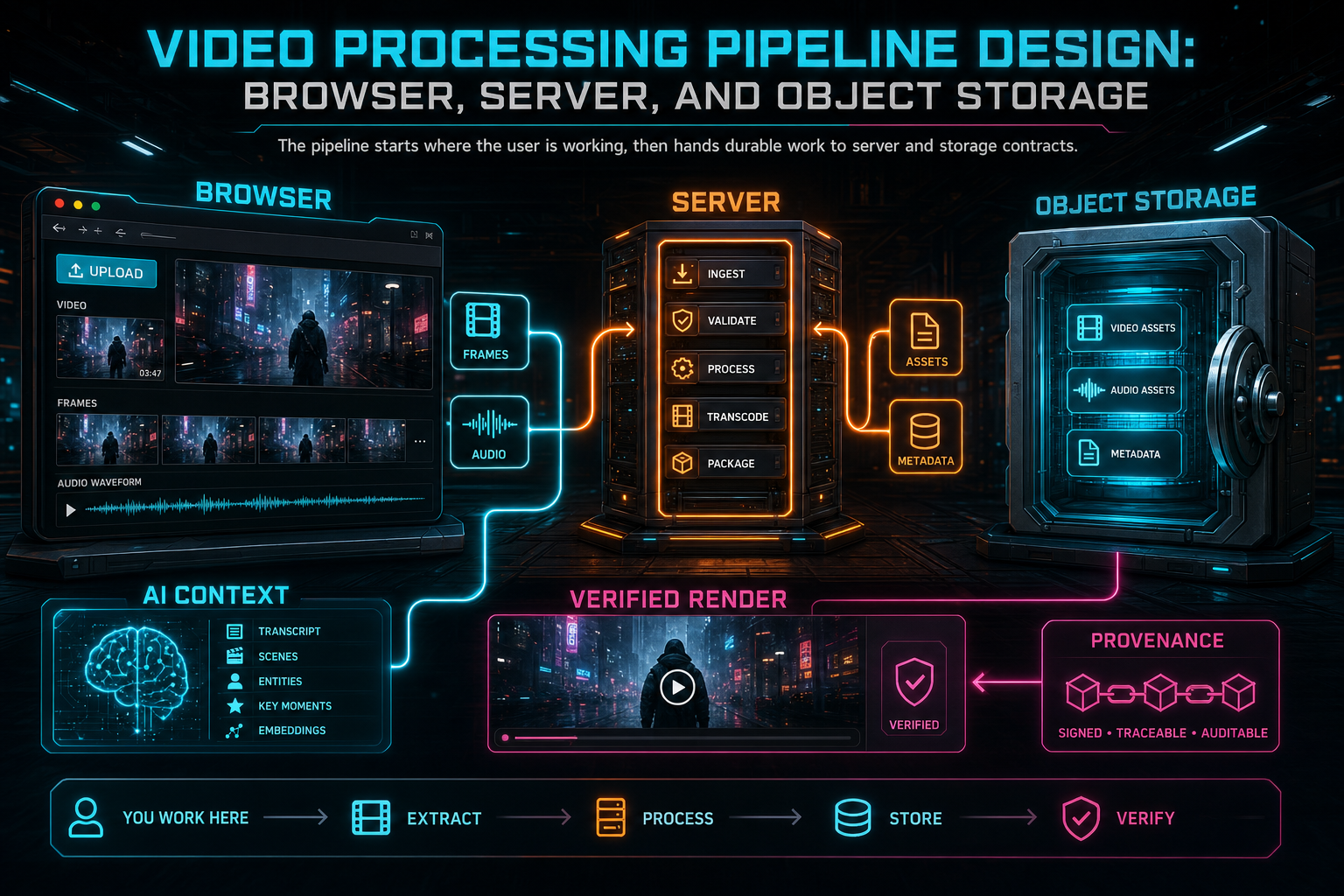
Video Processing Pipeline Design: Browser, Server, and Object Storage
A reliable video processing pipeline is not one giant upload followed by one giant encode. For an AI video editor, the better shape is a set of typed handoffs: browser sampling and preview, authenticated server processing, durable object storage, recoverable progress, AI-readable media records, and verified render artifacts.
Read the post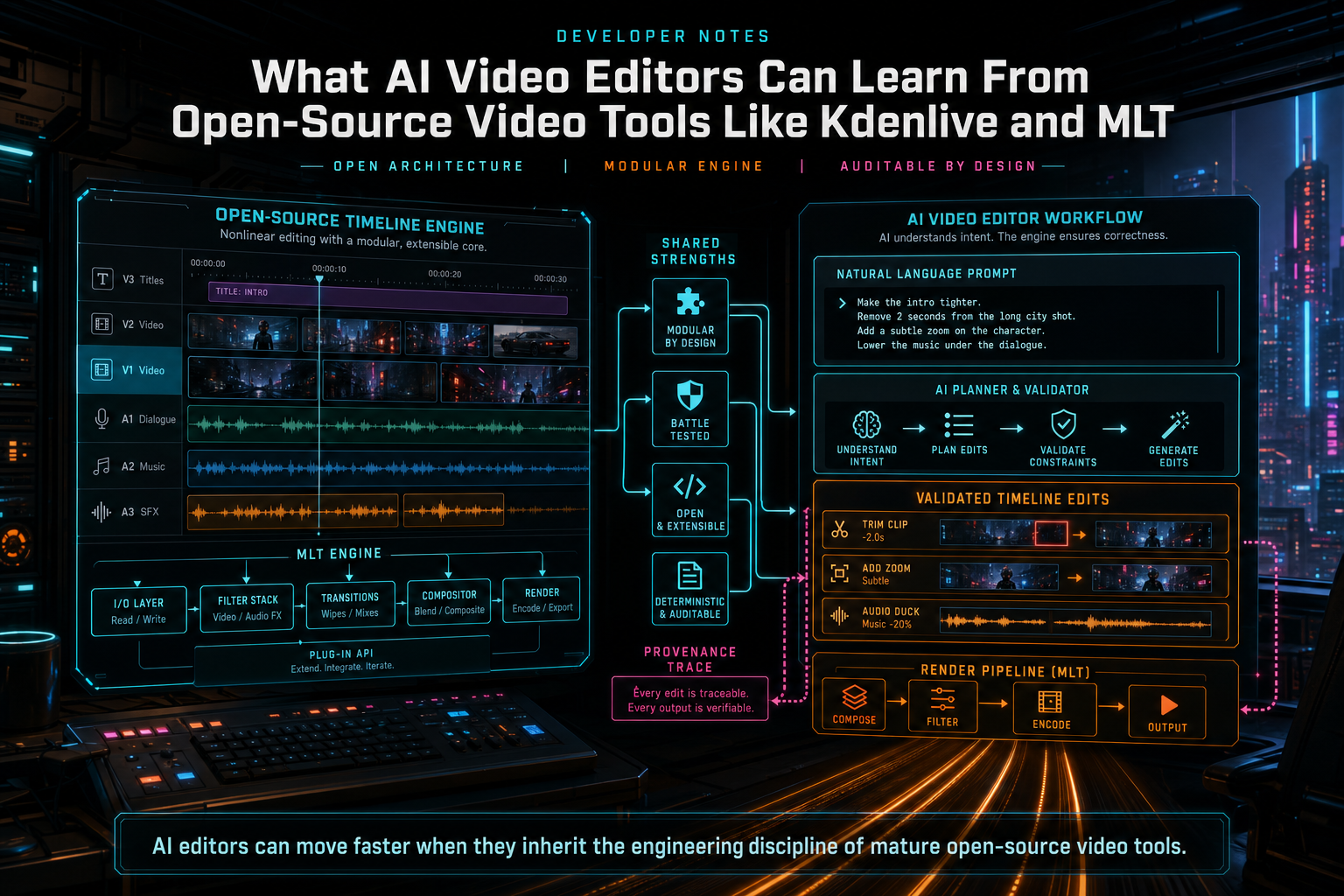
What AI Video Editors Can Learn From Open-Source Video Tools Like Kdenlive and MLT
Open-source video tools show that durable editing software is built on explicit timeline models, plugin boundaries, proxy workflows, inspectable effects, and repeatable rendering. AI video editors should copy that discipline before adding model-driven automation.
Read the postCreator workflows
Creator Playbooks
No creator playbooks match this tag yet.