
Developer Notes
Technical notes on AI video editing infrastructure, media processing, render verification, object storage, and production-grade creative tools.
Filter by tag
Clear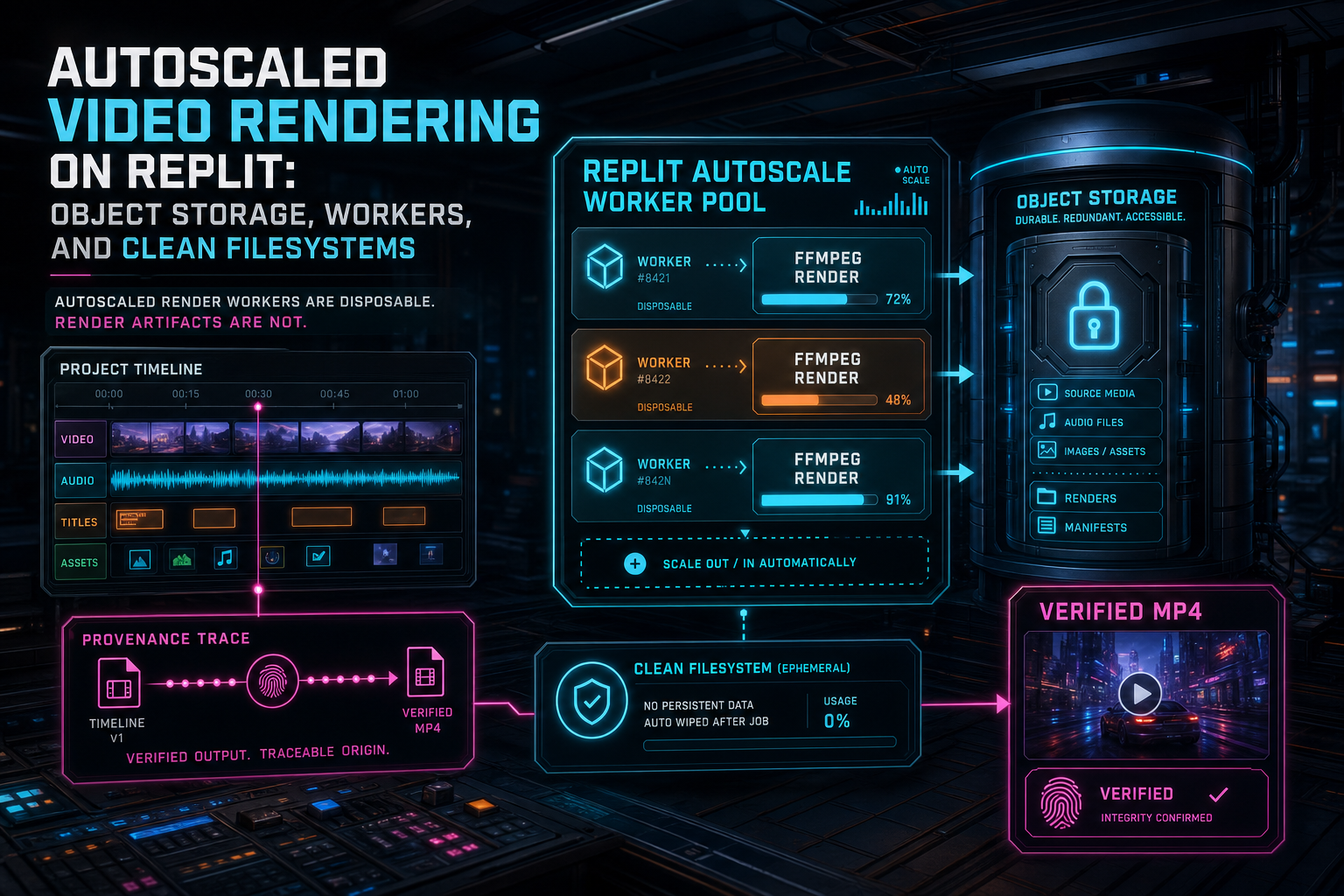
Autoscaled Video Rendering on Replit: Object Storage, Workers, and Clean Filesystems
Autoscaled video rendering works when every worker behaves like a temporary machine with a permanent contract: resolve project media from trusted storage, render inside bounded scratch space, stream the artifact to object storage, verify the result, and leave the filesystem clean for the next job.
Read the post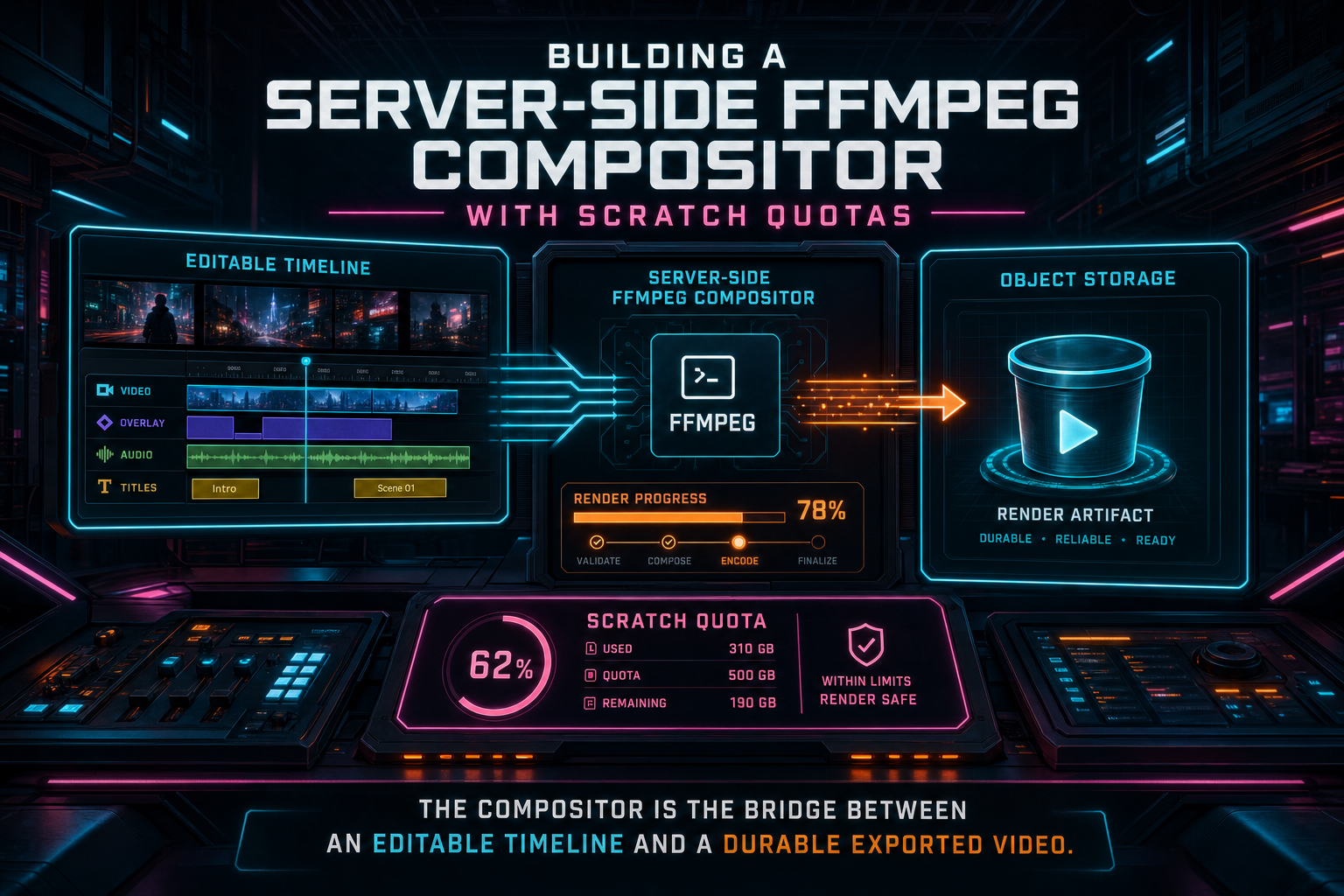
Building a Server-Side FFmpeg Compositor With Scratch Quotas
VibeChopper's server-side compositor turns an editable timeline into a durable render without letting temporary files become the product. The render path downloads only project-owned media, builds one FFmpeg graph for clips, effects, transitions, overlays, adjustment tracks, and audio, enforces scratch quotas along the way, streams the result into object storage, and cleans the workspace after every attempt.
Read the post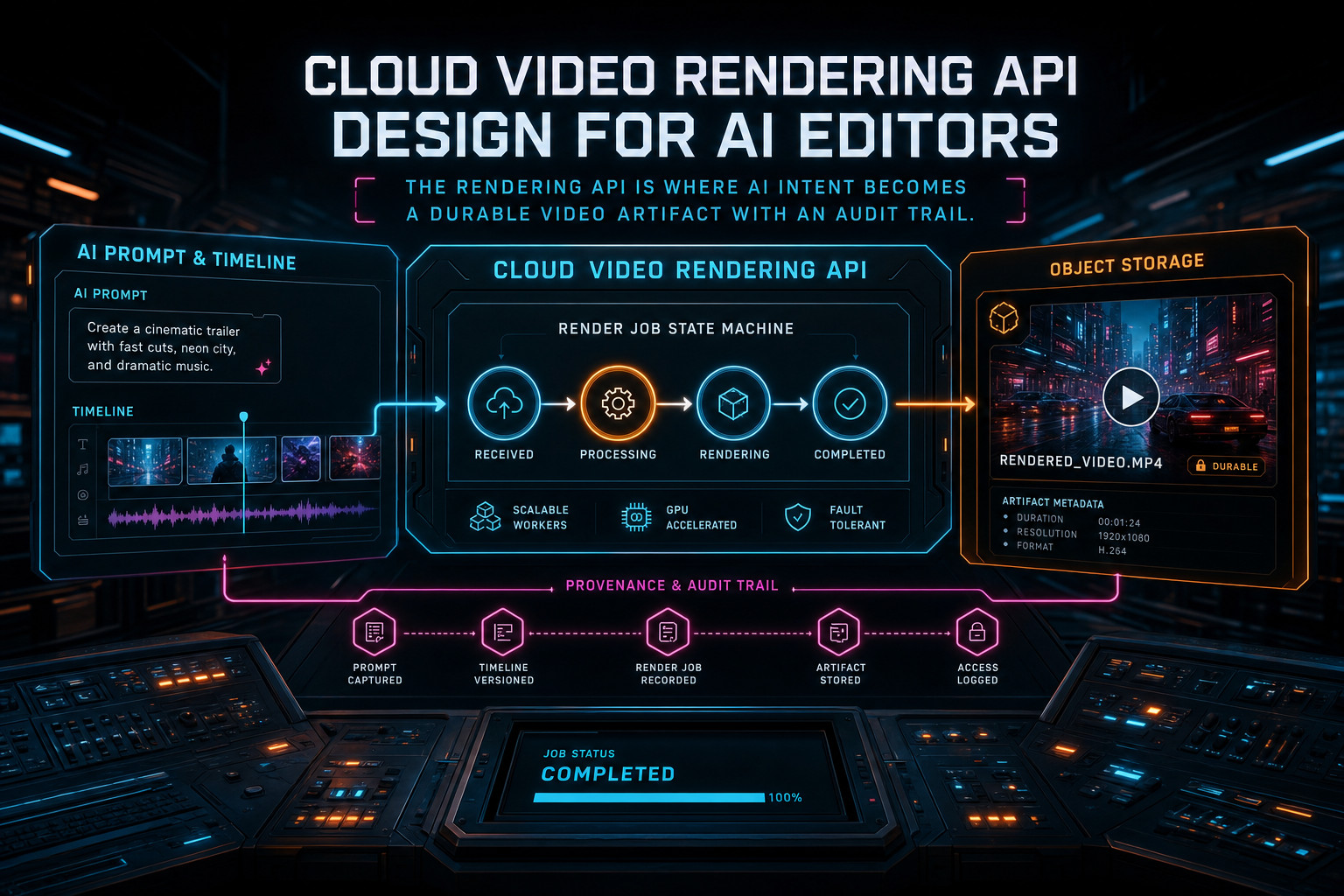
Cloud Video Rendering API Design for AI Editors
A cloud video rendering API for an AI editor is not only a job endpoint around FFmpeg. It is the boundary where prompts, timeline edits, media provenance, storage paths, progress events, failures, and verified export artifacts become one dependable product contract.
Read the post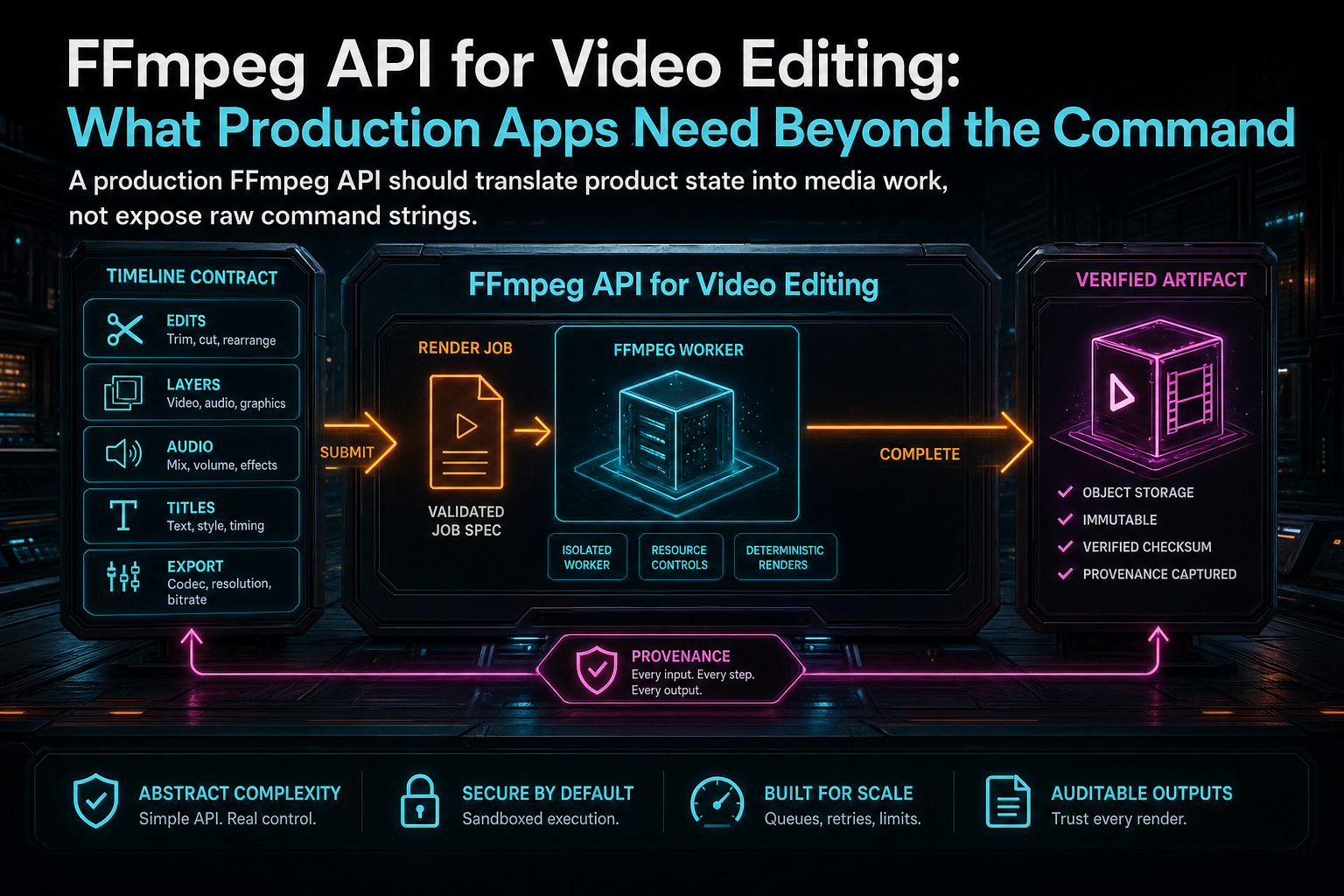
FFmpeg API for Video Editing: What Production Apps Need Beyond the Command
A useful FFmpeg API is not a remote shell for media commands. Production video editors need a typed timeline contract, authenticated media resolution, durable render jobs, progress, idempotency, object storage, verification, and provenance that survives refreshes, retries, AI edits, and support cases.
Read the post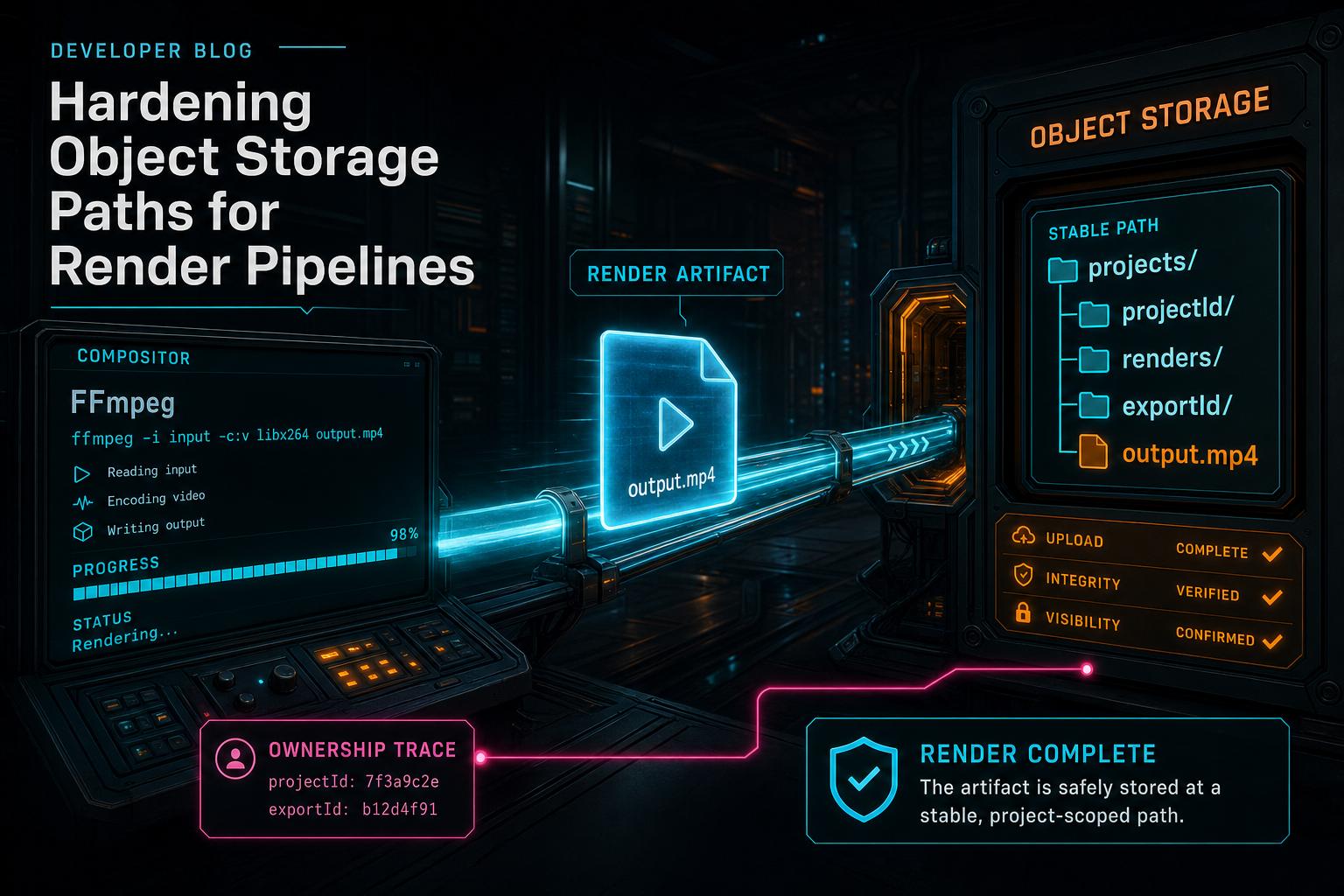
Hardening Object Storage Paths for Render Pipelines
A render pipeline is only production-ready when the output path is as intentional as the edit. VibeChopper hardens render storage by giving each export a stable project-scoped object path, streaming completed media from scratch disk into object storage, normalizing object URLs, rejecting unsafe overlay fetches, cleaning temporary files, and preserving enough metadata for verification, media graphs, AI edit runs, and repair workflows.
Read the post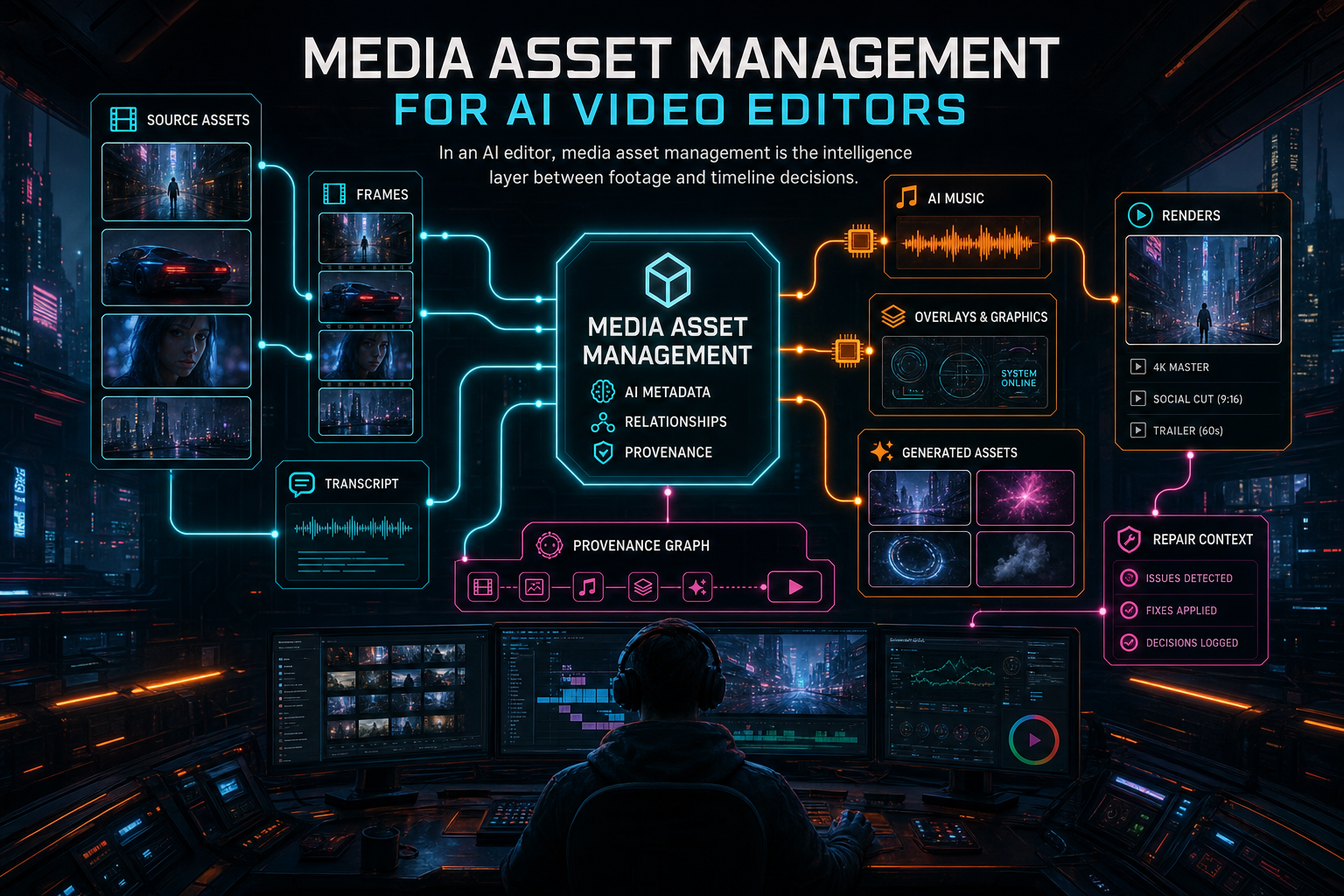
Media Asset Management for AI Video Editors
Media asset management for an AI video editor is not a file browser with thumbnails. It is the system that keeps source footage, extracted frames, transcripts, generated music, overlays, renders, plan assets, AI edit runs, object storage paths, and repair context connected enough for humans and agents to make reliable editing decisions.
Read the post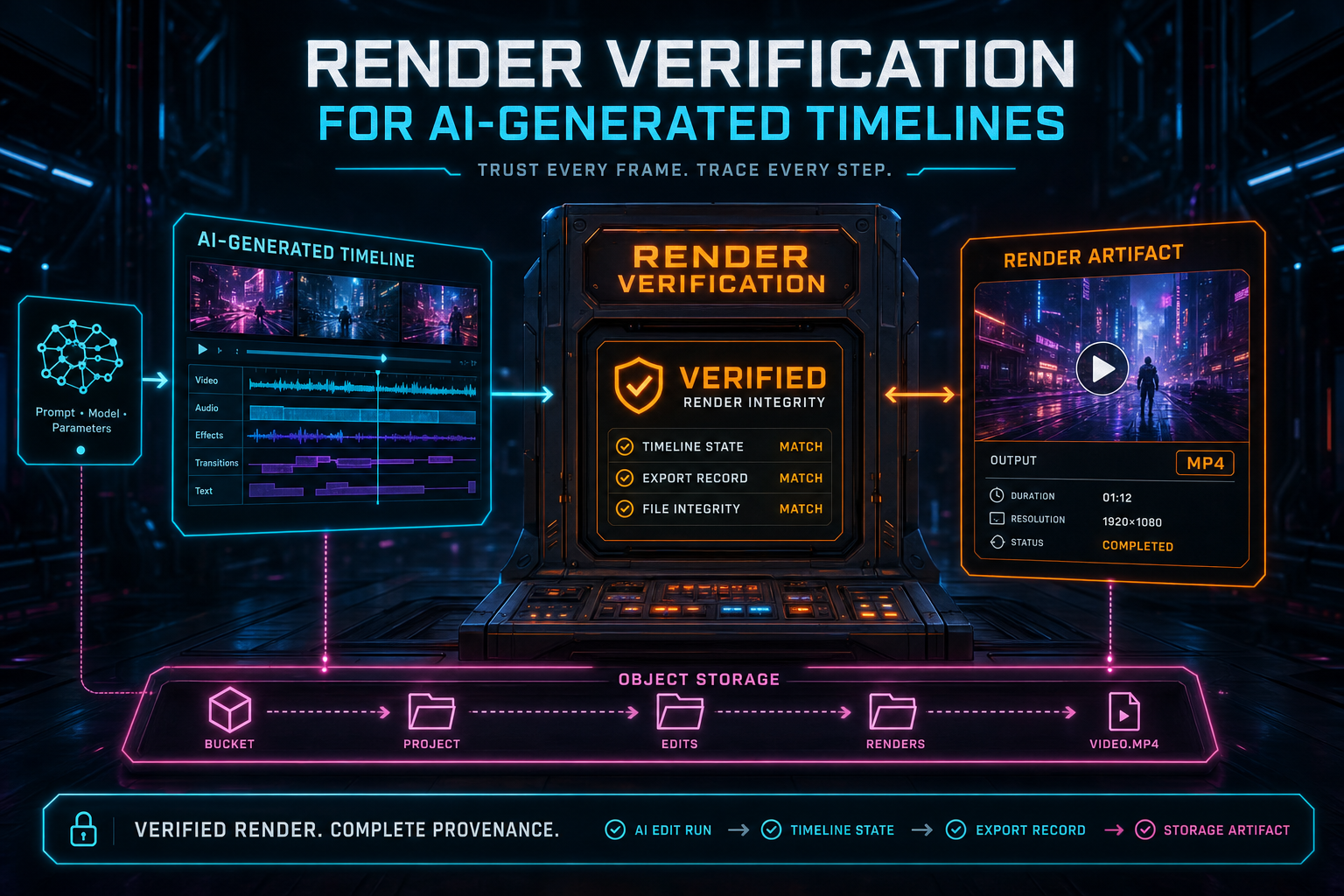
Render Verification for AI-Generated Timelines
AI can plan and mutate a timeline, but the product still has to prove that a render exists, belongs to the right project, points at durable storage, and carries enough metadata for a user or repair job to trust what happened. VibeChopper's render verification layer turns a completed export into a structured record with artifact details, timeline links, blockers, scores, and honest limitations.
Read the post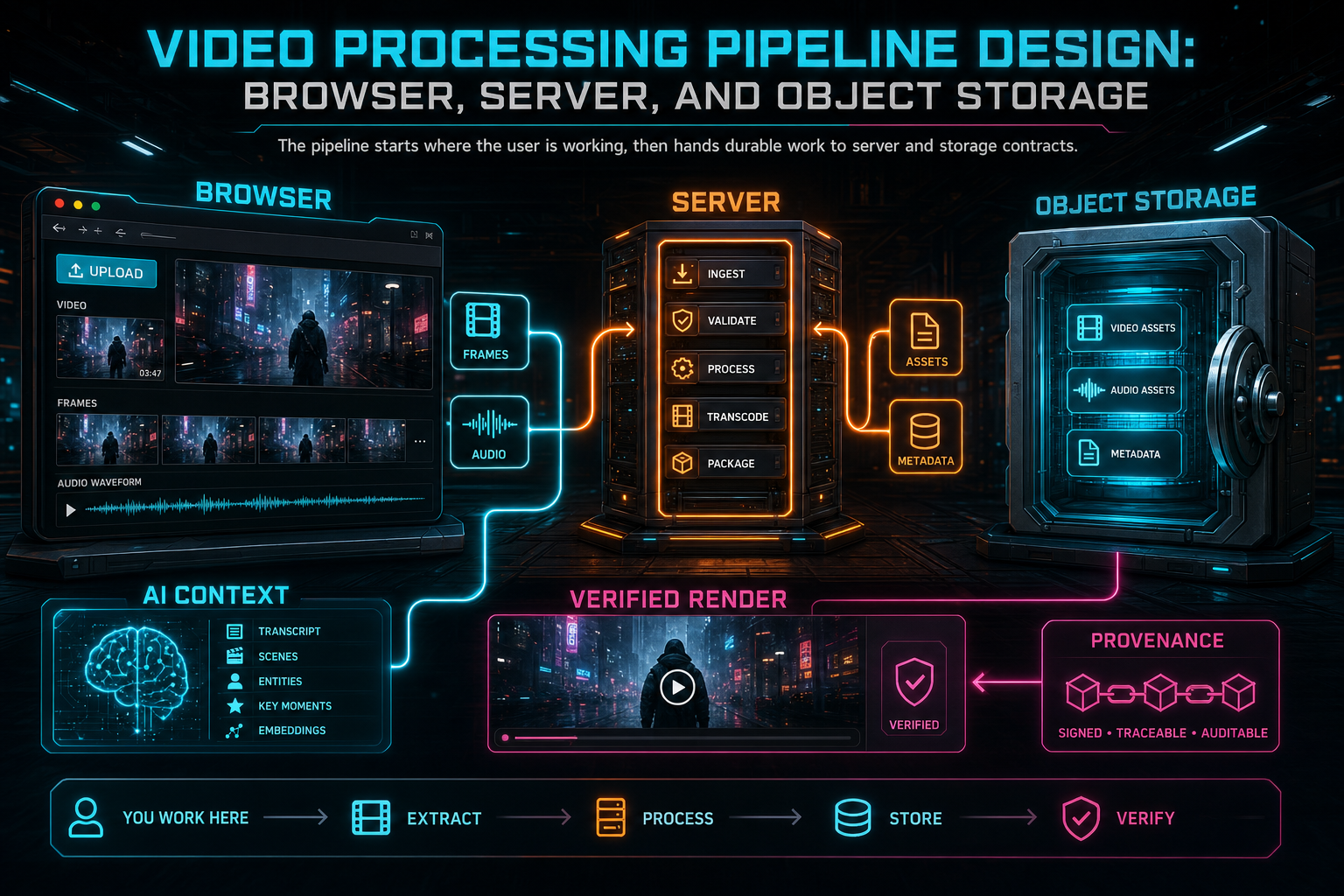
Video Processing Pipeline Design: Browser, Server, and Object Storage
A reliable video processing pipeline is not one giant upload followed by one giant encode. For an AI video editor, the better shape is a set of typed handoffs: browser sampling and preview, authenticated server processing, durable object storage, recoverable progress, AI-readable media records, and verified render artifacts.
Read the post