VibeChopper Blog

Developer Notes and Creator Playbooks

Read VibeChopper Developer Notes and Creator Playbooks for technical architecture, creative workflows, and AI video editing strategy.

Filter by tag

Clear
All tags ai-editingAI video editorobject storagevideo-editorFFmpegasset provenanceDATA Remediationmobile-editingtool eventsAI agentsaudiocloud renderingcloud video renderingcolor-gradingcomparisonnatural language editingrender verificationtechnical SEOtimelinevideo renderingvideo-editor-comparisonAI edit runsAI video analysisbrowser video editorbrowser video processingburnoutcapcutchatcollaborationdavinci-resolvedescripteditorial-aiedlfallbacksfcpxmlfounder-noteframe extractionmedia graphobservabilityonline video editororiginprovenanceresumable uploadstimeline architecturetimeline editingtool-traceuniversal-appupload reliabilityvibe-editingvideo editingvideo editor backendvideo metadataadjustment-layersadobe-premiereagent scoringagent securityAI audit trailAI edit planningAI edit run schemaAI editingAI infrastructureAI musicAI music generationAI timelinesAI video editingAI video editor observabilityAI video toolsAI workflow audit trailai-clipperai-graphicsai-musicai-videoai-visionai-voiceoveralternativeasset contextasset ownershipattachmentsaudio-mixeraudit trailauthauthenticityautomatic subtitlesautosaveb-rollbackend streamsbatch uploadbatch-uploadbearer tokensbeat-detectionbrandbriefbrowser based video editorbrowser storagebrowser-video-editorCapCut alternativecapcut-alternativecaption infrastructurecasey-neistatchat-editingclient-reviewclip effectsclip-swapcloud compositorcloud persistencecloud video processingcreative briefscreator-economycreator-philosophycreator-toolscreditscross-device editingdatabase schemadead-airdeep linksdeep-linkdeveloper notesdiarizationdiffusion-studiodossieremailemail bootstrapexportexport reliabilityexport workflowfeedbackfeedback automationffmpegFFmpeg APIFFmpeg workersfinal-cut-profootage-organizationfounders-noteframe-searchGemini Lyriagemini-lyriagenerated media provenancegenerated music bedgpt-image-1hank-greenharnessheadless workershero-journeyhighlight-reelHMACimovieincident automationincident responseingestiOS video editorios-editingiPad video editorJSON validationjump-cutsJWT fallbackKdenlivekonstantinlarge media projectslower-thirdslutsmacos-editingmanifestomarketplacematch-scoremedia asset graphmedia asset managementmedia processingmemory pressureMLT frameworkmobilemp4multi-device syncnarrationnarrative-frameworksnative app authnative authnatural-languageopen-sourceopen-source video editingopusclipoverlaysowned authpasskeyspasswordless loginplanningpodcast-clipspodcast-editingpolishpremiere-alternativespresetsproduct infrastructureproduction reliabilityproduction repairprogress trackingproject provenance graphprompt metadataprovider harnessrecoveryreelsrenderrender hygienerender pipelinesrender testsrepair loopsrepair workflowsReplit Autoscaleresumerubricsscorescratch storagescript-generationshareshort-formslip-editsnapshotssoundtrackspeech-to-textspeed-rampstory-structurestoryboardsubmagictelemetrytext-based video editingtheo-brownethree-acttiktoktimeline compositortimeline synctimeline tool callstimeline toolstitle-cardstrailertransactional emailtranscript editingtranscript-based editingtranscript-editingtranscript-searchtranscriptiontransparencytransparent-pngttsundoupgradeupload sessionsupload telemetryusage logsVEED.IOversion-historyvideo editing APIvideo editing architecturevideo editing backendvideo editor APIvideo editor architecturevideo editor infrastructurevideo editor metadatavideo processing pipelinevideo provenancevideo rendering APIvideo timelinevideo transcription editorvideo upload architecturevideo upload UXvision-provizardvoice video editingvoice-editingvoice-notesvu-meterwatchoswaveformweb video editorWebAuthnwebmworker callbacksyc-f24

Technical deep dives

Developer Notes

View all developer notes
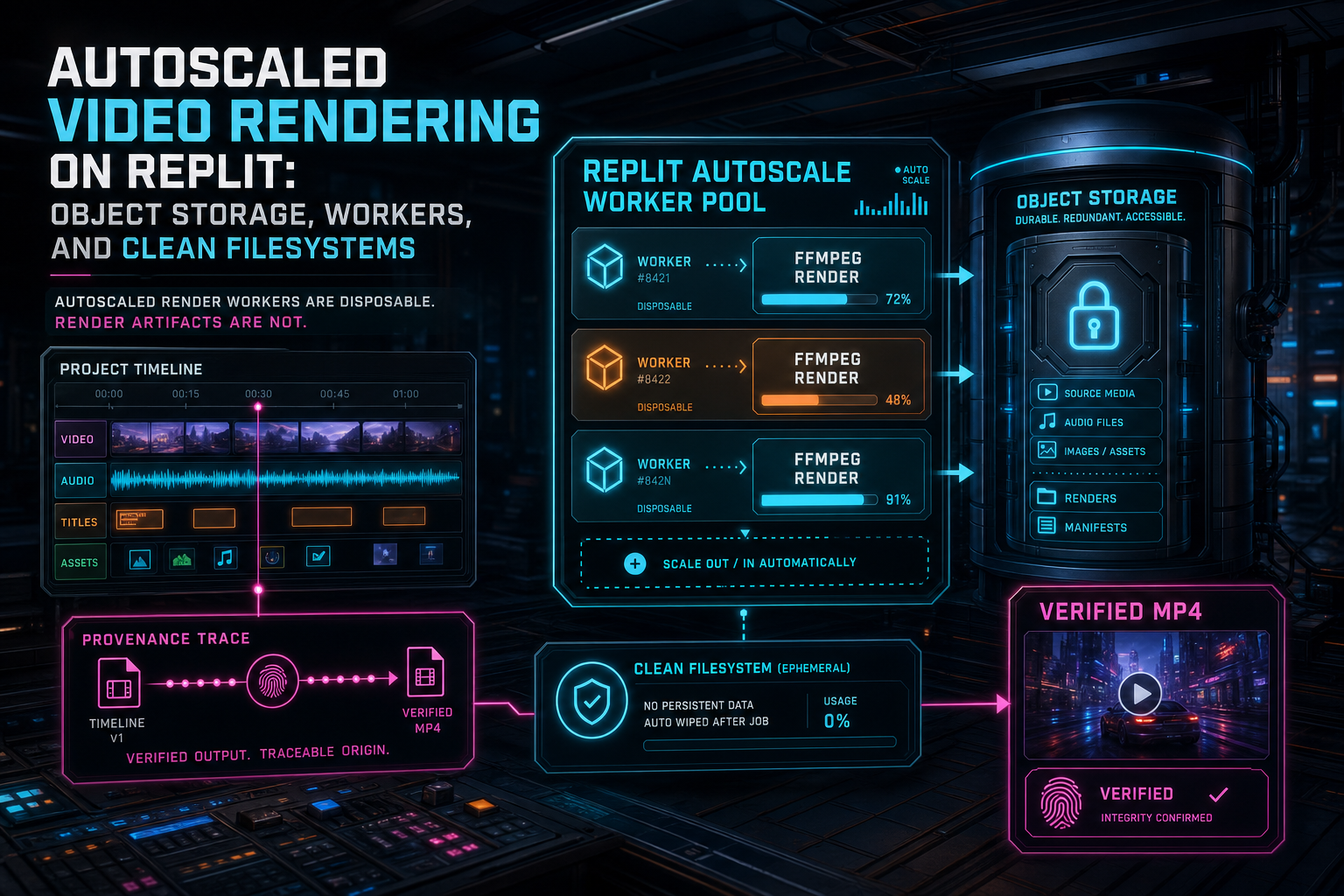
Autoscaled Replit render workers pulling project media from object storage and writing verified video artifacts.
Developer Notes16 min read

Autoscaled Video Rendering on Replit: Object Storage, Workers, and Clean Filesystems

Autoscaled video rendering works when every worker behaves like a temporary machine with a permanent contract: resolve project media from trusted storage, render inside bounded scratch space, stream the artifact to object storage, verify the result, and leave the filesystem clean for the next job.

Replit Autoscalecloud video renderingobject storageFFmpeg workers
Read the post
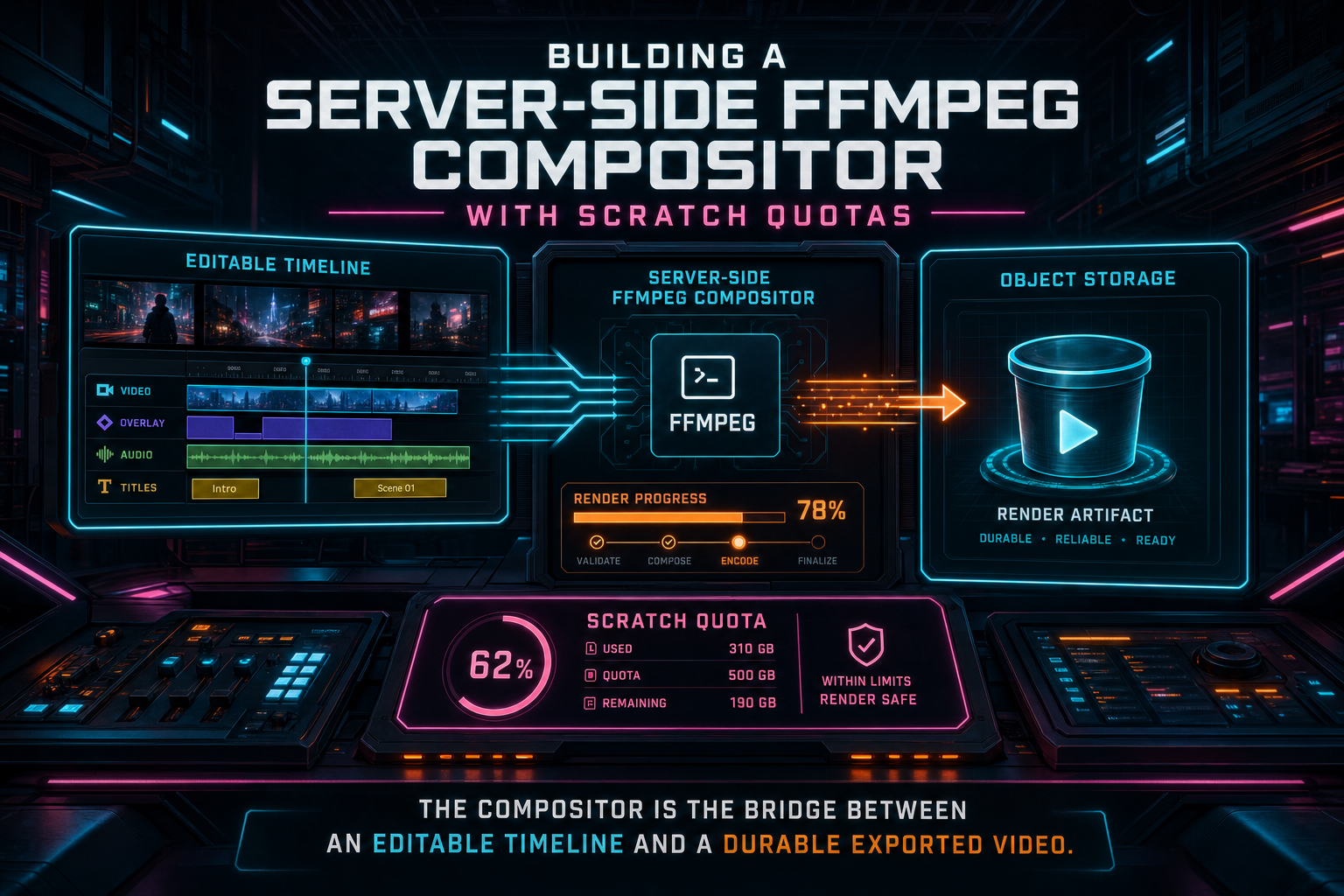
A dark VibeChopper render console showing a timeline flowing through FFmpeg into object storage.
Developer Notes16 min read

Building a Server-Side FFmpeg Compositor With Scratch Quotas

VibeChopper's server-side compositor turns an editable timeline into a durable render without letting temporary files become the product. The render path downloads only project-owned media, builds one FFmpeg graph for clips, effects, transitions, overlays, adjustment tracks, and audio, enforces scratch quotas along the way, streams the result into object storage, and cleans the workspace after every attempt.

FFmpegvideo renderingscratch storagecloud compositor
Read the post
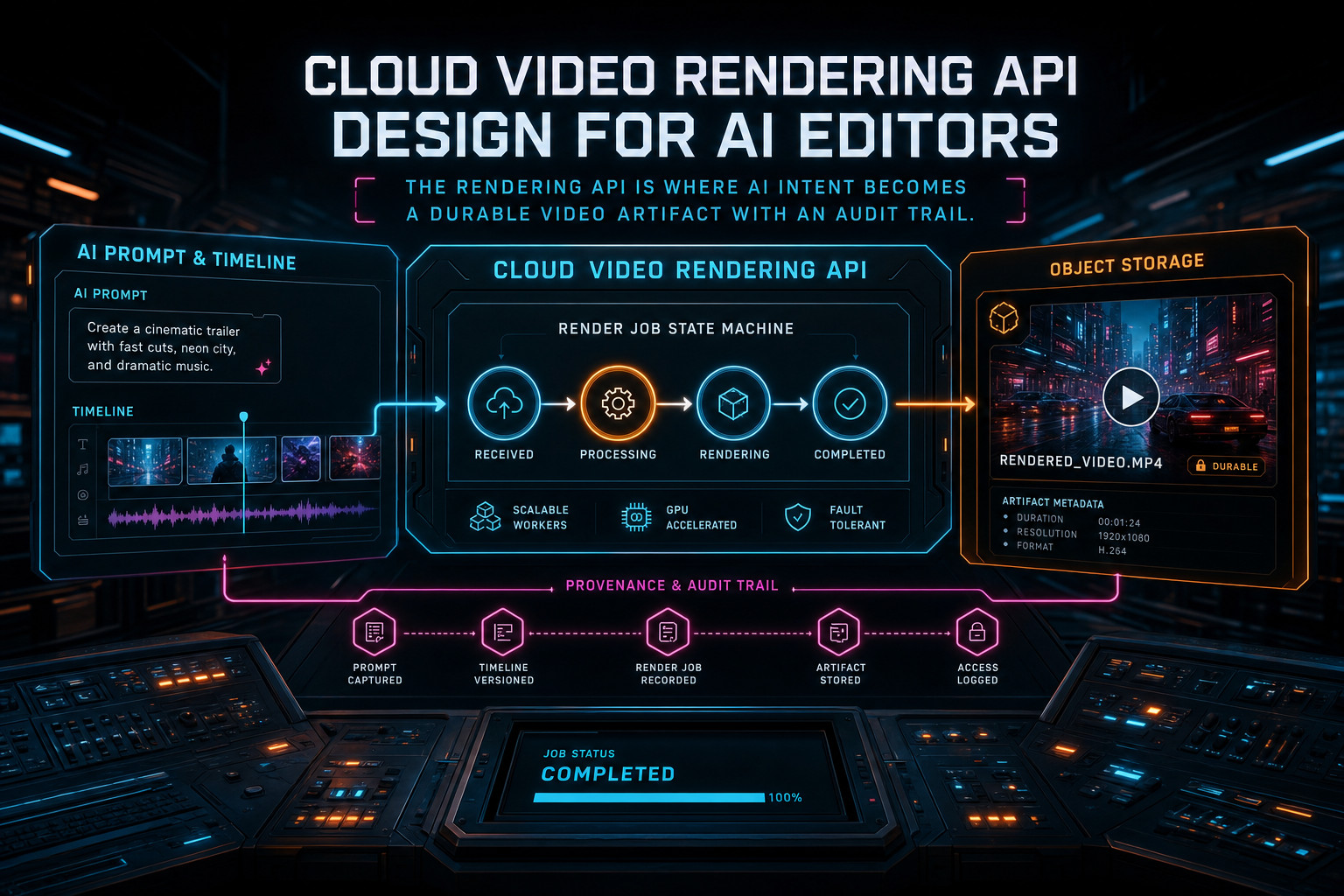
A dark VibeChopper developer console showing an AI timeline flowing into a cloud video rendering API.
Developer Notes17 min read

Cloud Video Rendering API Design for AI Editors

A cloud video rendering API for an AI editor is not only a job endpoint around FFmpeg. It is the boundary where prompts, timeline edits, media provenance, storage paths, progress events, failures, and verified export artifacts become one dependable product contract.

cloud video renderingvideo rendering APIAI video editorFFmpeg
Read the post
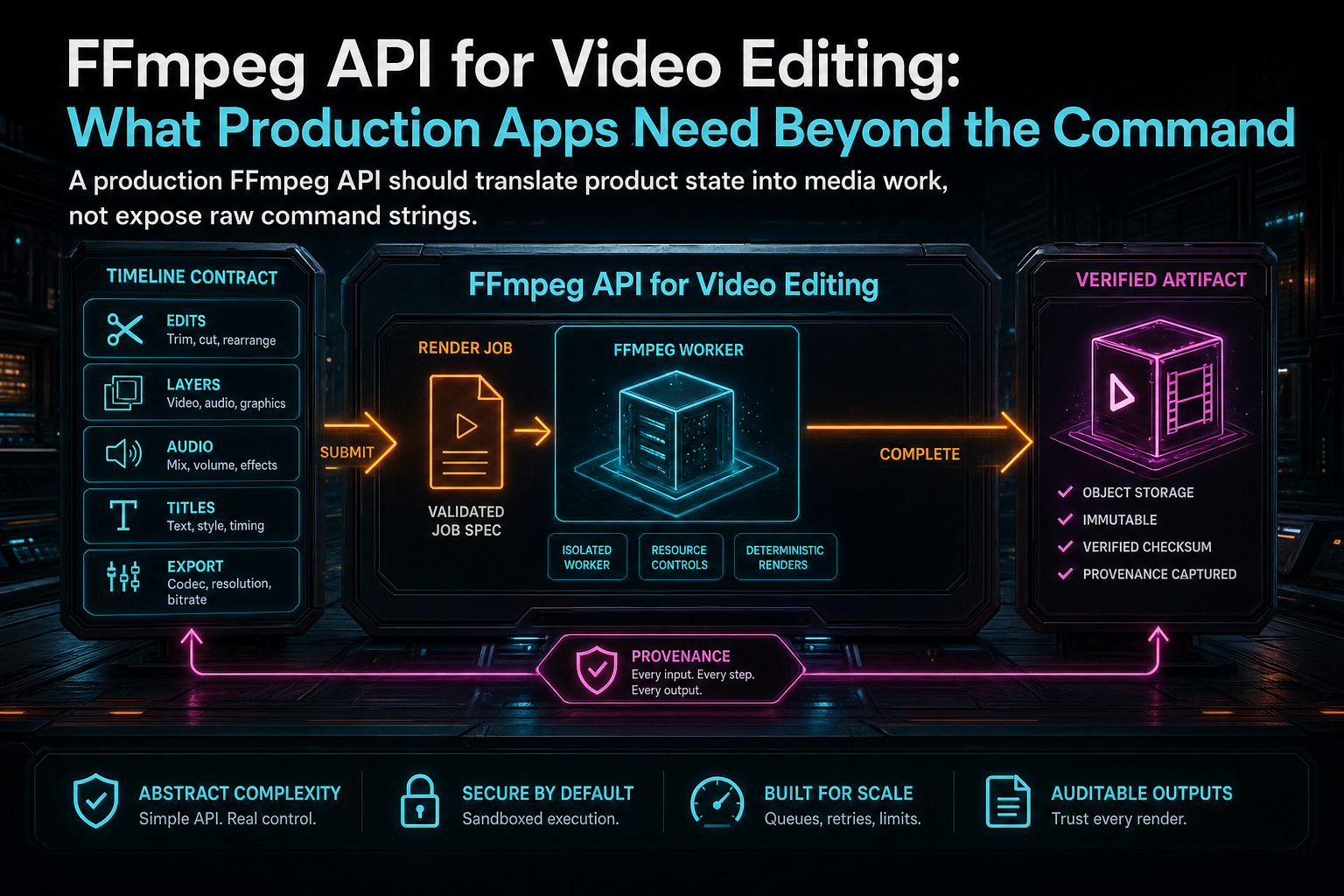
A dark VibeChopper production console showing an FFmpeg API turning timeline data into a verified video artifact.
Developer Notes15 min read

FFmpeg API for Video Editing: What Production Apps Need Beyond the Command

A useful FFmpeg API is not a remote shell for media commands. Production video editors need a typed timeline contract, authenticated media resolution, durable render jobs, progress, idempotency, object storage, verification, and provenance that survives refreshes, retries, AI edits, and support cases.

FFmpeg APIvideo editing APIcloud renderingAI video editor
Read the post
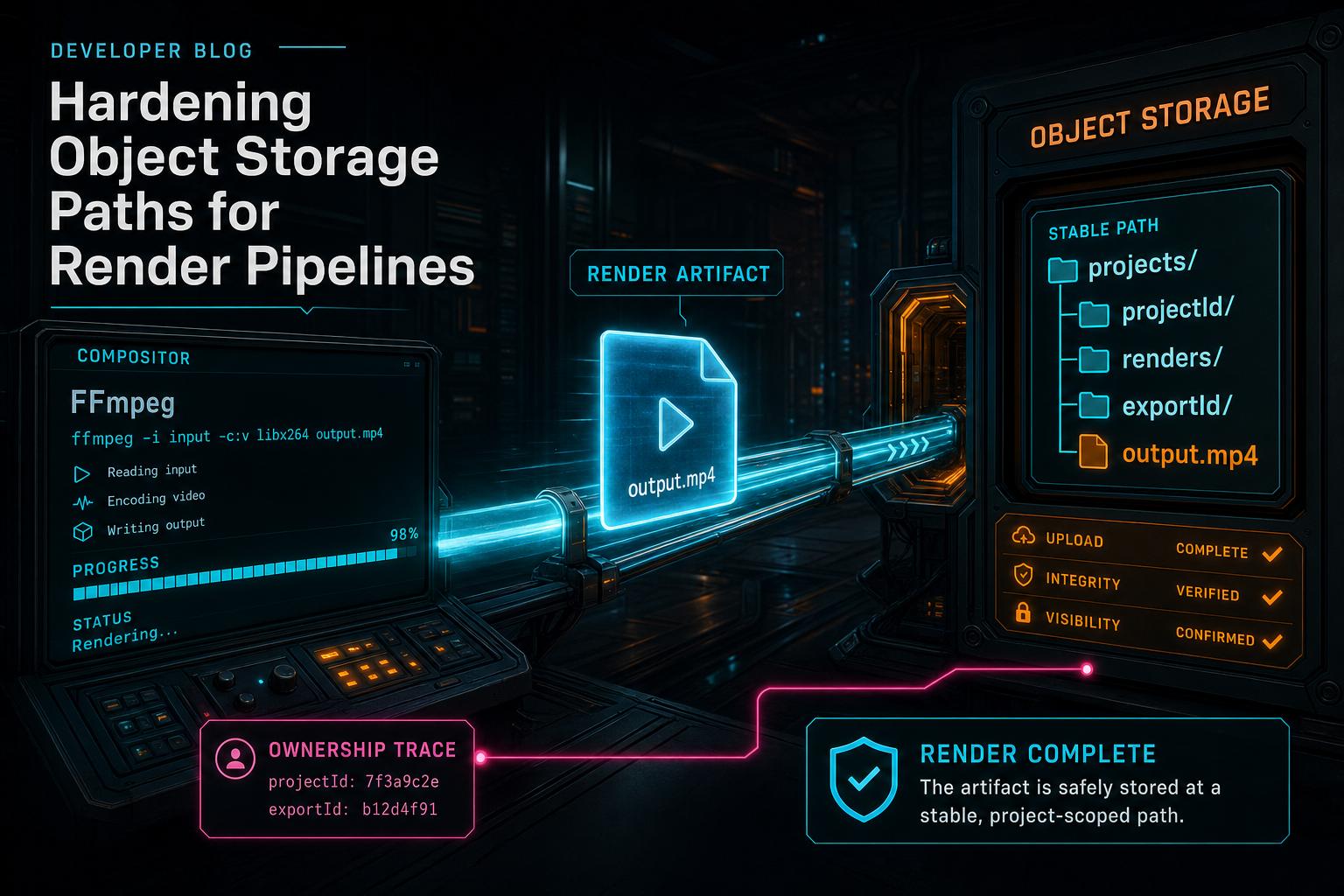
A dark VibeChopper render pipeline console showing FFmpeg output flowing into a stable object-storage path.
Developer Notes15 min read

Hardening Object Storage Paths for Render Pipelines

A render pipeline is only production-ready when the output path is as intentional as the edit. VibeChopper hardens render storage by giving each export a stable project-scoped object path, streaming completed media from scratch disk into object storage, normalizing object URLs, rejecting unsafe overlay fetches, cleaning temporary files, and preserving enough metadata for verification, media graphs, AI edit runs, and repair workflows.

object storagerender pipelinescloud renderingFFmpeg
Read the post
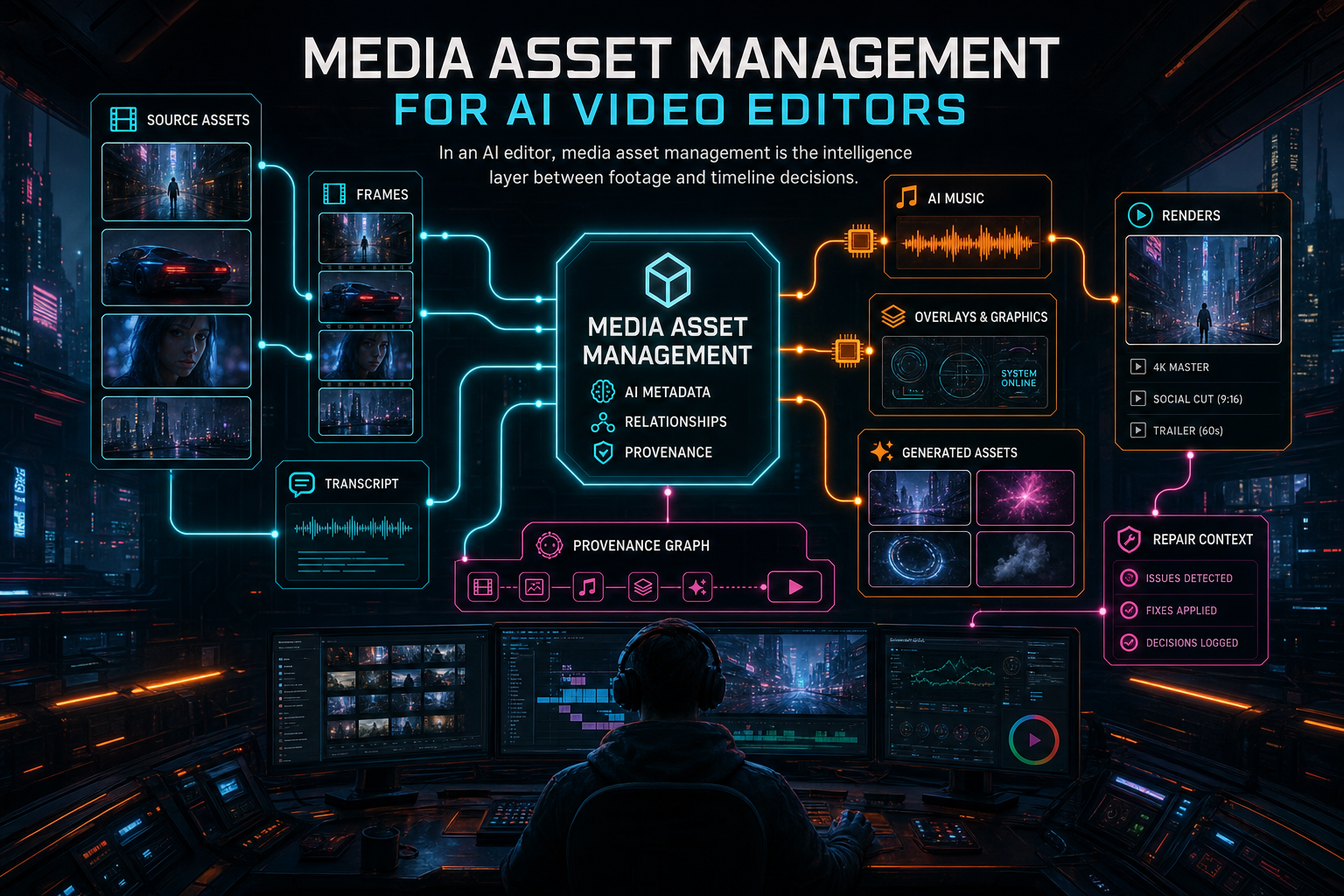
A dark VibeChopper media asset command center showing source clips, AI metadata, generated assets, and renders connected in one graph.
Developer Notes18 min read

Media Asset Management for AI Video Editors

Media asset management for an AI video editor is not a file browser with thumbnails. It is the system that keeps source footage, extracted frames, transcripts, generated music, overlays, renders, plan assets, AI edit runs, object storage paths, and repair context connected enough for humans and agents to make reliable editing decisions.

media asset managementAI video editorasset provenancevideo metadata
Read the post
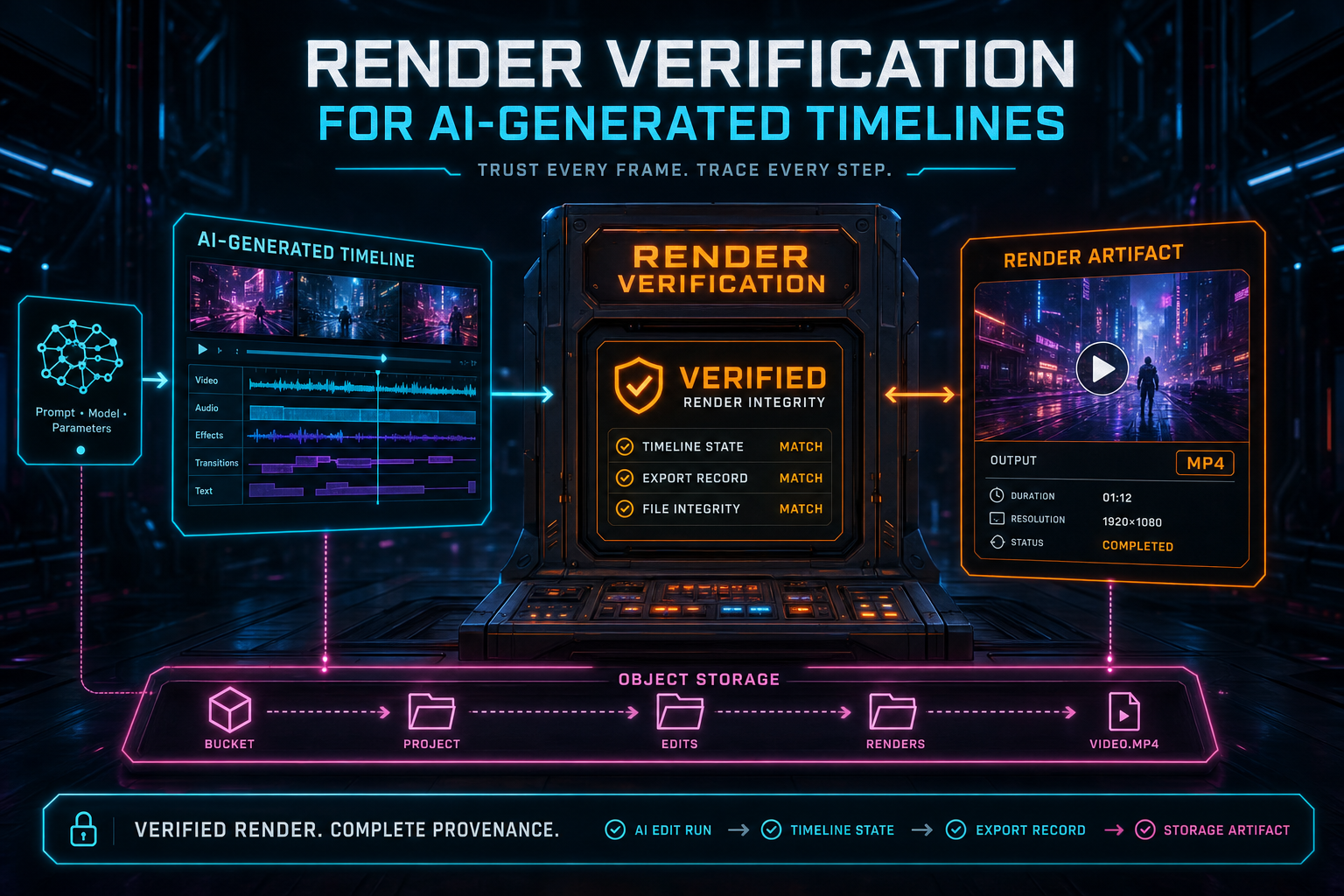
A dark VibeChopper render verification console connecting an AI timeline to a completed video artifact.
Developer Notes15 min read

Render Verification for AI-Generated Timelines

AI can plan and mutate a timeline, but the product still has to prove that a render exists, belongs to the right project, points at durable storage, and carries enough metadata for a user or repair job to trust what happened. VibeChopper's render verification layer turns a completed export into a structured record with artifact details, timeline links, blockers, scores, and honest limitations.

render verificationAI timelinesvideo renderingobject storage
Read the post
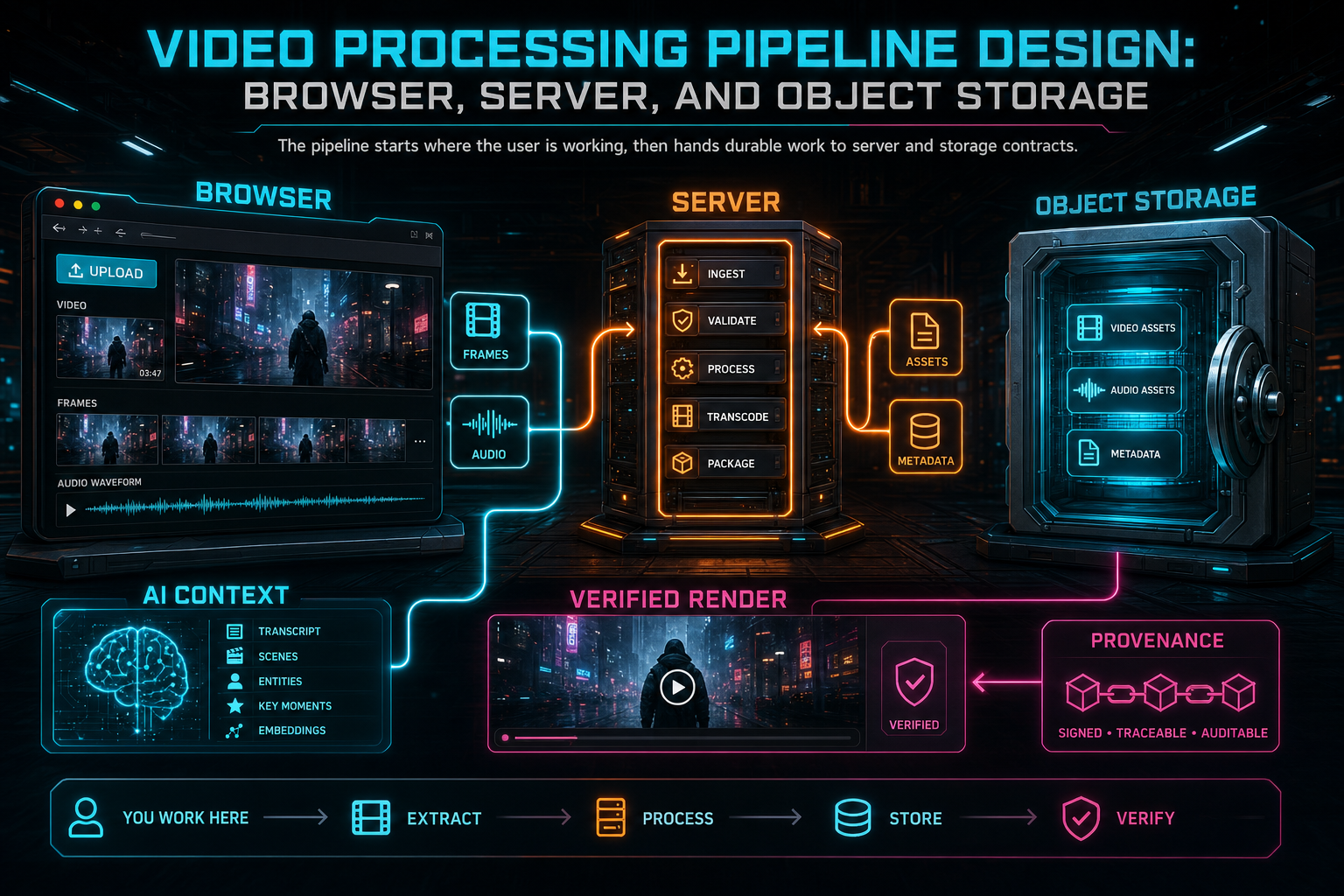
A VibeChopper video processing pipeline flowing from browser upload through server processing into object storage.
Developer Notes18 min read

Video Processing Pipeline Design: Browser, Server, and Object Storage

A reliable video processing pipeline is not one giant upload followed by one giant encode. For an AI video editor, the better shape is a set of typed handoffs: browser sampling and preview, authenticated server processing, durable object storage, recoverable progress, AI-readable media records, and verified render artifacts.

video processing pipelinebrowser video editorobject storagecloud video processing
Read the post

Creator workflows

Creator Playbooks

View all creator playbooks

No creator playbooks match this tag yet.