
Developer Notes
Technical notes on AI video editing infrastructure, media processing, render verification, object storage, and production-grade creative tools.
Filter by tag
Clear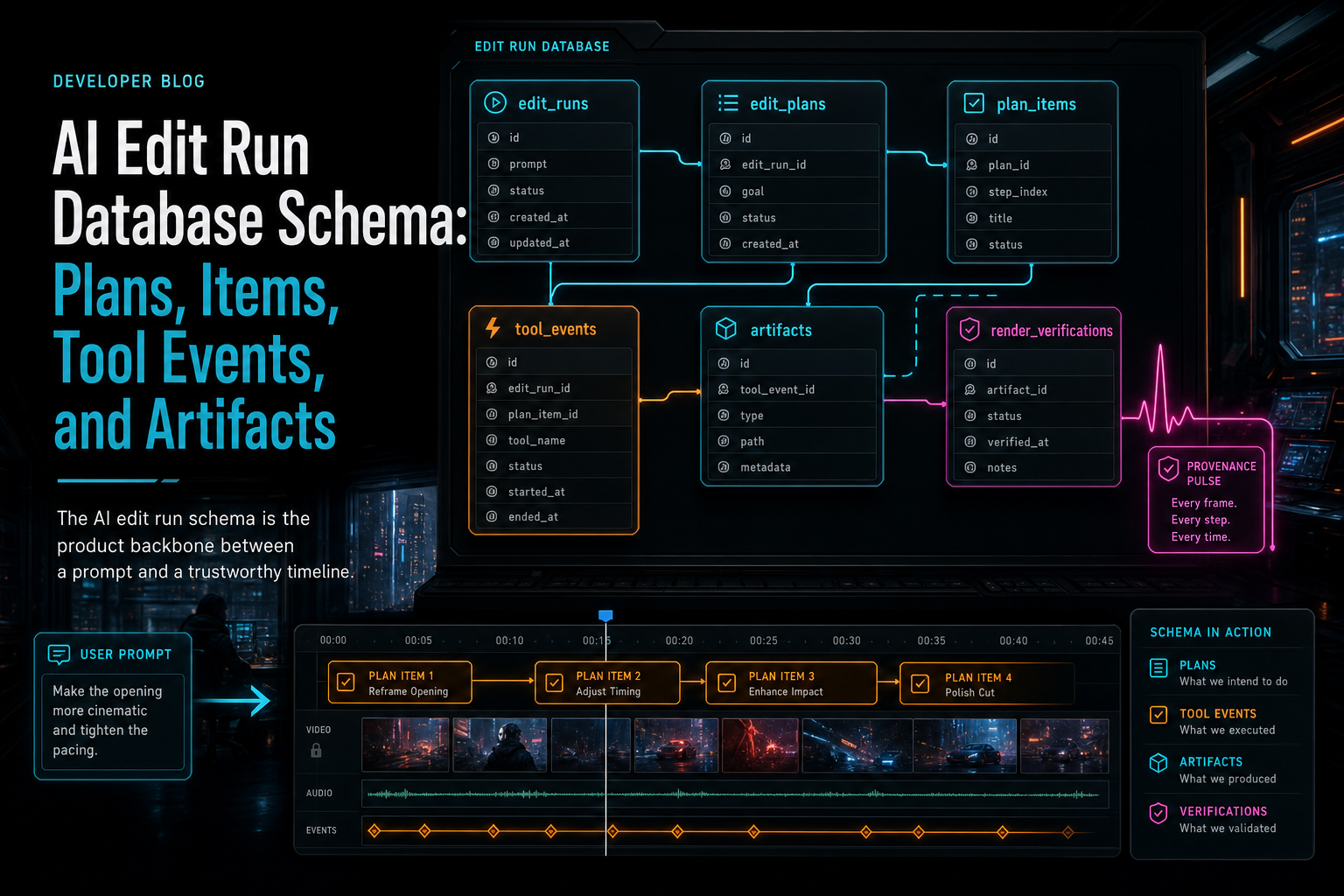
AI Edit Run Database Schema: Plans, Items, Tool Events, and Artifacts
An AI edit run schema gives natural-language video editing a durable backbone: plans describe intent, plan items break work into executable units, tool events prove what changed, and artifacts preserve the media produced by the run.
Read the post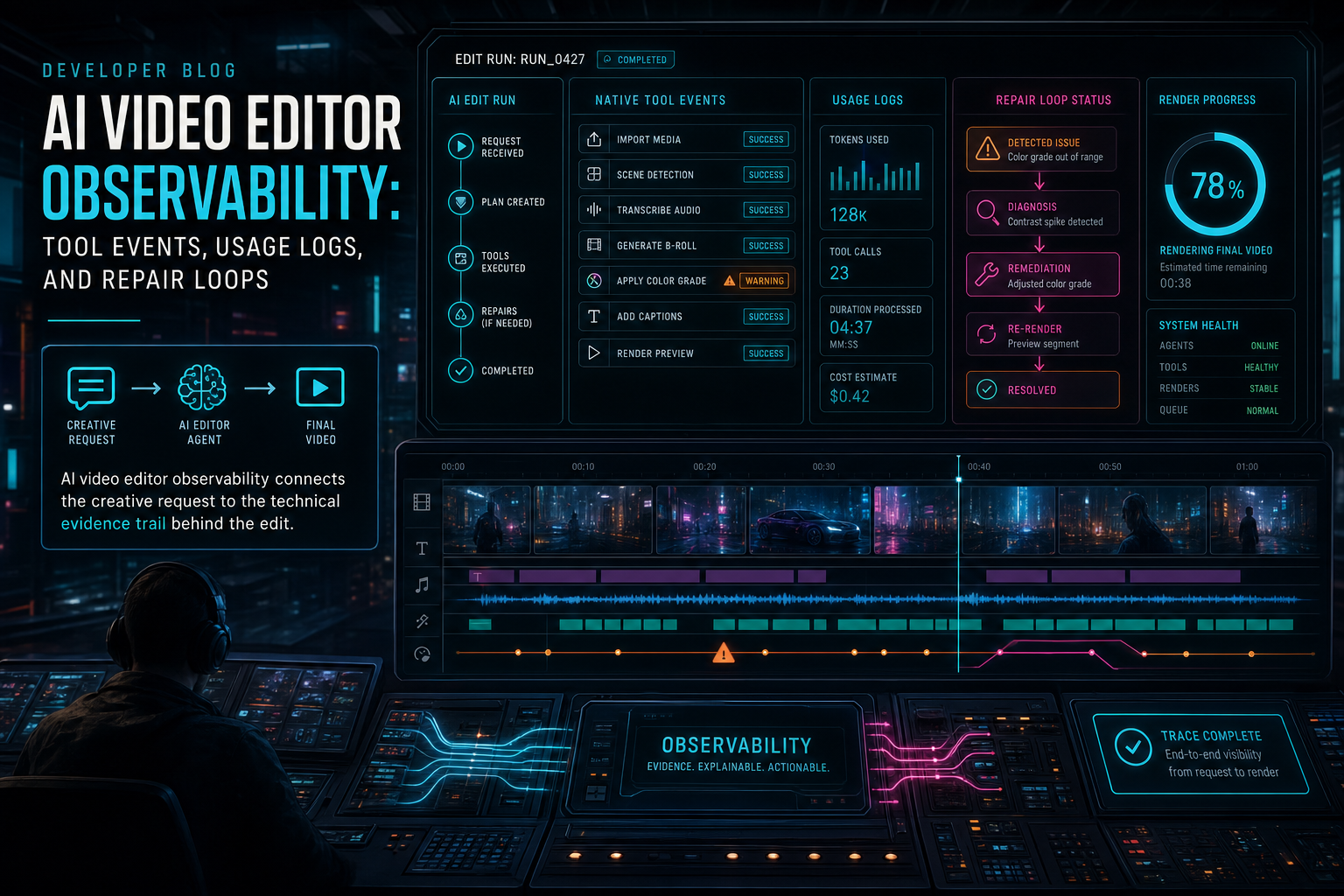
AI Video Editor Observability: Tool Events, Usage Logs, and Repair Loops
AI video editing becomes trustworthy when every long-running job, model decision, tool call, media artifact, render, and repair path leaves a product-readable trail. Observability is not just dashboards for engineers; in an AI editor, it is part of the creative contract.
Read the post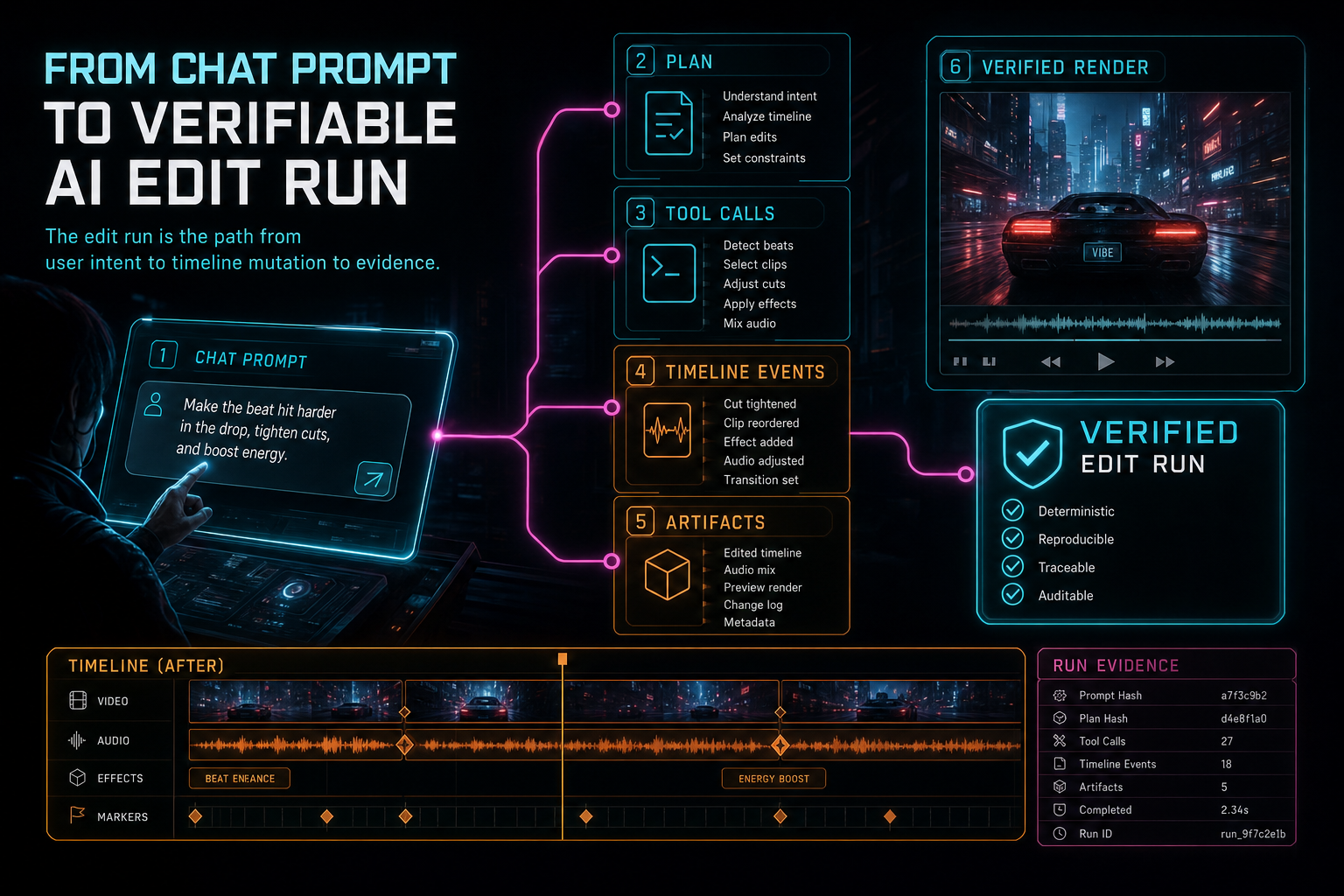
From Chat Prompt to Verifiable AI Edit Run
A chat prompt is not enough to trust an AI video editor. VibeChopper wraps prompt interpretation, plan records, native tool calls, generated artifacts, editor events, and render verification into an AI edit run that can be inspected after the edit lands.
Read the post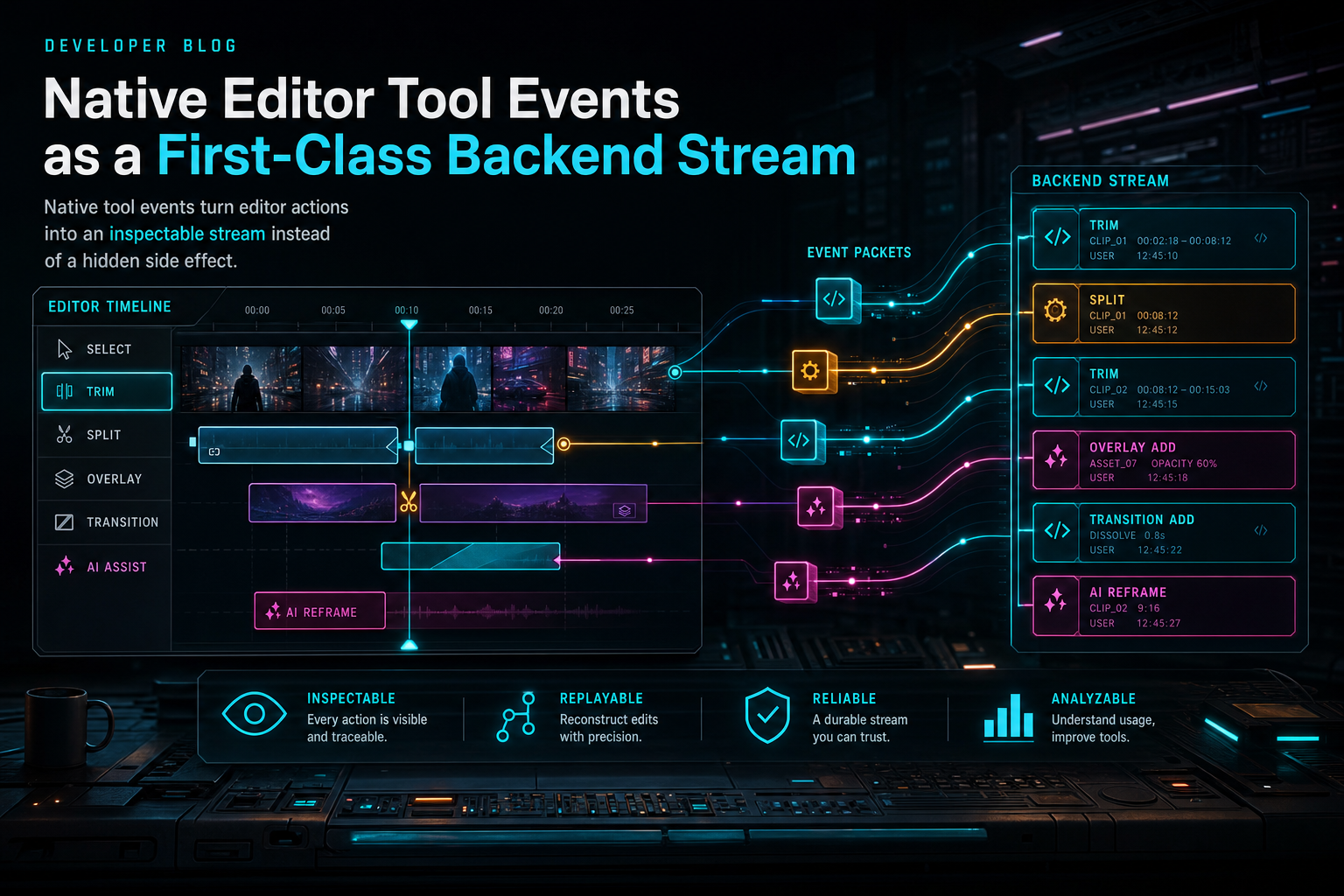
Native Editor Tool Events as a First-Class Backend Stream
VibeChopper treats native editor tool events as product data, not debug exhaust. Every meaningful timeline mutation can be recorded, visualized, and connected back to AI edit runs so creators and developers can see how an instruction became an edit.
Read the post