
Developer Notes and Creator Playbooks
Read VibeChopper Developer Notes and Creator Playbooks for technical architecture, creative workflows, and AI video editing strategy.
Filter by tag
ClearTechnical deep dives
Developer Notes
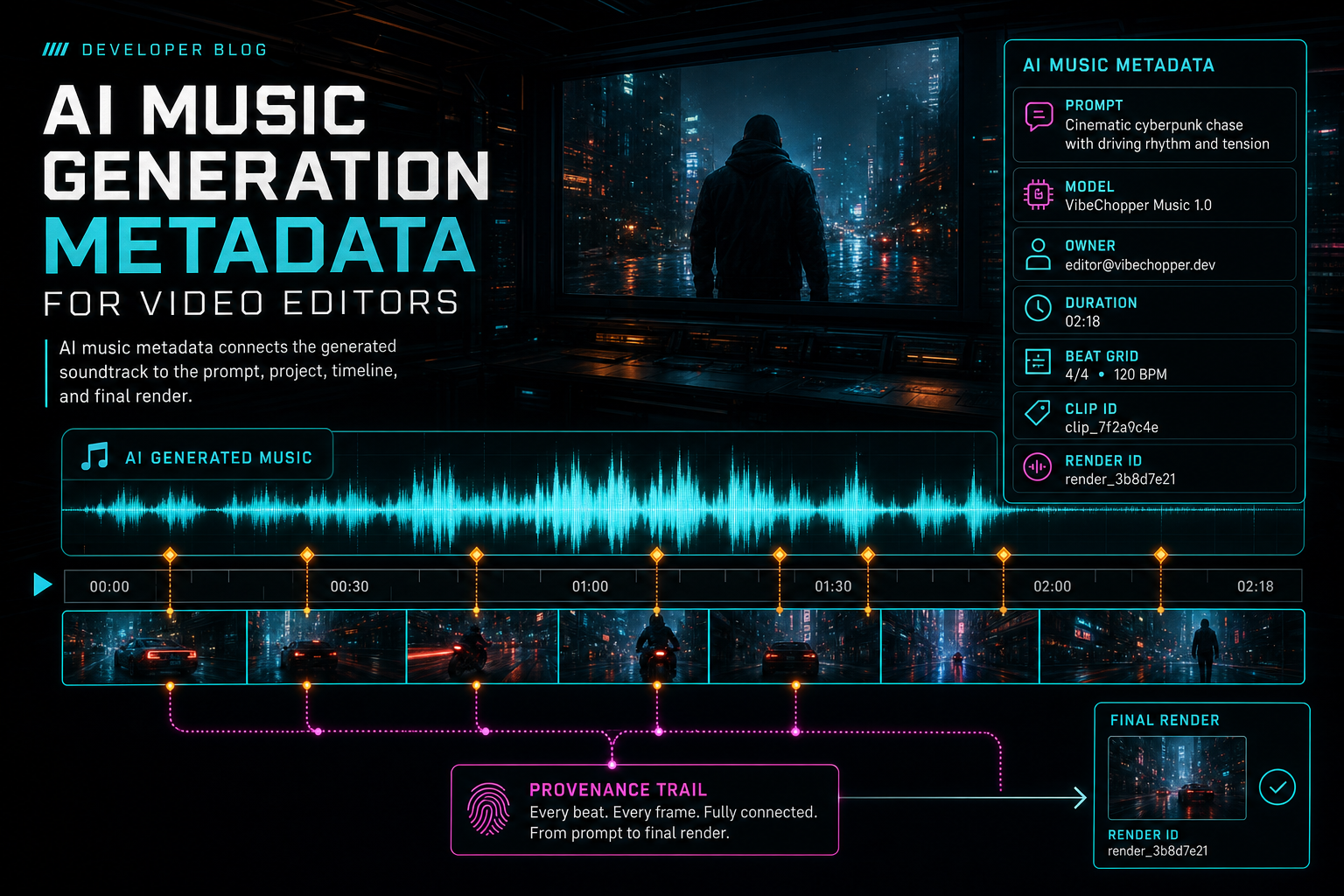
AI Music Generation Metadata for Video Editors
AI music generation becomes reliable inside a video editor when the soundtrack is stored as structured project state, not just as an audio file. The useful metadata spans creative intent, prompt text, provider and model, output format, ownership, timeline placement, sync decisions, audit events, and render relationships.
Read the post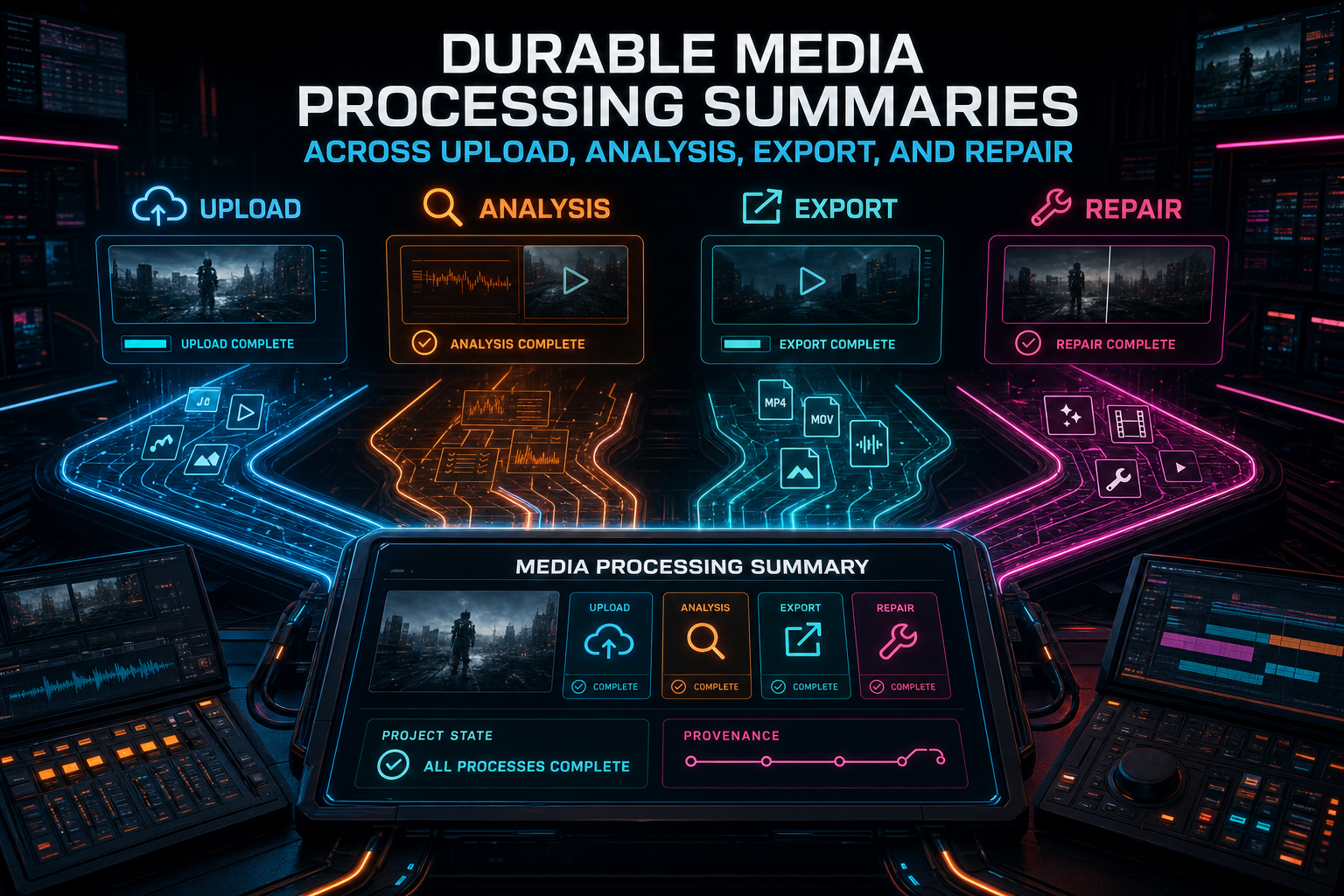
Durable Media Processing Summaries Across Upload, Analysis, Export, and Repair
VibeChopper treats media processing state as product data, not scattered progress text. A project summary joins upload sessions, matched video records, frames, AI descriptions, audio, transcripts, generated metadata, proxies, active jobs, exports, plan assets, and readiness checks into one durable view that the editor, media panel, AI runs, and repair flows can trust.
Read the post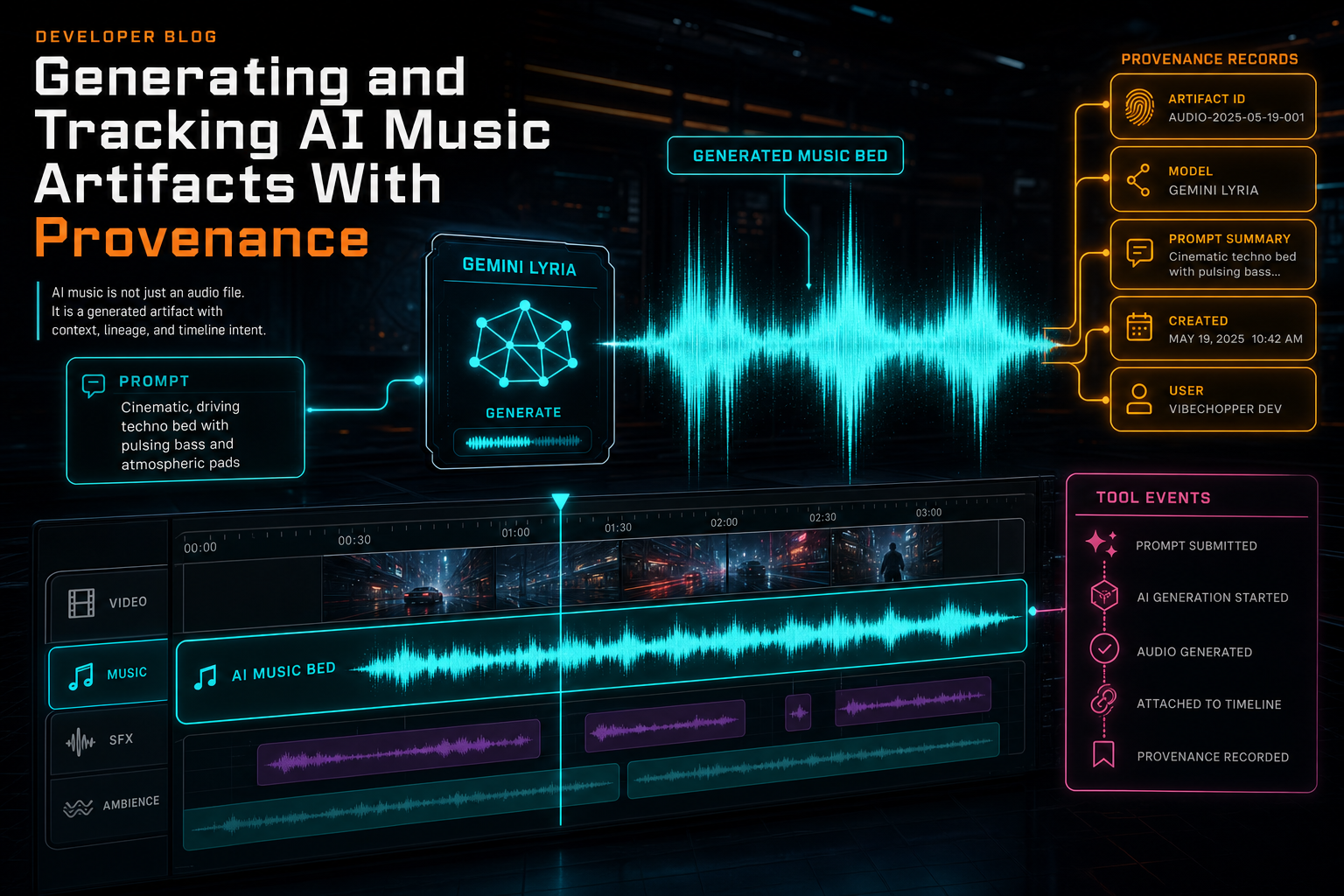
Generating and Tracking AI Music Artifacts With Provenance
Generated music becomes useful in a video editor only when the system can explain where it came from, why it was created, which edit run requested it, and where it landed on the timeline. VibeChopper treats every AI music bed as a durable artifact with prompt, provider, model, storage, tool-event, and clip provenance.
Read the post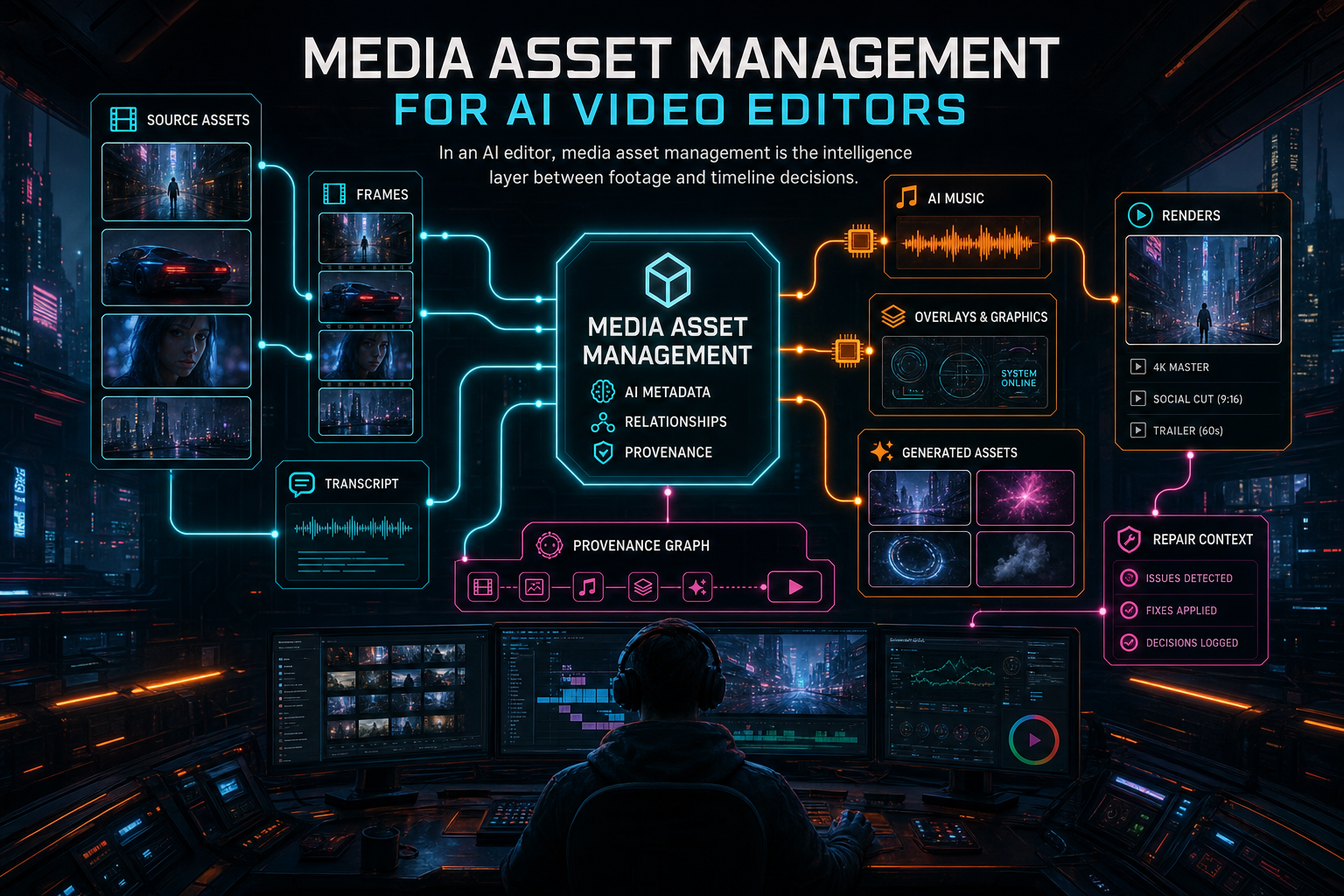
Media Asset Management for AI Video Editors
Media asset management for an AI video editor is not a file browser with thumbnails. It is the system that keeps source footage, extracted frames, transcripts, generated music, overlays, renders, plan assets, AI edit runs, object storage paths, and repair context connected enough for humans and agents to make reliable editing decisions.
Read the postCreator workflows
Creator Playbooks
No creator playbooks match this tag yet.