VibeChopper Blog

Developer Notes

Technical notes on AI video editing infrastructure, media processing, render verification, object storage, and production-grade creative tools.

Filter by tag

Clear
All tags AI video editorobject storageFFmpegasset provenanceDATA Remediationtool eventsAI agentscloud renderingcloud video renderingnatural language editingrender verificationtechnical SEOvideo renderingAI edit runsAI video analysisbrowser video editorbrowser video processingfallbacksframe extractionmedia graphobservabilityonline video editorprovenanceresumable uploadstimeline architecturetimeline editingupload reliabilityvideo editingvideo editor backendvideo metadataagent scoringagent securityAI audit trailAI edit planningAI edit run schemaAI editingAI infrastructureAI musicAI music generationAI timelinesAI video editingAI video editor observabilityAI video toolsAI workflow audit trailasset contextasset ownershipaudit trailauthautomatic subtitlesbackend streamsbatch uploadbearer tokensbrowser based video editorbrowser storageCapCut alternativecaption infrastructureclip effectscloud compositorcloud persistencecloud video processingcollaborationcreative briefscross-device editingdatabase schemadeep linksdeveloper notesemail bootstrapexport reliabilityexport workflowfeedback automationFFmpeg APIFFmpeg workersGemini Lyriagenerated media provenancegenerated music bedheadless workersHMACincident automationincident responseiOS video editoriPad video editorJSON validationJWT fallbackKdenlivelarge media projectsmedia asset graphmedia asset managementmedia processingmemory pressureMLT frameworkmulti-device syncnative app authnative authopen-source video editingowned authpasskeyspasswordless loginproduct infrastructureproduction reliabilityproduction repairprogress trackingproject provenance graphprompt metadataprovider harnessrender hygienerender pipelinesrender testsrepair loopsrepair workflowsReplit Autoscalerubricsscratch storagetelemetrytext-based video editingtimeline compositortimeline synctimeline tool callstimeline toolstransactional emailtranscript editingtranscript-based editingupload sessionsupload telemetryusage logsVEED.IOvideo editing APIvideo editing architecturevideo editing backendvideo editor APIvideo editor architecturevideo editor infrastructurevideo editor metadatavideo processing pipelinevideo provenancevideo rendering APIvideo timelinevideo transcription editorvideo upload architecturevideo upload UXvoice video editingweb video editorWebAuthnworker callbacks
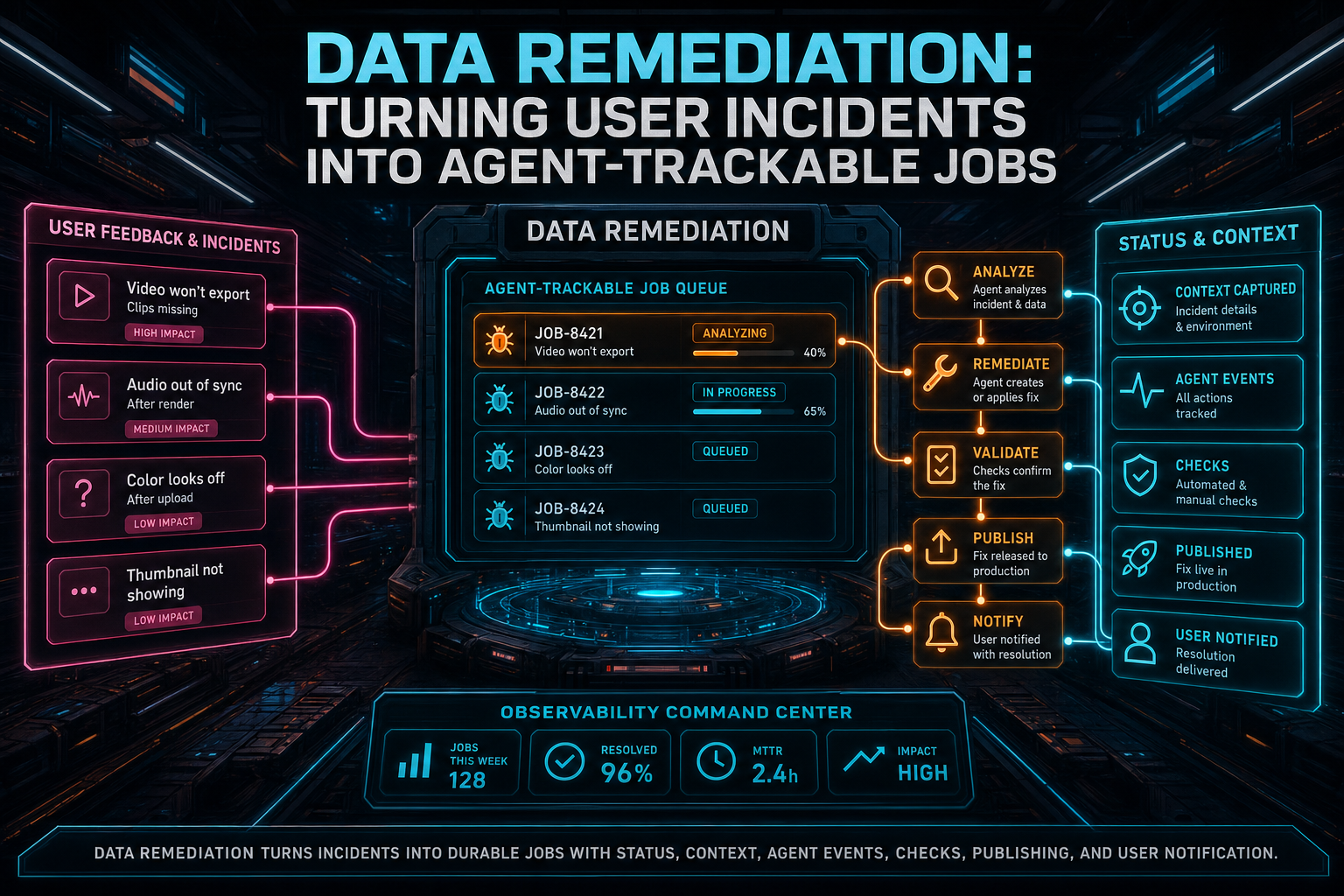
A dark VibeChopper DATA Remediation command center turning user feedback into tracked repair jobs.
Developer Notes16 min read

DATA Remediation: Turning User Incidents Into Agent-Trackable Jobs

DATA Remediation is VibeChopper's incident-to-repair pipeline. A user's bug report, feedback item, comment, or voice feedback session becomes a durable job with source context, dedupe, status, allowed file scope, agent events, check results, publish results, and notifications. The goal is not to make production incidents feel magical. The goal is to make them trackable enough for agents, admins, users, and future automation to agree on what is happening.

DATA RemediationAI agentsincident responsefeedback automation
Read the post
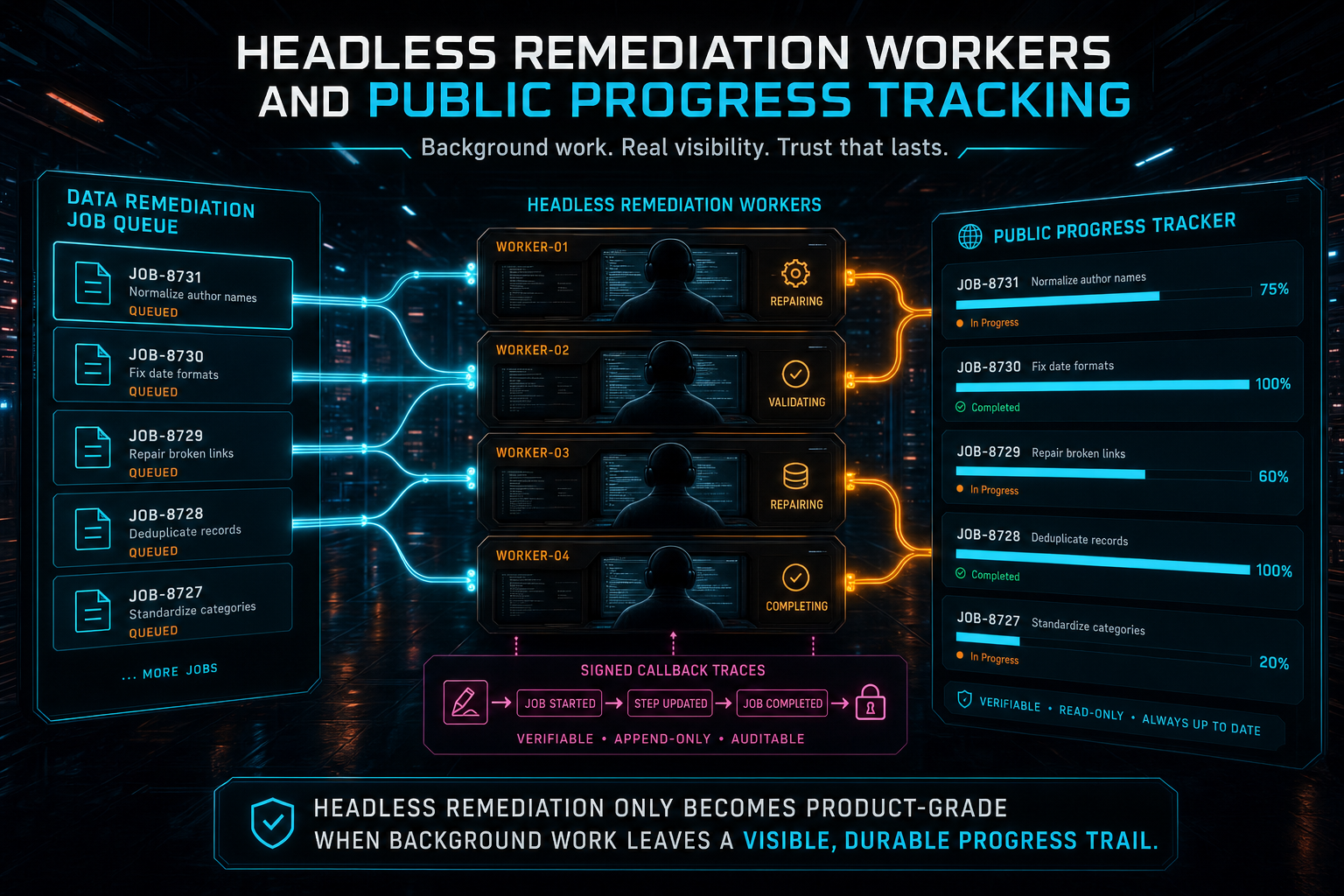
A dark VibeChopper operations room showing headless remediation workers moving jobs into a public progress tracker.
Developer Notes15 min read

Headless Remediation Workers and Public Progress Tracking

VibeChopper's DATA Remediation workers run outside the user request that created the incident, but they do not disappear into a terminal. The worker claims a durable job, dispatches a headless dev runner, reports signed lifecycle events, records checks and verification, publishes when the repair is ready, verifies production, and feeds a public progress tracker that a submitter can refresh at any point.

DATA Remediationheadless workersprogress trackingAI agents
Read the post
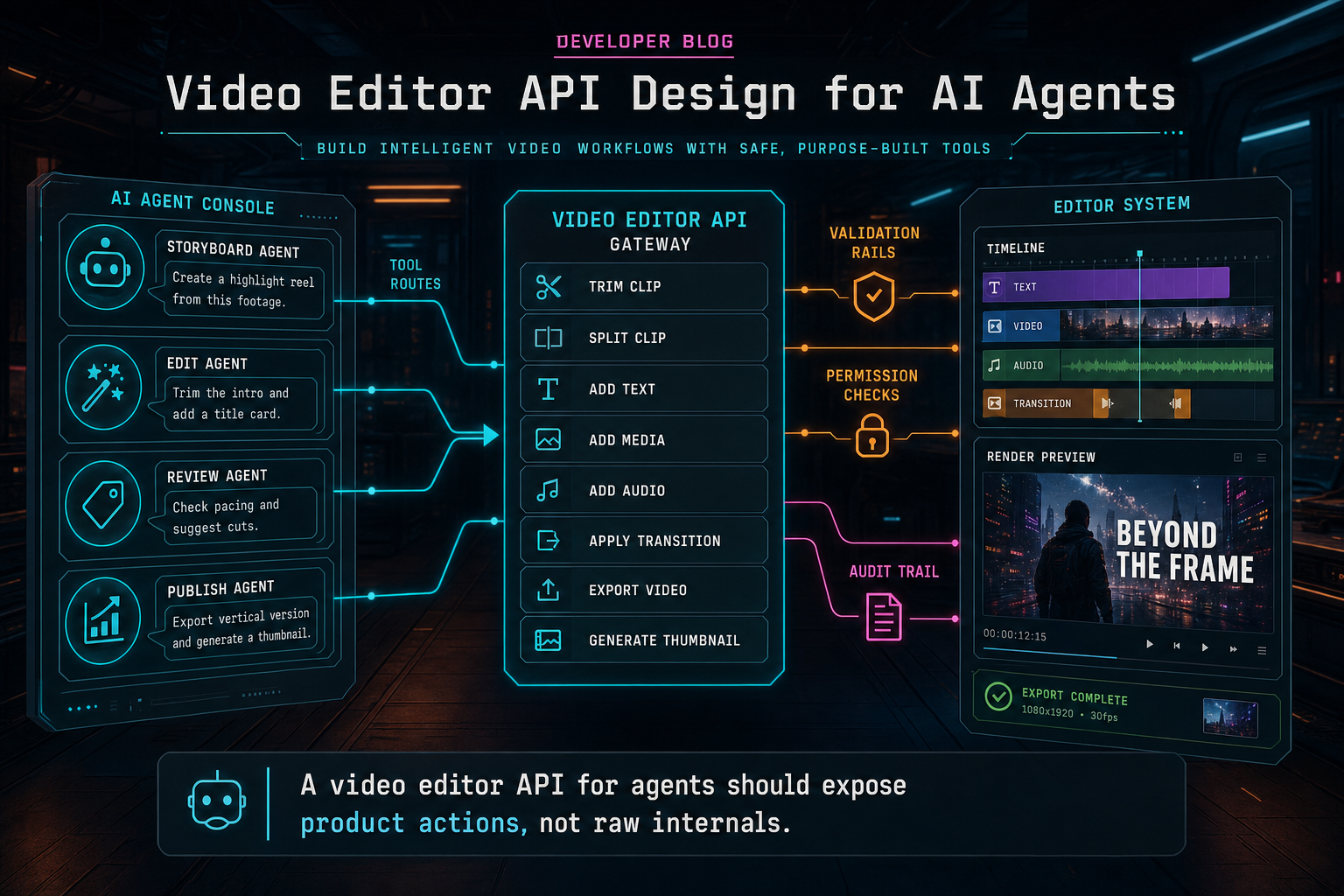
A dark VibeChopper developer console showing AI agents calling safe video editor API tools.
Developer Notes16 min read

Video Editor API Design for AI Agents

An API for AI video editing agents should expose bounded timeline tools, not raw database access or command strings. The durable design uses schemas, ownership checks, idempotency, media provenance, render artifacts, and audit trails so agents can move fast without bypassing the editor.

video editor APIAI agentsAI video editortimeline tools
Read the post